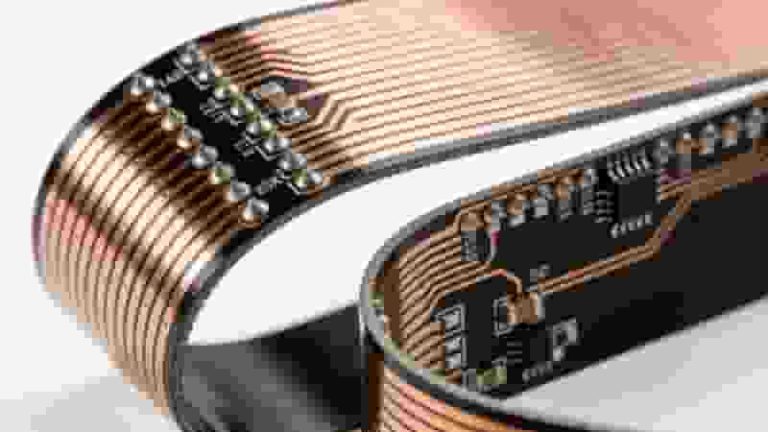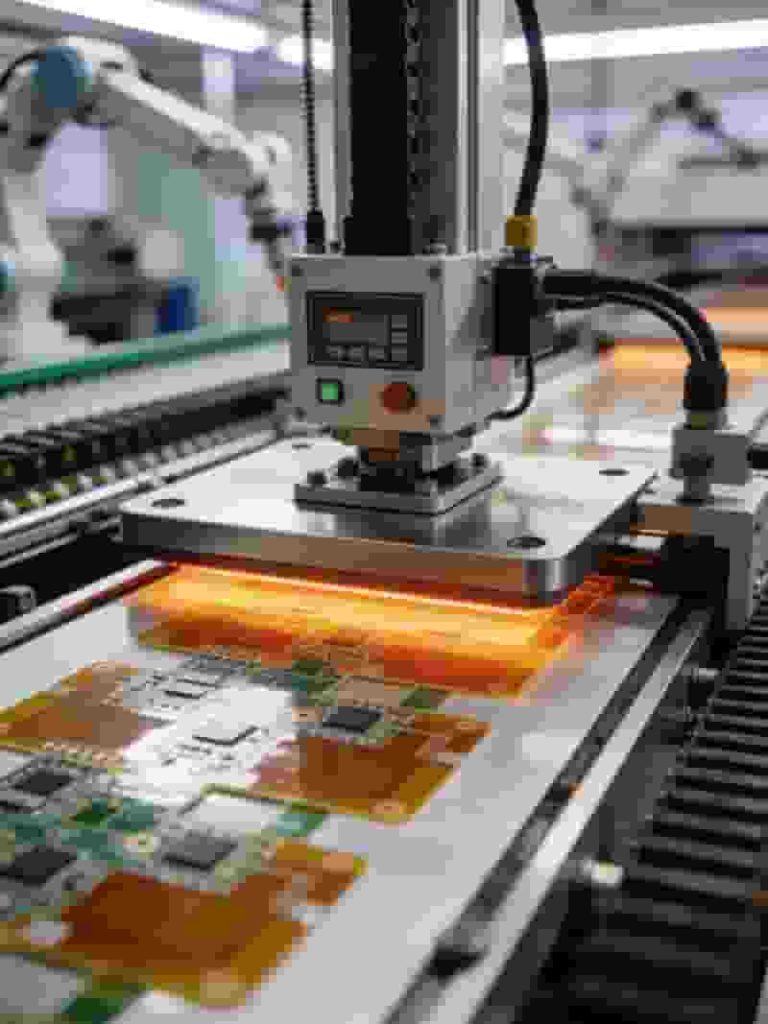
Lightweight, high‑density multilayer flexible PCB for compact, reliable electronics in consumer, automotive, medical, and industrial applications. Up to 16‑layer flex and rigid‑flex PCB manufacturing with tight tolerances and controlled impedance.
10+ years flex PCB experience in China
1,000,000+ flex circuits shipped per year
Quick‑turn prototypes & volume production for multilayer flexible PCB
Multilayer Flex PCB Manufacturing Capabilities
Our multilayer flexible PCB supports high‑density, high‑reliability designs for demanding applications. Polyimide‑based flex circuits with ENIG, hard gold and other finishes ensure stable interconnect performance.
We deliver tight tolerances on fine lines, microvias and controlled impedance for high‑speed designs. Standard multilayer flexible PCB ranges from 3 to 16 layers; higher layer counts are available after engineering review.
| Capability | Standard Range |
|---|---|
| Layer Count | 3–16 layer multilayer flexible PCB |
| Base Material | Polyimide (PI) adhesive & adhesiveless laminates |
| Copper Thickness | 1/3 oz to 2 oz; up to 4–6 oz on request |
| Min. Trace / Space | 0.075 / 0.075 mm (3 / 3 mil) |
| Min. Finished Hole | 0.20 mm mechanical; laser microvias for HDI |
| Finished Thickness | 0.05–2.5 mm (custom based on stack up) |
| Surface Finishes | ENIG, Hard Gold, Immersion Tin, OSP |
| Impedance Control | ±10% tolerance for differential & single‑ended |
What Is a Multilayer Flexible PCB?
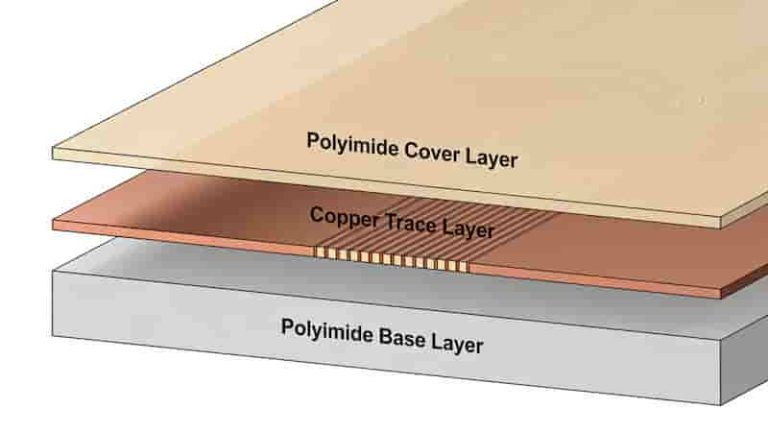
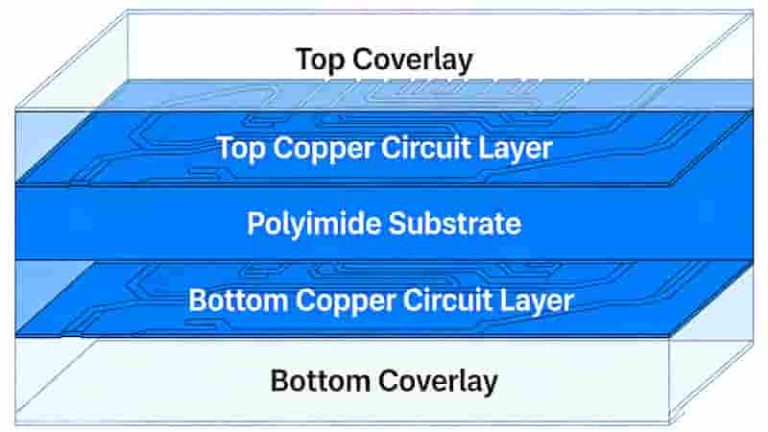
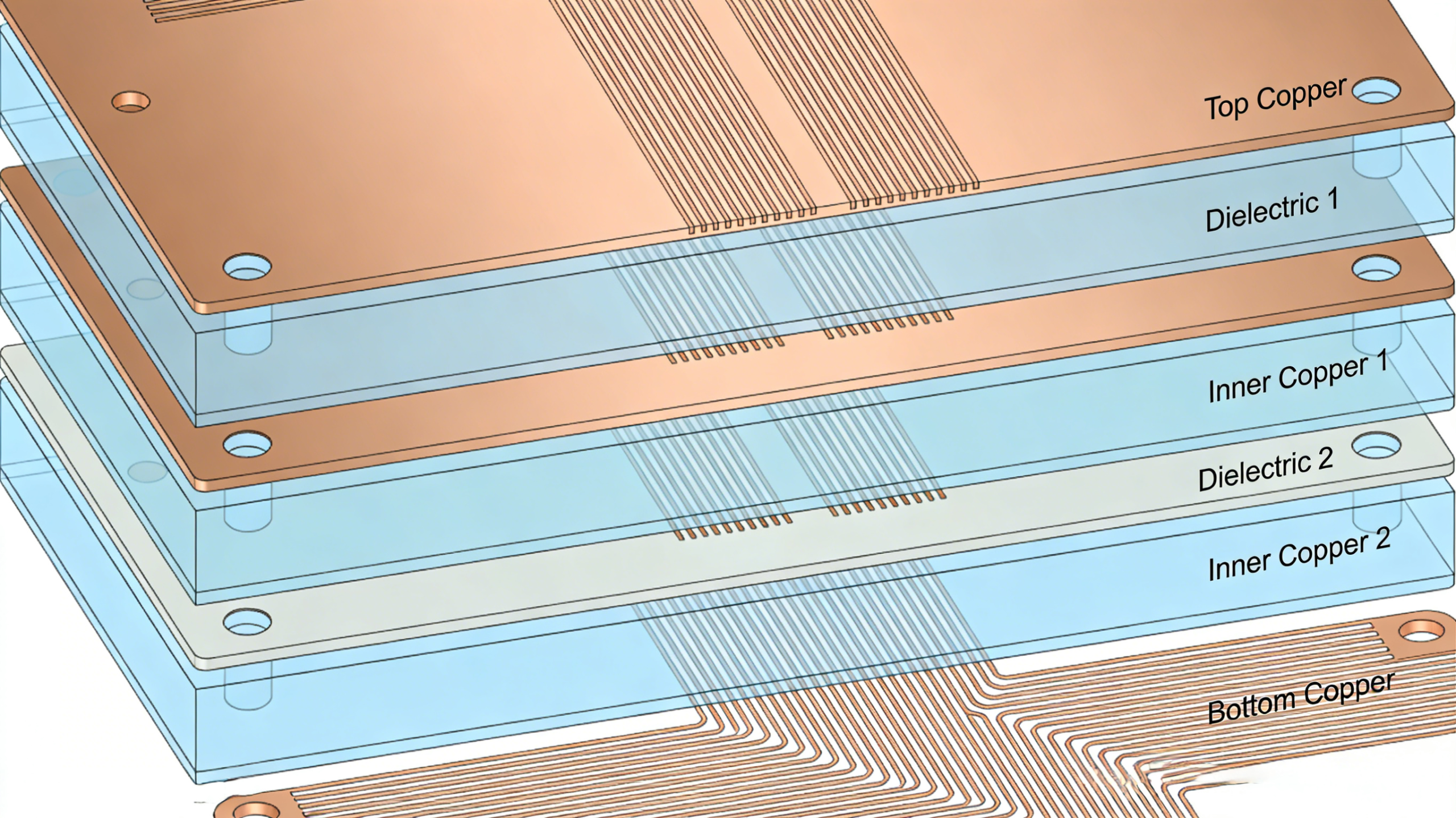
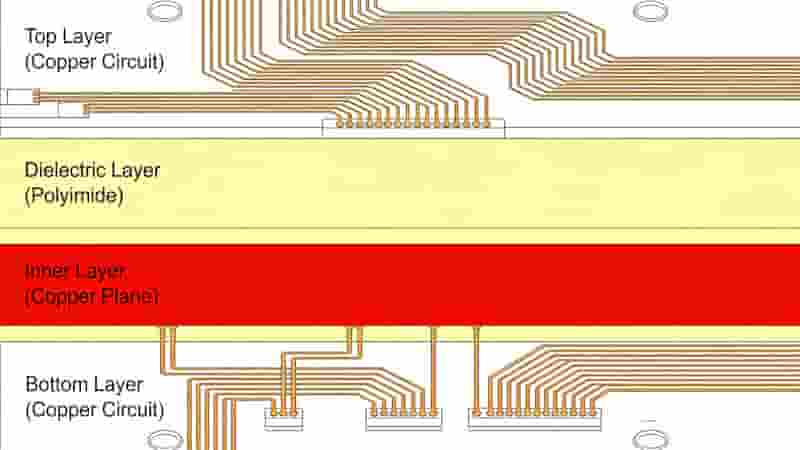
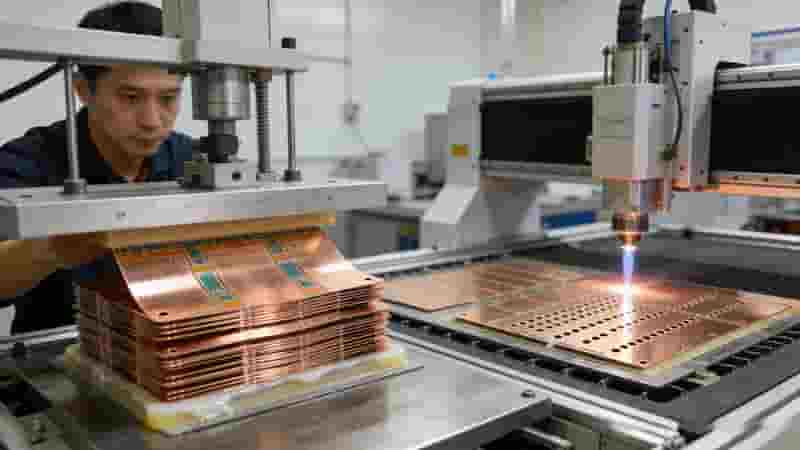
A multilayer flexible PCB integrates three or more copper layers with polyimide insulation and plated‑through holes to build complex, high‑density interconnects in a flexible format.
Compared with single or double‑sided flex boards, multilayer flexible PCB provides higher routing density, integrated power/ground planes, and better signal integrity for high‑speed circuits.
By replacing bulky wire harnesses, multilayer flexible PCB reduces weight and thickness while improving reliability, assembly efficiency and long‑term performance.
Single‑, Double‑ & Multilayer Flex PCB Comparison
| Type | Features | Typical Applications |
|---|---|---|
| Single‑Layer Flex | Highest flexibility, lowest cost | Simple interconnects, low‑complexity devices |
| Double‑Layer Flex | PTH, higher density, good flexibility | Moderate‑speed consumer & automotive |
| Multilayer Flexible PCB | High density, impedance control, shielding | Medical, automotive, aerospace, high‑speed |
Multilayer Flex PCB Stack‑Up & Design Guidelines
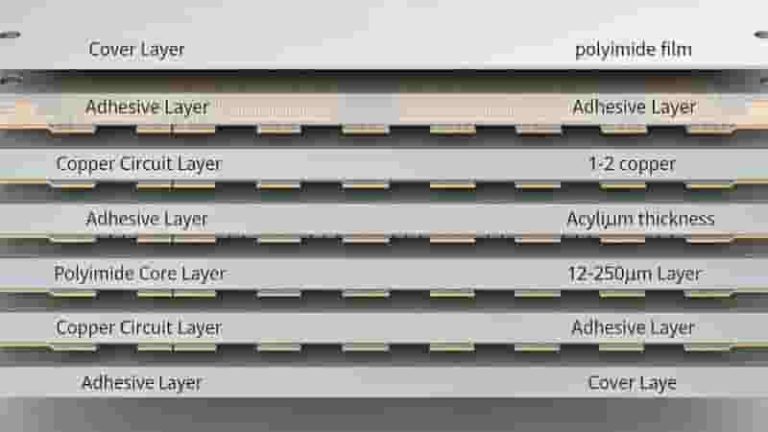
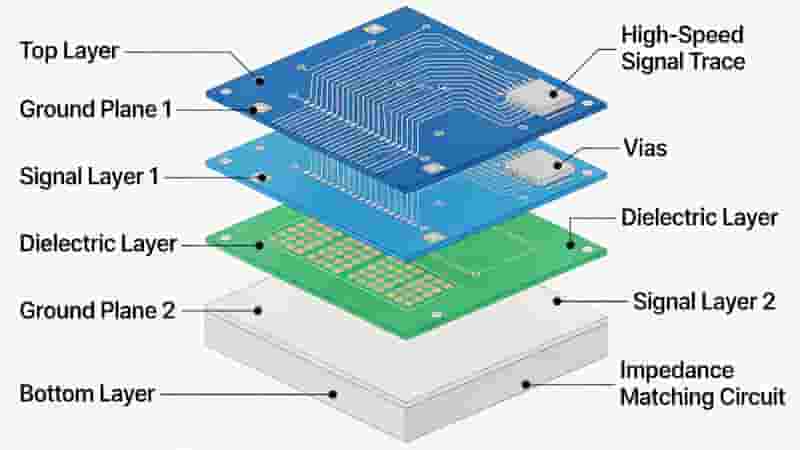
A well‑designed stack up is critical for multilayer flexible PCB flexibility, reliability and electrical performance. We provide free DFM support for stack up, bend radius and impedance planning.
4‑Layer Multilayer Flex Stack Up
- Top coverlay
- Copper layer 1 – signal
- Polyimide dielectric
- Copper layer 2 – ground plane
- Polyimide dielectric
- Copper layer 3 – power / signal
- Polyimide dielectric
- Copper layer 4 – signal
- Bottom coverlay
6‑Layer Multilayer Flex Stack Up
- Top coverlay
- Copper layer 1 – high‑speed signal
- Polyimide dielectric
- Copper layer 2 – ground plane
- Polyimide dielectric
- Copper layer 3 – inner signal / power
- Polyimide dielectric
- Copper layer 4 – inner signal / power
- Polyimide dielectric
- Copper layer 5 – ground plane
- Polyimide dielectric
- Copper layer 6 – signal / pads
- Bottom coverlay
Bend Radius & Routing Best Practices
- Static bend radius: 15–20 times total flex thickness
- Avoid vias and pads in dynamic bend areas
- Use rolled‑annealed (RA) copper for repeated bending
- Reserve solid ground planes near high‑speed signal layers
Materials, Surface Finishes & Stiffeners
We use industrial‑grade materials to ensure consistent performance of every multilayer flexible PCB.
Base Materials
- Polyimide (PI): High temperature resistance, long flex life
- Adhesiveless PI: Thinner profile, better dimensional stability
- PET: Cost‑effective for low‑temperature applications
Stiffeners
- Polyimide: For ZIF contacts and precise thickness control
- FR‑4: Reinforce connectors and component mounting areas
- Stainless steel / aluminum: High rigidity and heat dissipation
Surface Finishes
- ENIG: Flat, solderable for fine‑pitch SMT and BGA
- Hard Gold: Wear‑resistant for gold fingers and connectors
- Soft Gold: Used for wire bonding pads
- Immersion Tin / OSP: Cost‑effective for standard solder joints
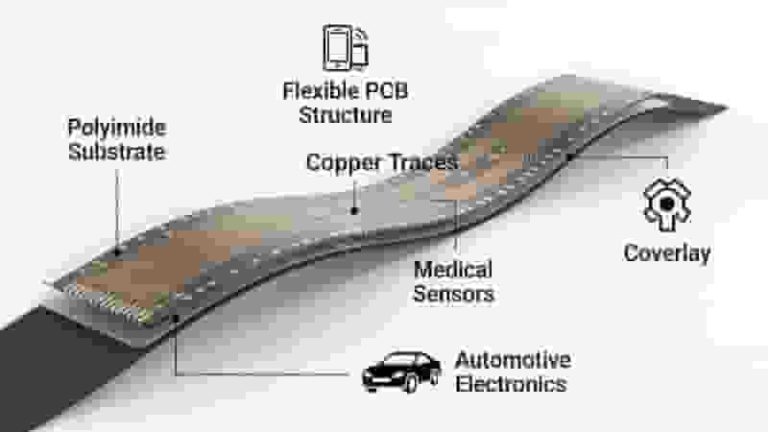
Key Applications of Multilayer Flexible PCB
| Industry | Applications | Value |
|---|---|---|
| Consumer Electronics | Smartphones, foldables, wearables, AR/VR | Ultra‑thin, lightweight, 3D packaging |
| Automotive | ADAS, infotainment, sensors, EV systems | Vibration resistance, space saving |
| Medical | Diagnostics, wearables, implantables | Compact, high reliability, biocompatible |
| Industrial & Robotics | Automation, sensors, motion controllers | Harsh environment durability |
| Aerospace & Defense | Avionics, communication, radar systems | Lightweight, mission‑critical reliability |
Multilayer Flex PCB Quote & Order Process
We provide quick‑turn multilayer flexible PCB prototyping and mass production with a 24‑hour quotation response on working days.
- Submit Gerber files, stack up, quantity and specifications
- Free DFM review and detailed formal quotation
- Order confirmation and full‑process production
- Electrical testing, AOI inspection and global shipping