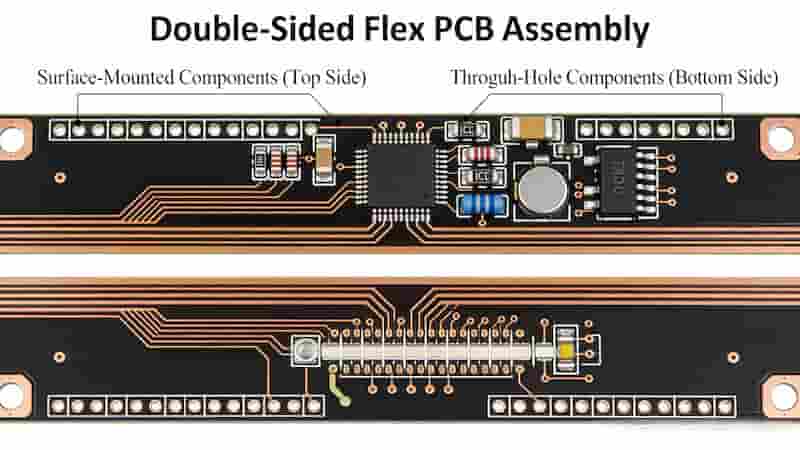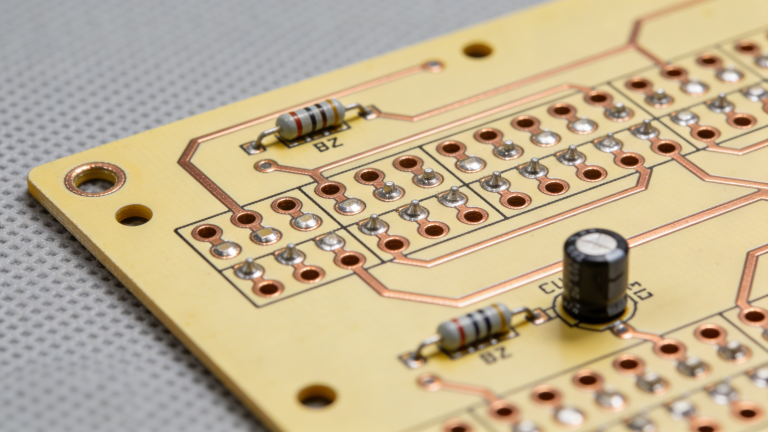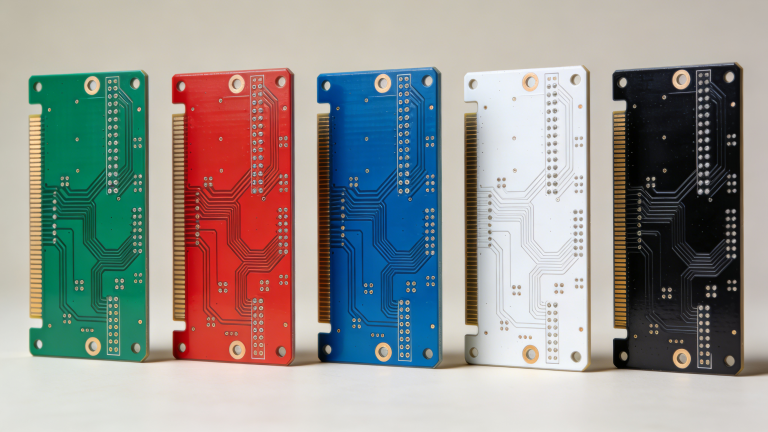
Double-sided flex PCB (also known as 2-layer flexible PCB) is a flexible circuit with two copper conductive layers on polyimide film, connected by plated through holes. We provide full-process manufacturing, customized stackup, strict quality control and fast delivery for global industrial, medical, automotive and high-tech electronics applications from prototype to mass production.
What Is a Double-Sided Flex PCB
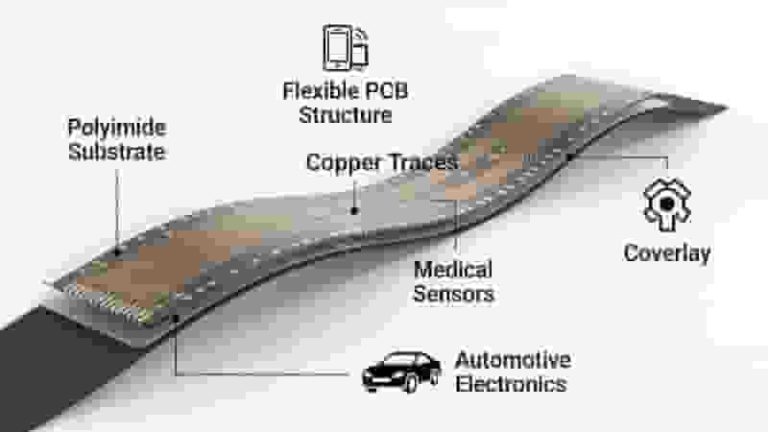
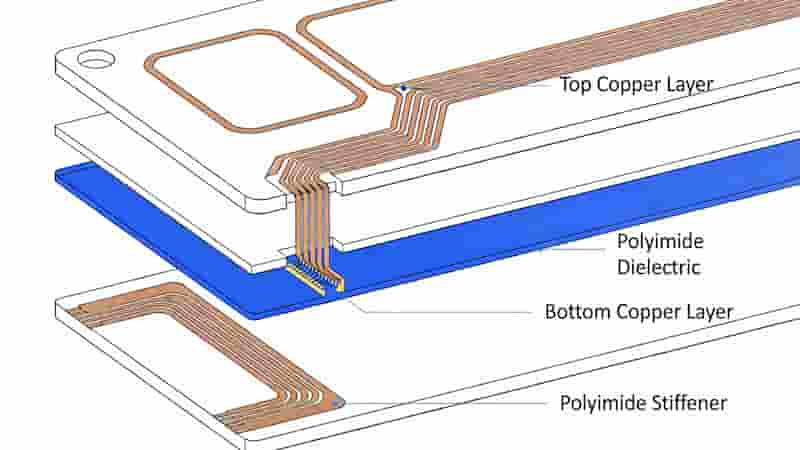
A double-sided flex PCB (also called double-sided flexible PCB or 2-layer flexible PCB) is a flexible printed circuit with two copper conductor layers on a bendable polyimide base film. Both sides carry etched copper traces, and plated through holes connect top and bottom layers to build more complex circuits than single-sided flex designs. Per IPC 6013 standard, this structure is defined as Type 2 double-sided flex circuit.
Compared with single-sided flex PCBs, double-sided flexible PCBs deliver higher routing density and greater design freedom in the same or smaller space. They are widely used in space-constrained devices that require flexibility, lightweight and reliable interconnection.
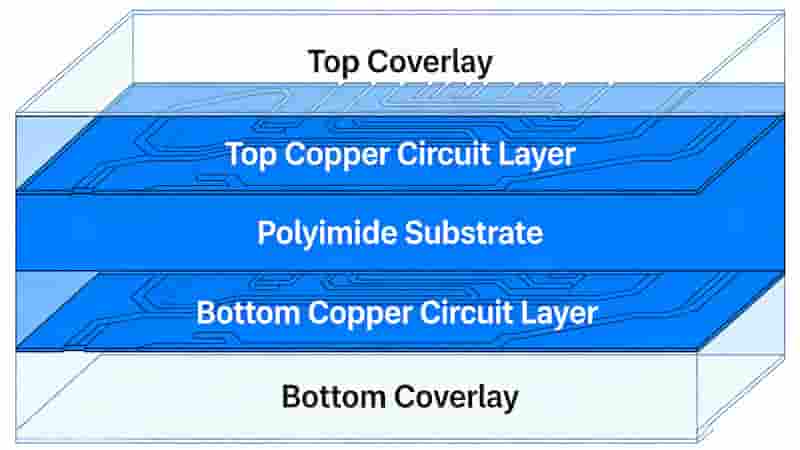
Double-Sided Flex PCB Stackup & Materials
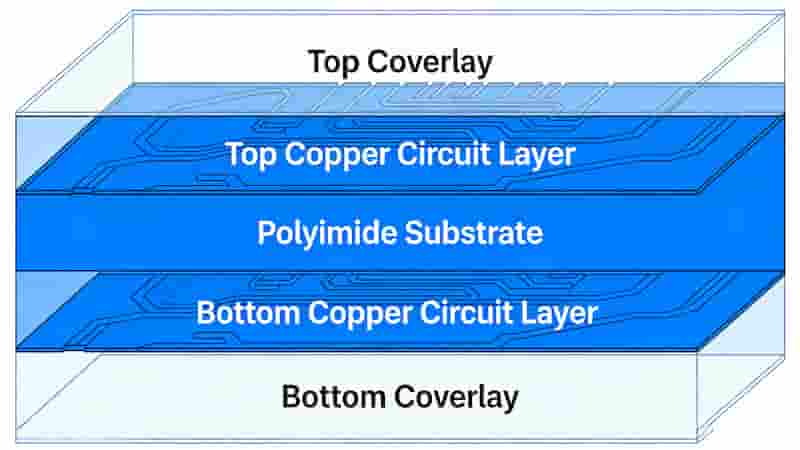
A standard 2-layer flex PCB stackup consists of two copper layers, a flexible PI core, and double-sided coverlay for insulation and protection. Optional stiffeners can be added to reinforce assembly areas while keeping flexible zones intact.
Standard 2-Layer Flex PCB Stackup (Top to Bottom)
| Layer | Description |
|---|---|
| Top Coverlay | Polyimide coverlay with openings for pads and contact areas |
| Top Copper Layer | Etched copper traces for top circuit routing |
| Flexible PI Core | Thin polyimide film providing insulation and flexibility |
| Bottom Copper Layer | Etched copper traces for bottom circuit routing |
| Bottom Coverlay | Protective polyimide film for bottom circuits |
Base Materials & Surface Finishes
- Base material: Polyimide (PI) (standard), PET/PEN for cost-effective designs, LCP for high-frequency applications
- Copper type: Rolled Annealed (RA) for dynamic bending, Electro-deposited (ED) for static use
- Surface finishes: ENIG, ENEPIG, Immersion Silver, Immersion Tin, OSP
- Stiffeners: PI, FR-4, stainless steel, aluminum for mechanical reinforcement
Key Benefits of Double-Sided Flex PCB
The double-sided flexible PCB combines flexibility with high routing density, bringing unique value to electronic designs:
- Higher wiring density in limited space compared to single-sided flex
- Greater design freedom for complex circuits and 3D layout
- Lightweight & space-saving to replace bulky wire harnesses and rigid boards
- Improved reliability under vibration, bending and thermal cycling
- Fewer interconnects to reduce failure points and simplify assembly
- Cost-efficient balance between single-sided and multilayer flex solutions
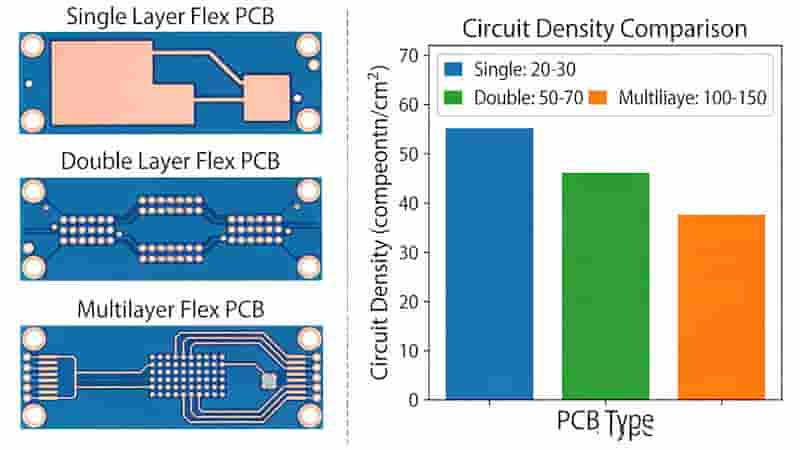
Single vs Double vs Multilayer Flex PCB Comparison
| Type | Layers | Best For | Advantages |
|---|---|---|---|
| Single-Sided Flex | 1 Copper Layer | Simple circuits, low-density interconnects | Low cost, maximum flexibility, easy fabrication |
| Double-Sided Flex | 2 Copper Layers | Medium-density, compact flexible designs | High density, balanced cost, good flexibility |
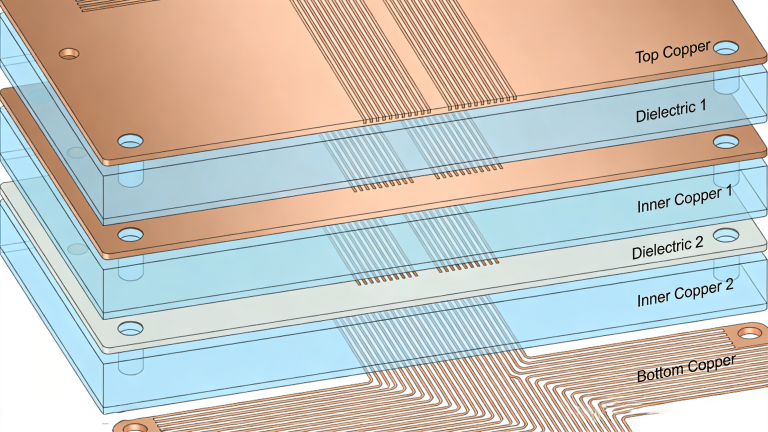
| Multilayer Flex | 3+ Copper Layers | High-speed, high-complexity systems | Maximum density, impedance control, high reliability |
Industry Applications of Double-Sided Flex PCB
Double-sided flex PCBs serve high-end industries that demand miniaturization, flexibility and stability:
- Consumer Electronics & Wearables: Smart watches, TWS earbuds, foldable devices, compact cameras
- Automotive Electronics: Instrument clusters, LED lighting, sensors, in-vehicle control modules
- Medical Devices: Portable diagnostic tools, wearable health monitors, implantable equipment
- Industrial & Robotics: Robot arms, dynamic connectors, compact control systems, sensors
- Aerospace & Defense: Avionics, satellite components, communication modules, high-reliability systems
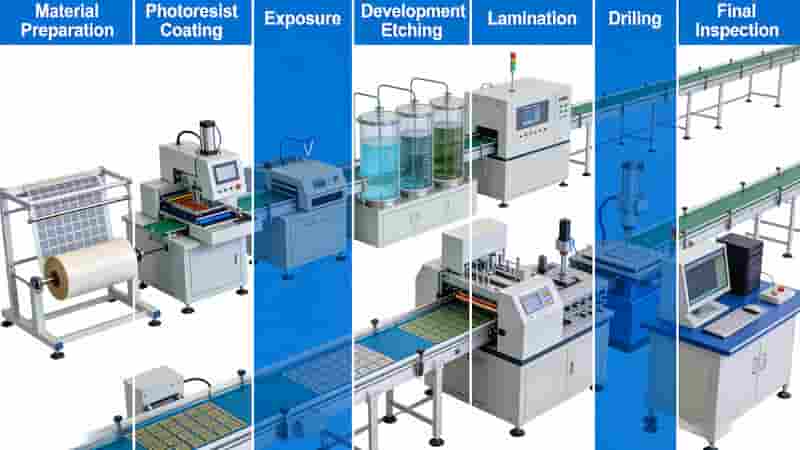
Our Double-Sided Flex PCB Manufacturing Capabilities
We provide full-service double-sided flex PCB manufacturing with IPC 6013 Class 2 / Class 3 standards, supporting prototype to mass production.
| Item | Specification |
|---|---|
| Board Type | 2-layer double-sided flex PCB (IPC Type 2) |
| Base Material | Polyimide (PI), PET, PEN, LCP available |
| Copper Thickness | 0.5oz – 2oz (RA/ED copper optional) |
| Min Trace / Space | 0.075mm / 0.075mm (3/3 mil) |
| Min Hole Size | 0.15mm |
| Finished Thickness | 0.10mm – 0.30mm customizable |
| Surface Finish | ENIG, ENEPIG, Immersion Ag/Sn, OSP |
| Testing | 100% electrical test, AOI, reliability verification |
How to Order Double-Sided Flex PCB
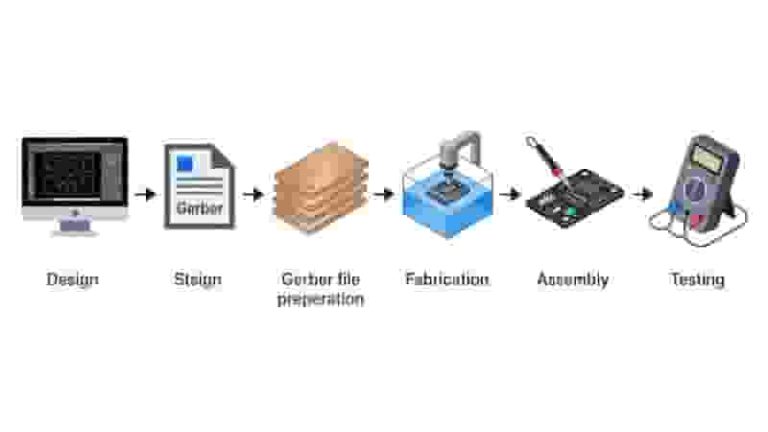
- Prepare design files: Gerber/ODB++ files, drill data, board outline, stackup and quantity requirements
- Submit inquiry: Send files and specifications to get professional evaluation and quotation
- Engineering review: DFM check, stackup optimization, design suggestion
- Production & delivery: Fast prototype and mass production with full quality inspection
Summary
Double-sided flex PCB is the most cost-effective and practical solution for medium-density flexible circuit designs. It offers higher wiring density, better design flexibility and reliable performance compared to single-sided flex, while being simpler and more affordable than multilayer flex. With professional manufacturing capabilities, customized stackup and strict quality control, we deliver high-quality 2-layer flex PCB solutions for global industrial buyers and engineers.
Get Your Double-Sided Flex PCB Quote Now
Send Gerber files and requirements to get fast, professional quotation and DFM feedback
Request a Quote