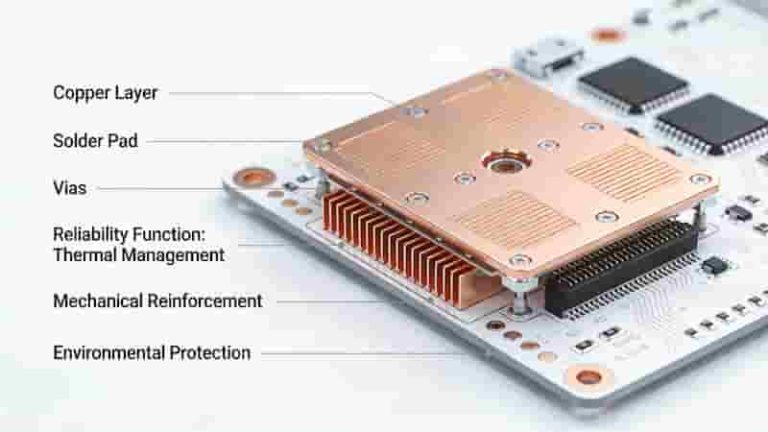
RoHS Compliant PCBs are essential for global market access. This guide covers restricted substances, compliance benefits, lead-free processes, assembly, testing, and how to partner with trusted RoHS compliant PCB manufacturers.
Introduction to RoHS Standards
RoHS (Restriction of Hazardous Substances) is an EU directive that limits hazardous materials in electrical and electronic products. For printed circuit boards, compliance is mandatory to export to the EU and many global markets.
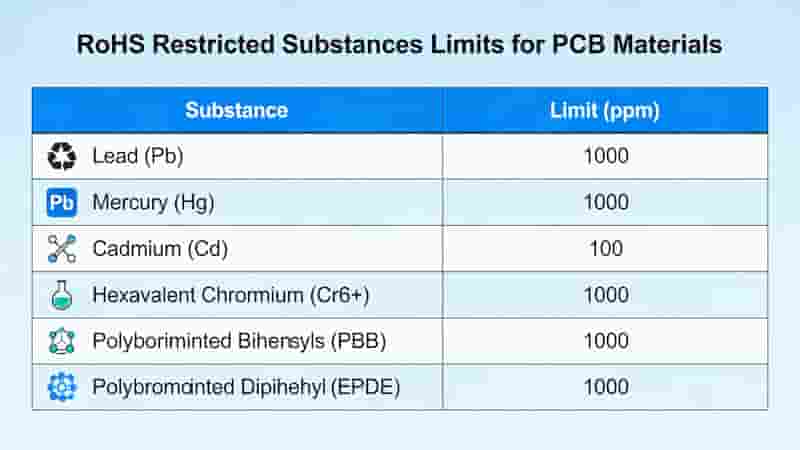
First introduced in 2002, RoHS now restricts 10 hazardous substances. The original 6 controlled materials are Lead (Pb), Mercury (Hg), Cadmium (Cd), Hexavalent Chromium (Cr6+), PBB, and PBDE.
Benefits of RoHS Compliance
Using RoHS compliant PCBs protects health, supports sustainability, and unlocks international sales channels.
Reduced Health & Environmental Risks: Limits toxic heavy metals and persistent flame retardants that harm workers, users, and ecosystems.
Global Market Access: Required for the EU, UK, Turkey, China, Korea, Japan, and other major electronics importers.
Brand & Supply Chain Trust: Demonstrates responsible manufacturing and meets buyer compliance requirements.
RoHS Restricted Substances for PCBs
All homogeneous materials in RoHS compliant PCBs must stay below maximum concentration values (MCV):
| Substance | MCV (ppm) | Application in PCB |
|---|---|---|
| Lead (Pb) | 1000 | Solder, finishes, components |
| Mercury (Hg) | 1000 | Components, coatings |
| Cadmium (Cd) | 100 | Plating, contacts |
| Hexavalent Chromium (Cr6+) | 1000 | Surface treatments |
| PBB / PBDE | 1000 | Flame retardants |
Manufacturing RoHS Compliant PCBs
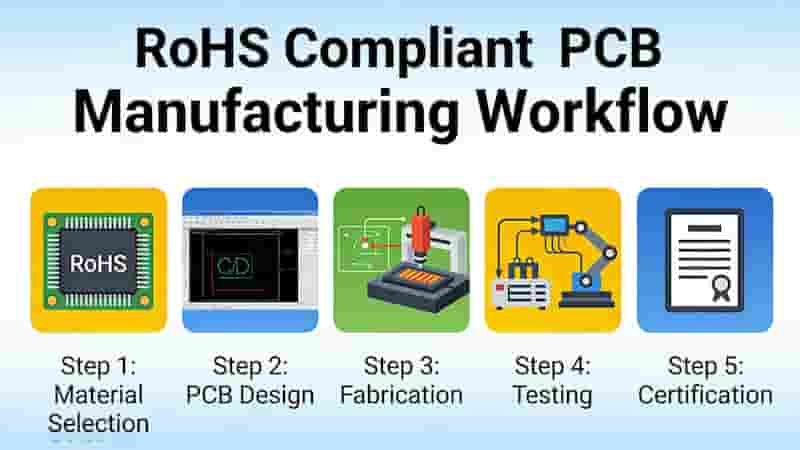
Producing RoHS compliant PCBs requires certified materials, controlled processes, and contamination prevention.
Certified Raw Materials: FR‑4 substrates, solder masks, resists, and laminates tested to meet RoHS substance limits.
Lead‑Free Production Lines: Dedicated equipment to avoid cross‑contamination from leaded processes.
Material Traceability: Full batch records and supplier declarations for every layer and component.
RoHS Compliant PCB Surface Finishes
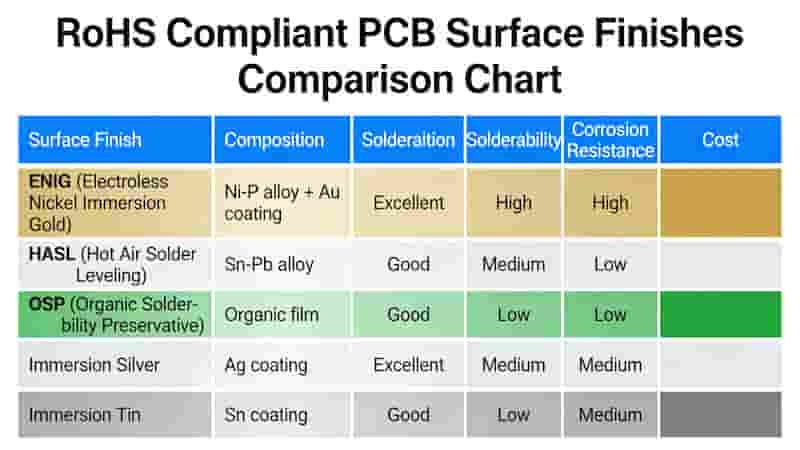
All popular surface finishes support RoHS compliant PCBs:
| Finish | Shelf Life | RoHS Compliant |
|---|---|---|
| ENIG | 12+ Months | Yes |
| Immersion Silver | 6–12 Months | Yes |
| Immersion Tin | 3–6 Months | Yes |
| Lead‑Free HASL | 12+ Months | Yes |
| OSP | 6–12 Months | Yes |
RoHS Compliant PCB Assembly
We provide full RoHS compliant PCB assembly with lead‑free solder and certified components:
RoHS Verified Components: ICs, resistors, capacitors, connectors all tested for restricted substances.
Lead‑Free Solder: SAC305 alloy paste and wire for reliable, non‑toxic joints.
RoHS‑Safe Flux & Cleaning: No heavy metals or halogenated materials.
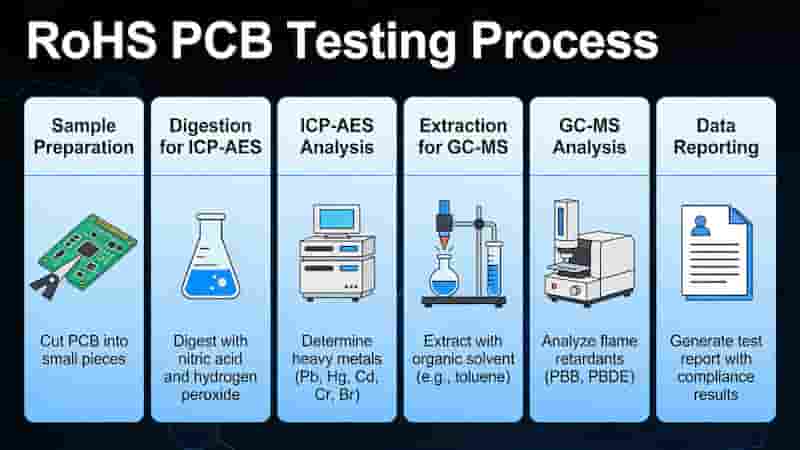
RoHS Testing & Certification
Every batch of RoHS compliant PCBs is validated with professional testing:
Testing Methods: ICP‑AES, GC‑MS, XRF for fast, accurate substance detection.
Certification & Reports: Test reports, material declarations, and compliance documents for customs and clients.
Traceability System: Full material and process logs for full supply chain transparency.
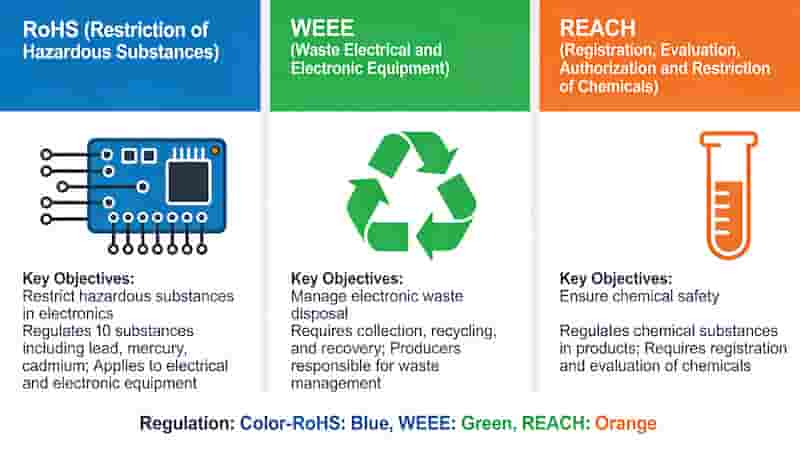
RoHS vs WEEE vs REACH
RoHS: Restricts 10 hazardous substances in electronic manufacturing.
WEEE: Manages collection, recycling, and disposal of waste electronics.
REACH: Regulates chemical safety and notification across all industries.
Summary
RoHS compliant PCBs are mandatory for global electronics export. They protect health and environment while opening EU and international markets. Working with an experienced RoHS PCB manufacturer ensures full compliance, reliable quality, and smooth customs clearance.
Get Your RoHS Compliant PCB Solution
Request a free quote, custom design review, or RoHS compliance documentation for your PCB project.