4 Types of PCB Open Circuit Diagram Repeated Gap Vacuum Scratched

PCB Open Circuit: Causes, Types, Diagnosis & Proven Solutions

PCB open circuit is one of the most frequent defects in PCB manufacturing, causing production downtime, rework, delivery delays, and quality complaints. This professional guide explains definitions, types, root causes, inspection methods, prevention, and reliable fixes for global electronics buyers and engineers.

What Is a PCB Open Circuit?

A PCB open circuit is an interruption in the intended conductive path on a printed circuit board. Two points that should be electrically connected become disconnected, blocking current flow and leading to functional failure.

Unlike short circuits, open circuits create gaps, thin traces, or physical breaks in copper circuitry. Common results include dead components, intermittent performance, failed electrical tests, scrapped panels, and delayed shipments.
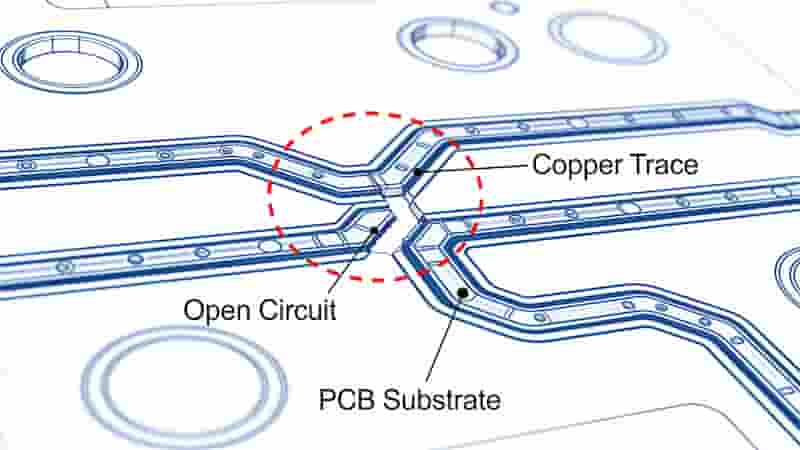
PCB Open Circuit Definition Diagram Copper Trace Break

4 Main Types of PCB Open Circuits

1. Repeated Open Circuit

Consistently appears at the same location across a batch, usually caused by damaged or contaminated exposure film.

2. Gap Open Circuit

Visible gap or severely thinned trace, often caused by film defects, dust, or misalignment.

3. Vacuum Open Circuit

Tapered or broken traces caused by trapped air between film and dry film during vacuum exposure.

4. Scratched Open Circuit

Physical damage to copper traces from mishandling, equipment friction, or improper transport.
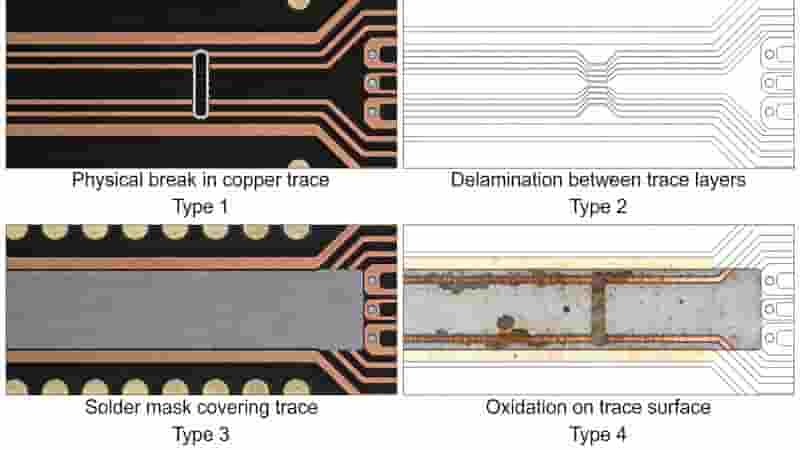
4 Types of PCB Open Circuit Diagram Repeated Gap Vacuum Scratched

Root Causes of PCB Open Circuits

Material Issues

Low‑quality copper foil, defective dry film, scratched exposure film, or contaminated materials directly cause PCB open circuit failures.

Process Issues

Over‑etching, under‑exposure, improper development, or misaligned imaging lead to incomplete or broken copper paths.

Human Factors

Improper handling, lack of training, or skipped SOPs lead to scratching, bending, or contamination.

Equipment Issues

Poor vacuum contact, worn etching nozzles, unstable UV intensity, or uncalibrated machinery create consistent defects.
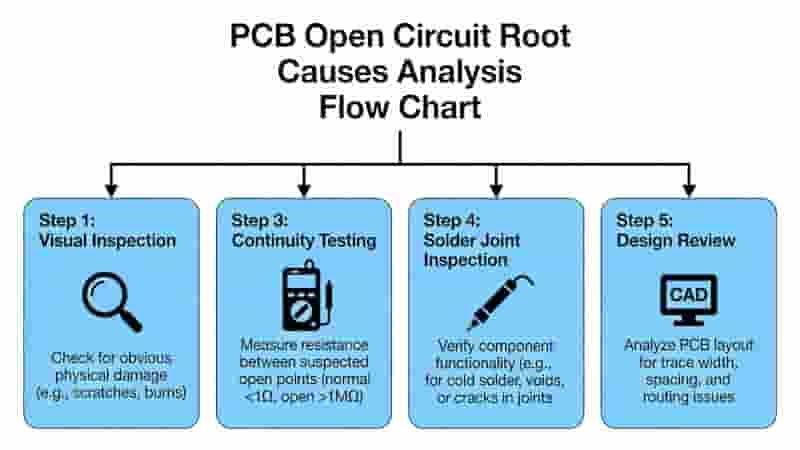
PCB Open Circuit Root Causes Material Process Human Equipment

How to Detect PCB Open Circuits

Early detection of PCB open circuit defects reduces rework and scrap costs.

  • AOI (Automated Optical Inspection): High‑speed visual scanning for gaps and thin traces
  • Flying Probe Test: Electrical continuity test for prototypes and low volume
  • X‑Ray Inspection: Detects hidden opens in inner layers of multilayer PCBs
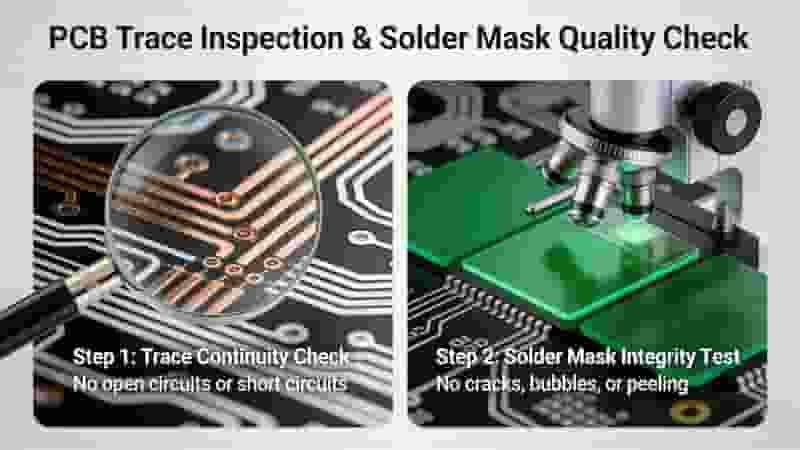
  • Manual Visual Inspection: Magnified check for obvious scratches and gaps
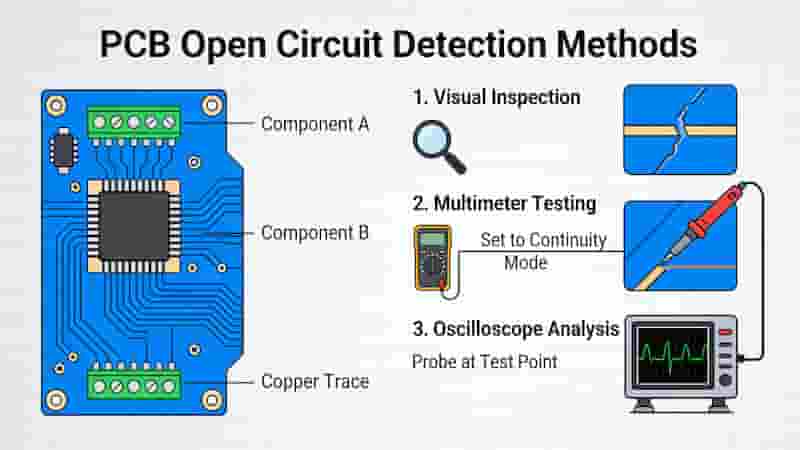
PCB Open Circuit Detection AOI Flying Probe X-Ray Visual Test

Proven Prevention & Solutions

Control PCB open circuit defects with these industry‑standard methods:

  1. Use high‑purity copper laminates and defect‑free phototools
  2. Calibrate exposure, development, and etching parameters daily
  3. Train operators on proper handling and ESD protection
  4. Maintain vacuum systems and equipment monthly
  5. Implement 100% AOI screening before electrical test
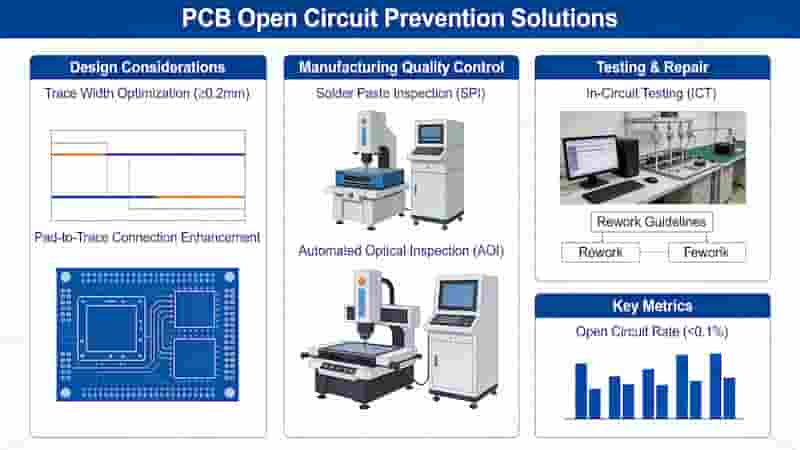
PCB Open Circuit Prevention and Quality Control Solutions

FAQ About PCB Open Circuits

Q: What is the most common cause of PCB open circuit?

A: Damaged exposure film, poor vacuum contact, and physical mishandling are the top three causes.

Q: Can PCB open circuits be repaired?

A: Minor surface opens can be repaired with conductive ink or jumper wires; inner layer opens usually require scrapping.

Q: How to reduce PCB open circuit in mass production?

A: Strict incoming material inspection, stable process control, AOI, and regular equipment maintenance.

Conclusion

PCB open circuit defects directly reduce yield, increase cost, and damage customer satisfaction. Understanding types, root causes, detection, and prevention allows manufacturers to stabilize quality and improve delivery reliability.

By implementing professional process control and inspection systems, you can minimize open‑circuit failures and produce high‑reliability PCBs for industrial, medical, automotive, and consumer electronics.

Get Reliable PCB Solutions for Your Project

Contact us for professional PCB manufacturing, quality control, defect prevention, and customized production solutions. We support global buyers with stable quality, on‑time delivery, and competitive pricing.

Inquire Now | Get Free Quote
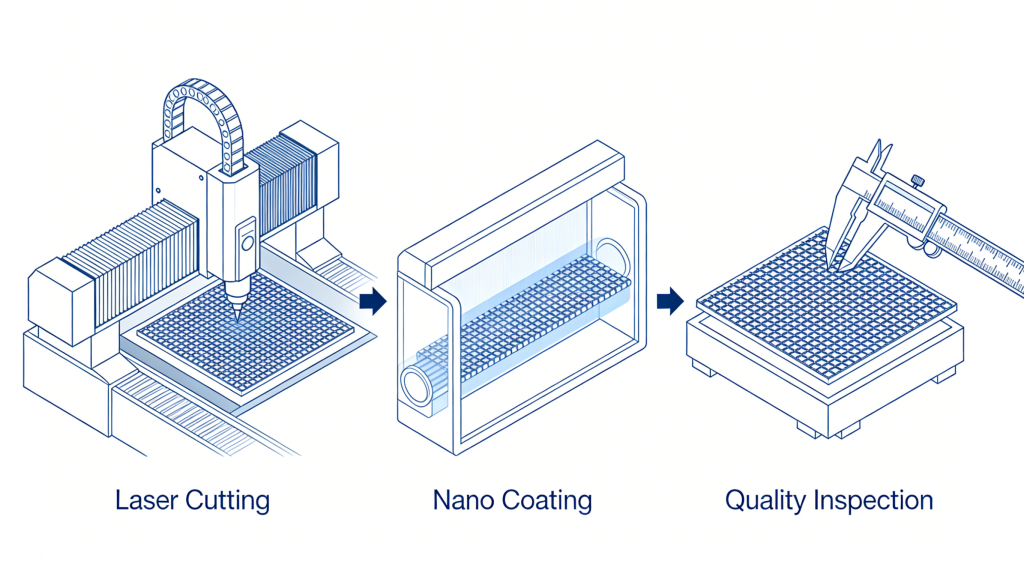
PCB assembly SMT production line

Reliable Fast PCB Manufacturer in China | High‑Quality Custom PCB Solutions

Posted on
0 Comments
We are a trusted PCB manufacturer in China specializing in fast‑turn prototyping, high‑precision fabrication, and full PCBA assembly for industrial buyers, engineers, and global importers. ISO, UL, IPC certified with 24‑hour rapid prototype service and stable bulk production capacity. PCB Manufacturing Capabilities We provide full‑featured PCB manufacturing to support industrial, medical, automotive, and communication applications….
SMT PCB Assembly Line and Automated Manufacturing Process

10 Essential Tips for Optimizing PCB Design for Manufacturing

Posted on
0 Comments
This expert guide delivers 10 actionable PCB design for manufacturing best practices to lower production cost, improve yield, speed up assembly, and ensure high‑reliability PCBs for industrial, automotive, and high‑tech applications. Introduction to PCB Design for Manufacturing PCB design for manufacturing (DFM) is a core engineering methodology that aligns PCB layout with real‑world production capabilities….
Rigid PCB Prototype FR-4 Industrial Circuit Board

Learn the Essential Requirements for PCB Prototype Manufacturing in 2025

Posted on
0 Comments
Summary: Master critical standards for PCB prototype manufacturing including file formats, design rules, layer stackup, and documentation. Optimize your prototyping workflow with expert best practices to achieve high-quality, cost-effective, and on-time PCB prototypes for industrial and engineering applications. Prototype PCB Fabrication PCB prototyping is a crucial step in the electronics design process, enabling designers to…
PCB Stencil Printing Tools and Materials

How to Use PCB Stencil: Professional Step-by-Step Guideline

Posted on
0 Comments
This professional guide explains PCB stencil usage for SMT assembly, including preparation, alignment, printing, inspection, cleaning, maintenance and best practices to ensure high-quality solder paste deposition for prototypes and mass production. What is PCB Stencil Stencils, also known as SMT stencil, are specialized molds for SMT assembly. Their primary function is to assist solder paste…
6Layer PCB Stack up

6 Layer PCB Board – Custom Stackup, Thickness & Competitive Price

Posted on
0 Comments
A 6 Layer PCB Board comprises three dielectric layers (insulating layers) and three conductive layers. The dielectric layers are usually made of fiberglass (a common material in PCB manufacturing) or other high-performance insulating materials, which provide electrical insulation between layers. Meanwhile, the conductive layers are typically composed of copper foil—with common thicknesses ranging from 0.5oz…
Custom PCB Cost Overview 2025 Key Factors

Key Factors Influencing Custom PCB Costs in 2025

Posted on
0 Comments
Discover what drives custom PCB costs in 2025, from material choices and layer counts to board size and production volume. Compare area-based pricing for prototypes with detailed cost calculations for bulk orders. Unlock cost-saving strategies to balance quality and budget for your industrial & electronics projects. Introduction In 2025, custom PCBs continue to be the…

Similar Posts