SMT stencils are critical for precise solder paste deposition in PCB assembly. This complete guide covers types, materials, selection tips, and pro techniques to improve yield and reliability for engineers and global buyers.
What Is an SMT Stencil?
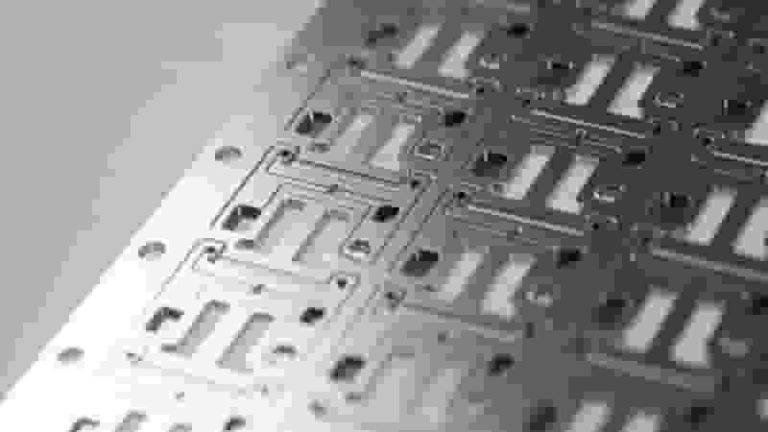
An SMT stencil is a thin precision metal sheet (usually stainless steel) with laser‑defined apertures that control solder paste volume onto PCB pads. It ensures uniform, repeatable deposition to avoid bridging, insufficient solder, or voids in mass production and prototyping.
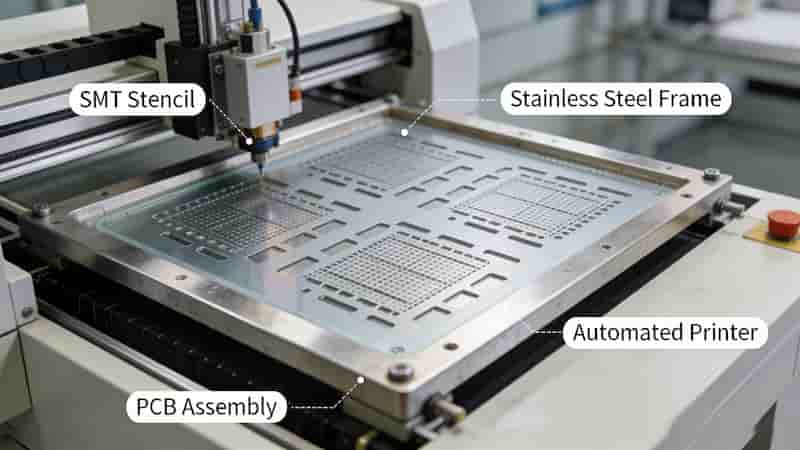
Without high‑quality SMT stencils, even advanced PCB assembly lines suffer high defect rates, rework costs, and delayed delivery. The stencil directly determines assembly yield and long‑term product reliability.
Types of SMT Stencils
Framed SMT Stencils
Framed SMT stencils feature a tensioned foil fixed in a rigid aluminum frame. They deliver stable printing for automated lines and high‑volume PCB assembly.
Best for: Mass production, high‑mix runs, fine‑pitch PCBs.
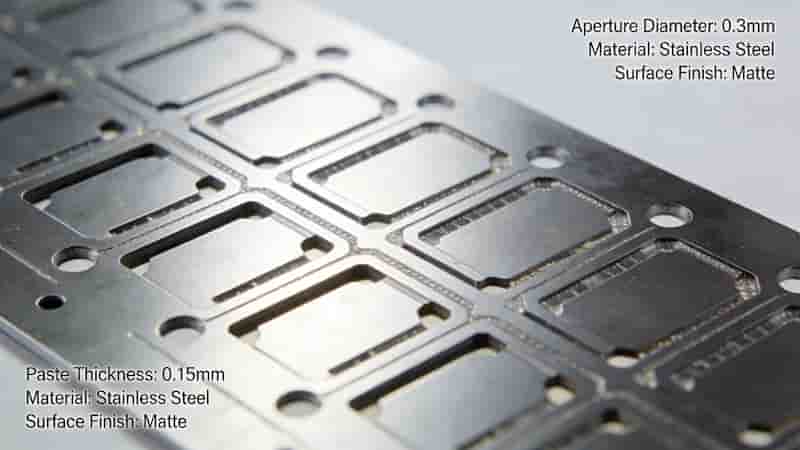
Frameless SMT Stencils
Frameless stencils are foil‑only designs used with a reusable tension frame. They lower cost and storage space for prototyping and small batches.
Best for: Prototypes, R&D, low‑volume orders.
Laser‑Cut Stencils
The most widely used type. Laser cutting delivers clean apertures, tight tolerances, and strong consistency for most PCB assembly scenarios.
Step (Ladder) Stencils
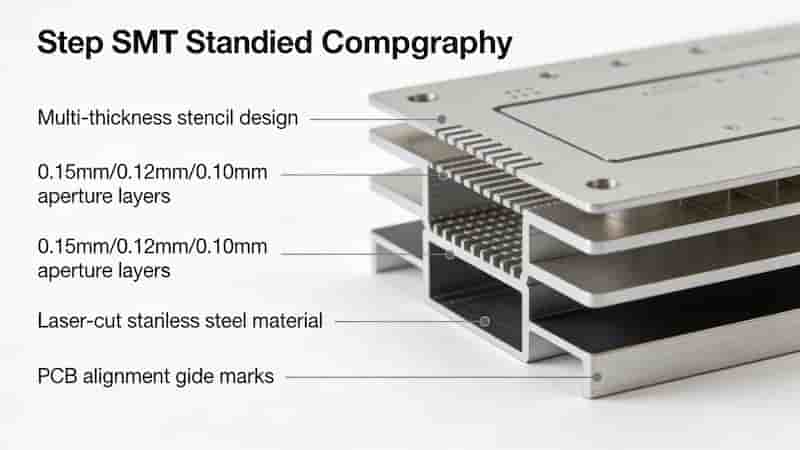
Step stencils have variable thickness zones to apply different paste volumes for mixed components on a single PCB.
Nano‑Coated Stencils
Nano‑coated SMT stencils repel solder paste, reduce clogging, and improve release for high‑density, fine‑pitch PCB assembly.
Electroformed & Electropolished Stencils
Electroformed stencils offer trapezoidal apertures for superior paste release. Electropolished versions have ultra‑smooth walls for high‑precision applications.
SMT Stencil Type Comparison
| Stencil Type | Best For | Advantages |
|---|---|---|
| Framed | Mass production | Stable, durable, high consistency |
| Frameless | Prototyping | Low cost, easy storage |
| Laser‑Cut | General PCB assembly | Precise, cost‑efficient |
| Step | Mixed‑component PCBs | Multi‑thickness control |
| Nano‑Coated | Fine‑pitch HDI | Anti‑clog, clean release |
How to Select the Right SMT Stencils
Choose SMT stencils based on production volume, PCB density, component pitch, budget, and assembly method:
- Production scale: framed for mass, frameless for prototypes
- Component pitch: nano‑coated or electroformed for 01005, 0201, μBGA
- Board type: step stencils for multi‑height components
- Material: stainless steel for durability and precision
- Surface treatment: electropolish for high‑yield PCB assembly
Usage & Maintenance Best Practices
Proper use and cleaning extend SMT stencils life and maintain print quality:
- Use correct stencil thickness (3–6 mil for most SMT)
- Follow IPC‑7525 aperture design rules
- Clean after each run with alcohol or stencil wipes
- Store flat to avoid tension loss or warping
- Inspect apertures regularly for wear or blockage
Conclusion
SMT stencils are foundational to high‑quality, high‑yield PCB assembly. Selecting the right type, material, and finish directly reduces defects, lowers costs, and speeds up delivery. Whether for prototyping or mass production, premium stencils deliver consistent results for global electronics manufacturing.
We provide custom SMT stencils designed for your specific PCB assembly needs, with fast lead times and professional technical support.
Need Custom SMT Stencils for Your PCB Projects?
Get a free quote, technical consultation, or custom stencil design for your PCB assembly line. We support global importers, contract manufacturers, and engineering teams worldwide.