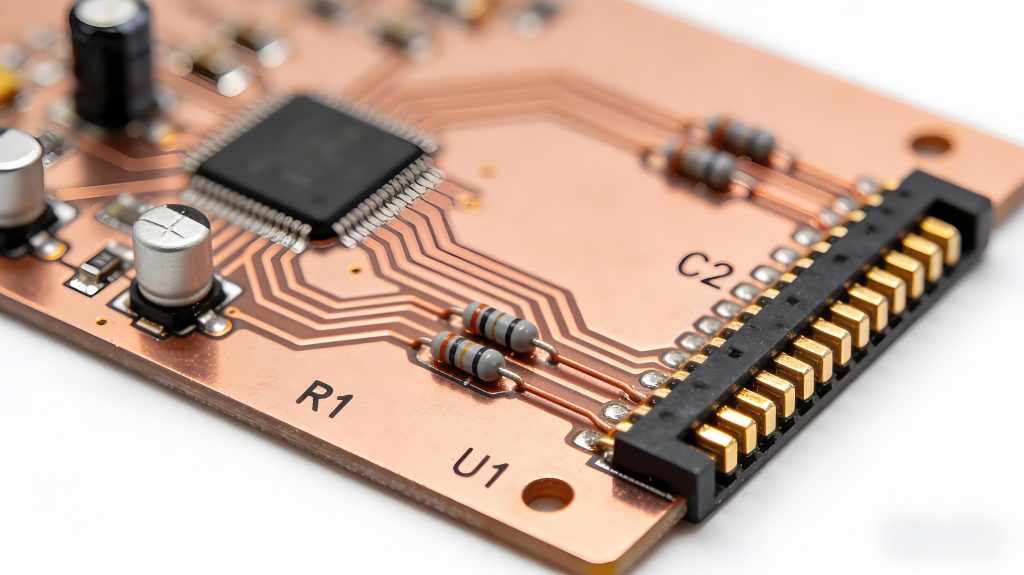
This guide details all essential PCB & PCBA manufacturing files, including Gerber files, BOM lists, NC Drill files, Centroid files, and other critical documents. It provides professional standards, format requirements, and technical parameters to ensure accurate quotes, error-free production, and reliable PCB assembly for global industrial buyers, engineers, and procurement teams.
1. Core Files for PCB Manufacturing
Professional PCB fabrication requires complete, standardized files to avoid production errors and ensure design consistency. The mandatory files include:
- Gerber Files (RS-274X / Gerber X2) – Industry standard for layer imaging
- NC Drill File (Excellon Format) – Defines hole positions and sizes
- .BRD / .PCB / .PCBDOC Files – Native design source files
- Stack-Up & Impedance Control Documents – For high-speed boards
2. Gerber Files: Standards & Versions
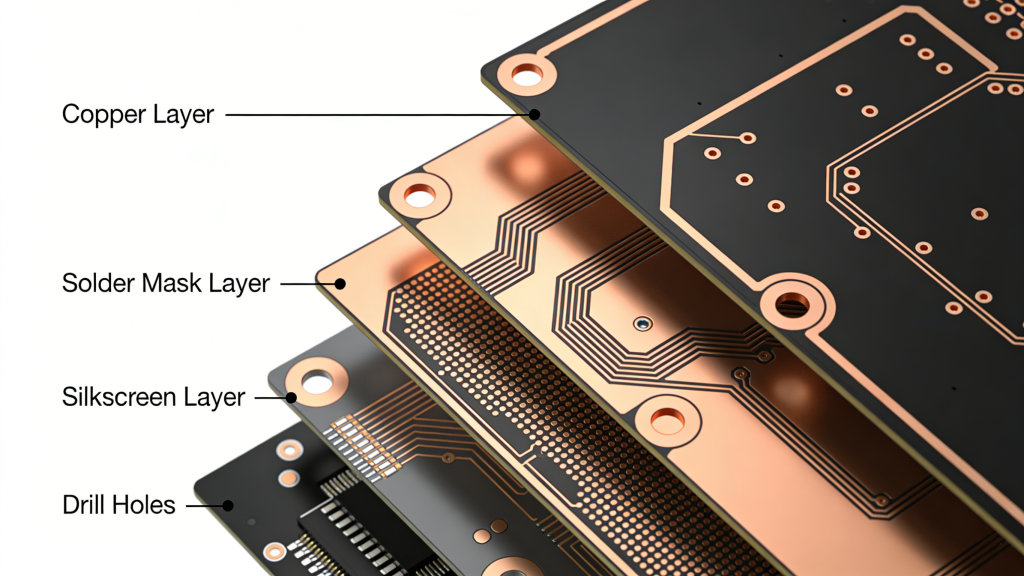
Gerber is the global de facto standard for PCB image description. It defines copper layers, solder mask, silkscreen, and paste mask.
Gerber Format Versions
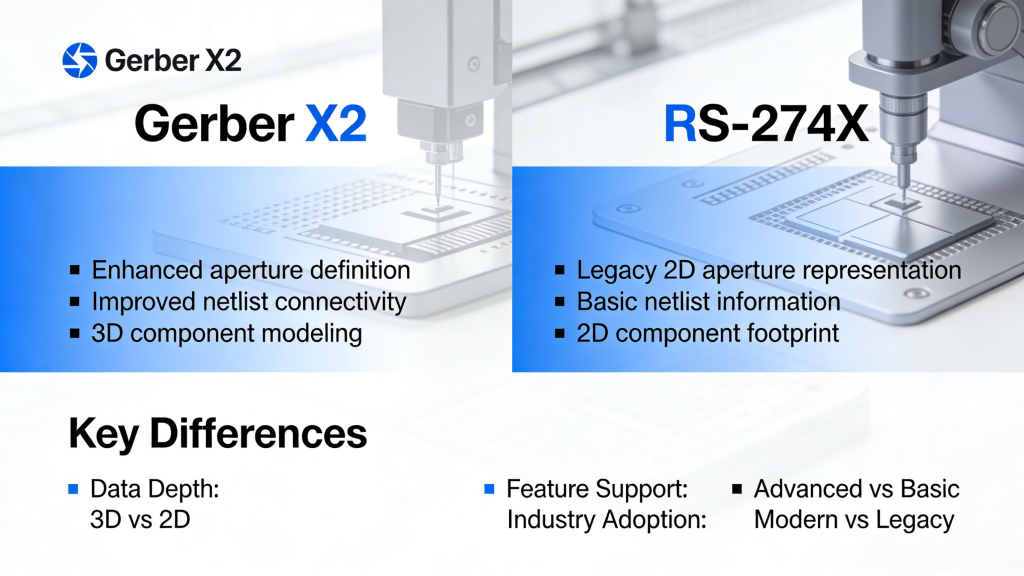
- Gerber X2 – Latest version with integrated attribute data
- RS-274X (Extended Gerber) – Most widely used industry format
- RS-274D (Standard Gerber) – Obsolete, not recommended
Each layer requires one Gerber file. A typical 2-layer PCB needs 6 Gerber files: top/bottom copper, top/bottom solder mask, top/bottom silkscreen.
NC Drill File (Excellon Format)
The NC Drill file provides precise drilling coordinates, hole sizes, and tool numbers. It must match Gerber layer data to avoid misalignment in PCB production.
3. Required Files for PCBA Assembly
Reliable PCBA assembly depends on complete, accurate files for SMT placement, component sourcing, and quality control.
Bill of Materials (BOM)
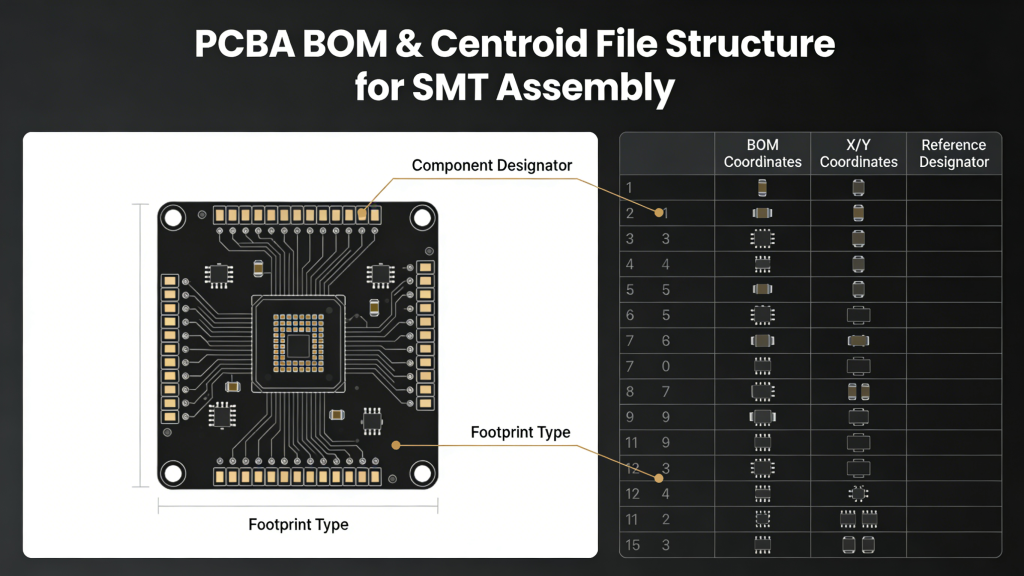
A complete BOM includes: reference designators, quantity, description, manufacturer part number (MPN), package, and tolerance.
Centroid File (Pick & Place / XY Data)
This file defines X/Y coordinates, rotation, and layer (top/bottom) for each SMT component, enabling automated SMT assembly.
Additional PCBA Documents
- Assembly Drawing (component polarity & placement)
- Test Guide & Fixture Information
- IC Programming Files (if required)
4. Inspection & Test Documents
Quality assurance files ensure PCB and PCBA meet IPC standards and customer specifications.
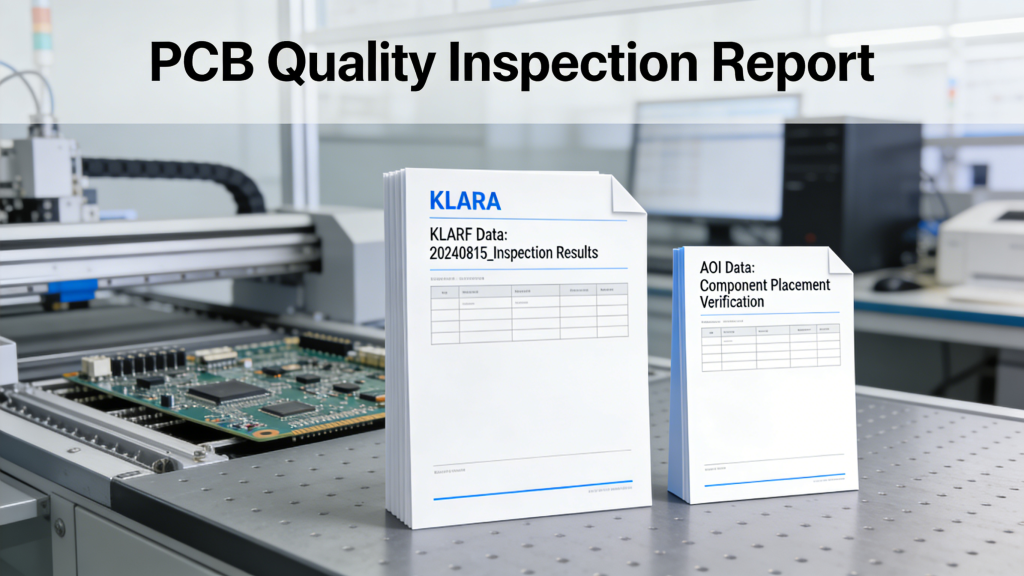
- KLARF File – AOI inspection results
- Test Report – Flying probe or functional test
- X-Ray Inspection Report – For BGA/QFN components
5. File Specification Comparison Table
| File Type | Purpose | Required Format | Usage Stage |
|---|---|---|---|
| Gerber | Layer imaging | RS-274X / X2 | PCB Fabrication |
| NC Drill | Hole drilling | Excellon | PCB Fabrication |
| BOM | Component list | Excel / CSV | PCBA Assembly |
| Centroid | SMT placement | XY Data / TXT | PCBA Assembly |
| KLARF | AOI inspection | Standard KLARF | Quality Test |
6. Conclusion
Complete and standardized PCB & PCBA manufacturing files are critical for accurate quoting, fast prototyping, consistent mass production, and high-quality assembly. Using Gerber RS-274X, proper BOM, Centroid files, and NC Drill files ensures zero rework and on-time delivery for global projects.
We support all standard PCB and PCBA file formats and provide DFM analysis to optimize your design for manufacturability.
Ready for Your PCB & PCBA Project?
Submit your PCB & PCBA manufacturing files for a free DFM check and instant quote.
Request a Quote Now
Ultimate Guide to PCB Materials, Dielectric Strength, and Testing in 2025
How to Solder On Flex PCB? Complete Professional Guide
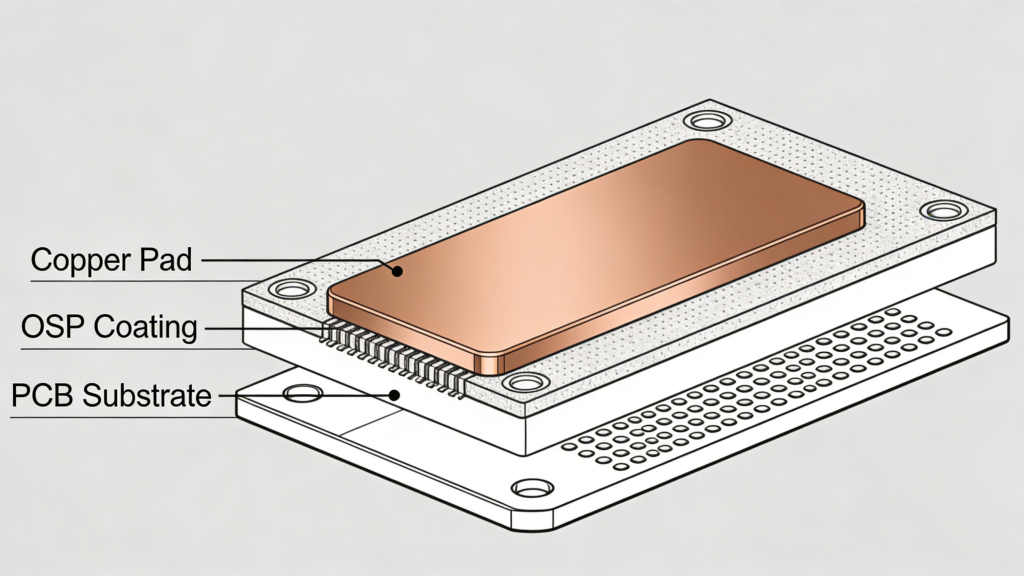
PCB OSP Surface Finish: Complete Technical Guide for Buyers & Engineers
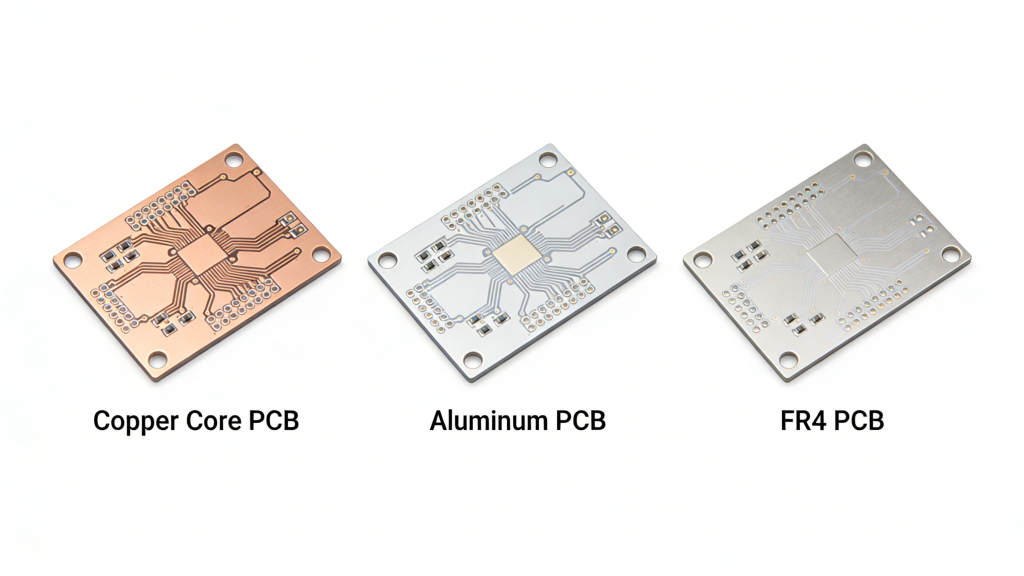
What is Copper Core PCB? Comprehensive Overview, Advantages & Industry Insights