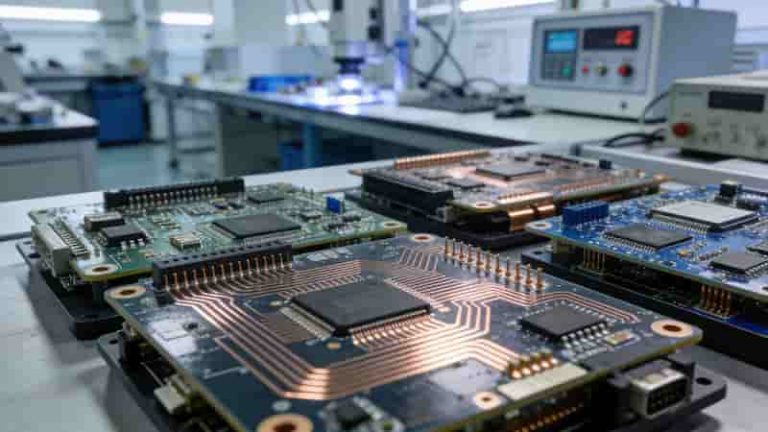
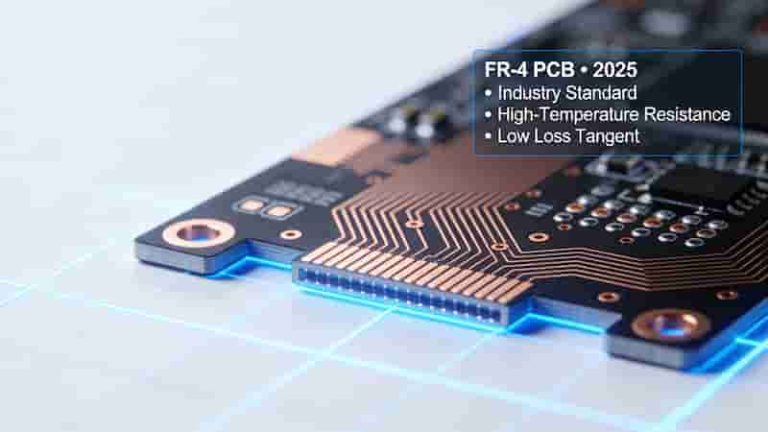
FR-4 remains the most trusted, cost-effective, and versatile PCB substrate for global industrial, automotive, consumer, and medical electronics. This guide explains key electrical, mechanical, thermal, and economic reasons to select FR-4 PCB for your 2025 projects.
What is FR-4 PCB Material?
FR-4 (Flame Retardant 4) is a fiberglass-reinforced epoxy laminate, the global standard for printed circuit boards. It combines high mechanical strength, stable electrical insulation, and flame resistance, making it the first choice for 80%+ of all PCB applications.
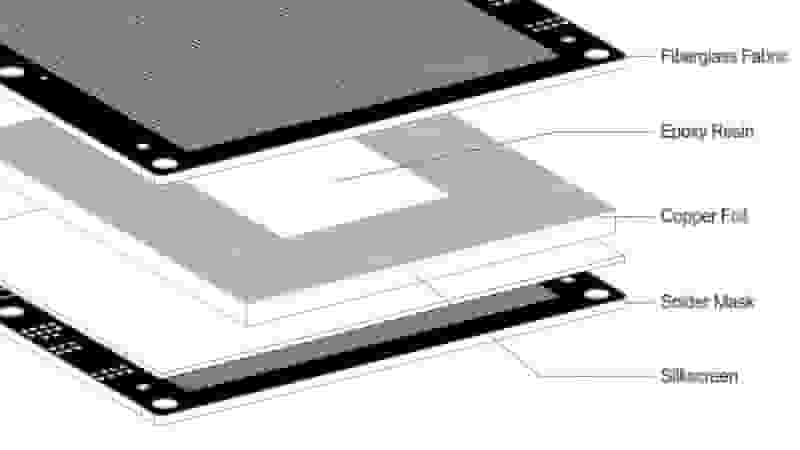
Composition & Structure
FR-4 is built from woven fiberglass cloth impregnated with flame-retardant epoxy resin. This structure delivers:
- Tensile strength: 20,000-30,000 PSI
- UL94 V-0 flammability rating (self-extinguishing)
- Low water absorption: <0.15%
FR-4 Grades for 2025
- Standard FR-4: Tg 130-140°C, general-purpose
- High-Tg FR-4: Tg 170-180°C, automotive & industrial
- Halogen-Free FR-4: RoHS compliant, eco-friendly designs
Key Properties of FR-4 PCB Material
The performance of FR-4 PCB makes it irreplaceable for most electronic designs:
- Electrical Insulation: Dk ~4.5, Df ~0.02, ideal for signal integrity
- Thermal Stability: Withstands reflow soldering up to 250°C
- Mechanical Strength: Resists vibration, bending, and physical stress
- Flame Resistance: UL94 V-0 certified for safety
- Moisture Resistance: Stable in humid and outdoor environments
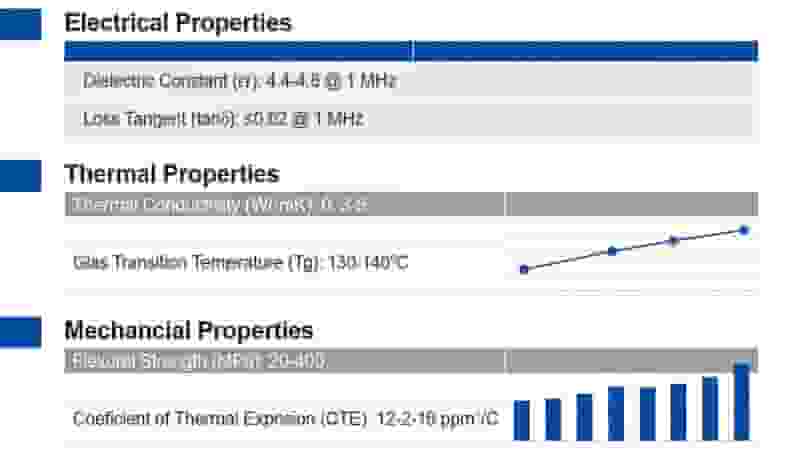
| Property | Value / Range | Benefit |
|---|---|---|
| Tensile Strength | 20,000-30,000 PSI | Durable for multilayer FR-4 PCB |
| Dielectric Constant (Dk) | ~4.5 at 1 MHz | Stable signal transmission |
| Tg Temperature | 130-180°C | Withstands lead-free soldering |
| Water Absorption | <0.15% | Reliable in humid environments |
| Flame Rating | UL94 V-0 | Safe for industrial & medical use |
Core Benefits of FR-4 PCBs in 2025
1. Cost-Effectiveness
FR-4 costs 3-5x less than high-frequency materials (Rogers, PTFE), making it ideal for mass production and cost-sensitive projects.
2. Versatility
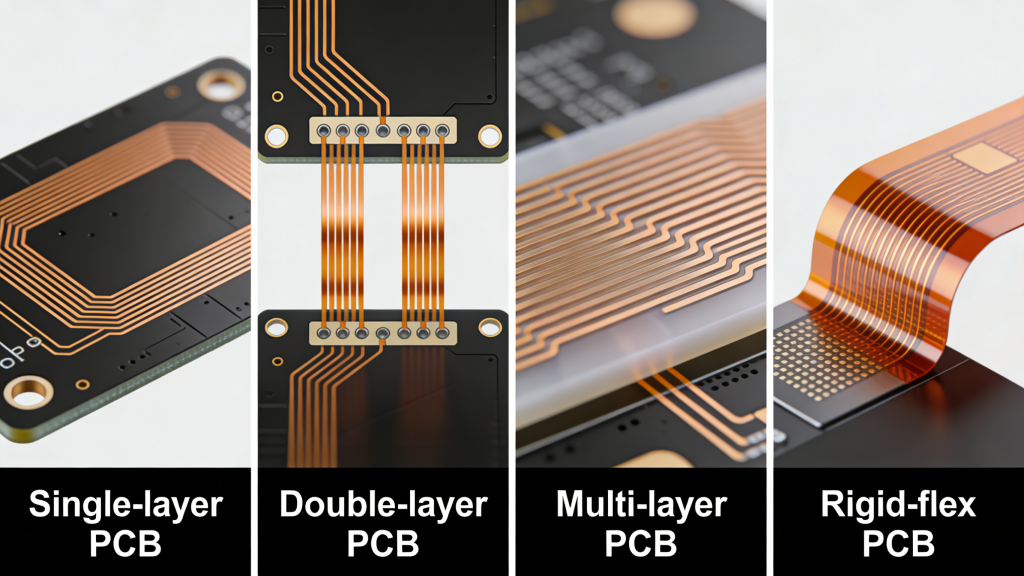
Supports single-sided, double-sided, and multilayer FR-4 PCB up to 30+ layers for 5G, IoT, automotive, and industrial devices.
3. Processability
Easy to drill, etch, laminate, and assemble, reducing lead times and manufacturing costs.
4. Long-Term Reliability
Proven performance in harsh environments: vibration, humidity, temperature cycling, and thermal shock.
FR-4 vs Other PCB Materials
| Material | Relative Cost | Best For |
|---|---|---|
| FR-4 | 1.0 | General FR-4 PCB, automotive, industrial, consumer |
| CEM-1 / CEM-3 | 0.8-0.9 | Low-cost simple PCBs |
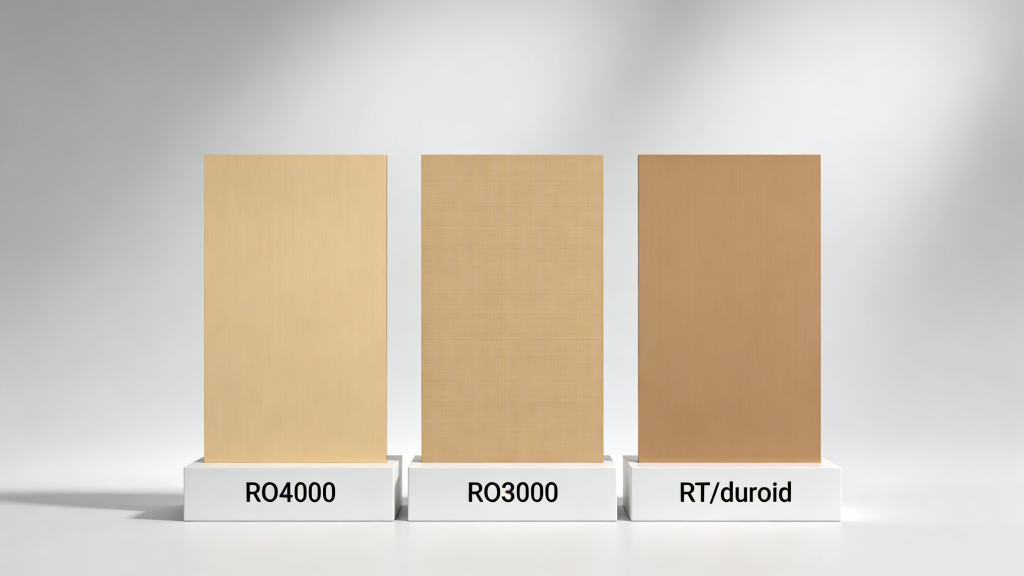
| Rogers | 3-5x | High-frequency RF / 5G |
| PTFE | 5-7x | Extreme high frequency / aerospace |
For most 2025 applications, FR-4 PCB delivers the best balance of performance and cost.
Top Applications of FR-4 PCBs
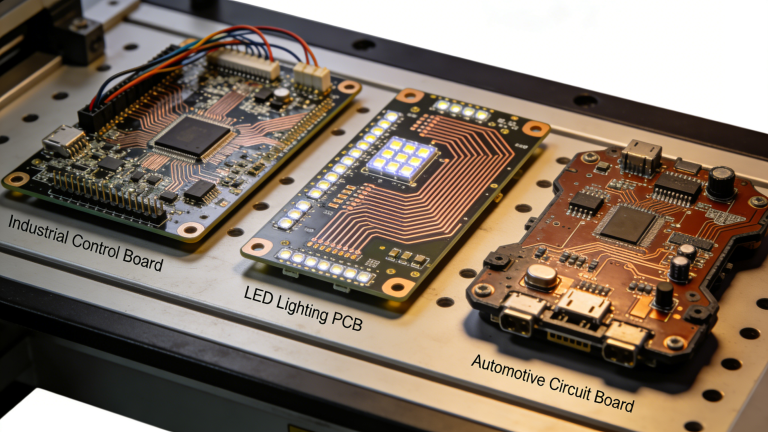
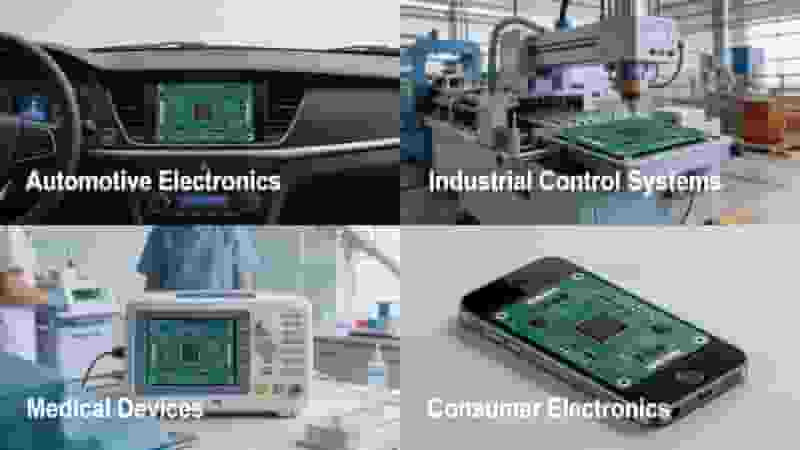
- Consumer Electronics: Smartphones, laptops, TVs, routers
- Automotive & EV: ECUs, BMS, infotainment, ADAS
- Industrial Automation: PLCs, sensors, control systems
- Medical Devices: Diagnostics, monitors, portable equipment
- IoT & 5G: Sensors, modules, base station hardware
- Marine & Outdoor: GPS, communication, weather devices
How to Choose the Right FR-4 for Your Project
Thickness Selection
- 0.2-0.8 mm: Compact IoT, wearables, HDI FR-4 PCB
- 1.0-1.6 mm: Standard consumer & industrial designs
- 2.0-3.2 mm: High-power industrial & automotive
Tg Grade Selection
- Standard Tg: General-purpose products
- High Tg: EV, automotive, high-temperature industrial
- Halogen-Free: RoHS / green electronics
When to Avoid FR-4
Above 1 GHz high-frequency RF, extreme temperature >180°C, or aerospace-grade requirements.
2025 Trends: FR-4 PCB Evolution
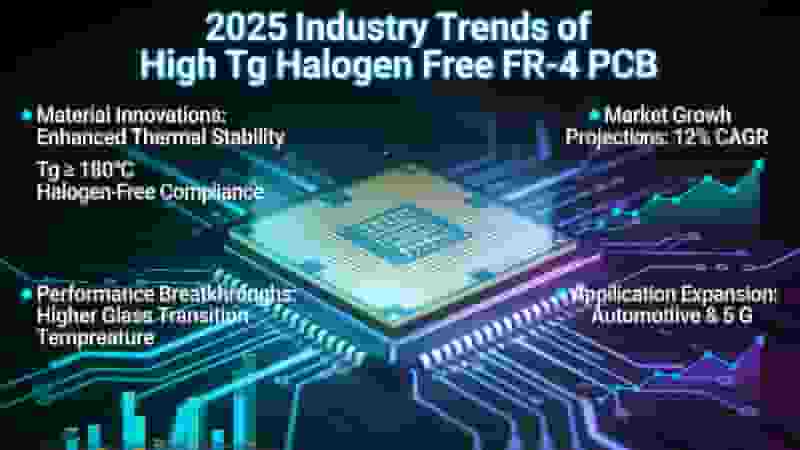
- High-Tg & Halogen-Free FR-4 becomes standard for EV and green electronics
- Thin-core FR-4 for miniaturized IoT and wearable devices
- Multilayer FR-4 PCB for 5G infrastructure and data centers
- Improved dielectric performance for near-high-frequency use cases
Conclusion: Why FR-4 Leads in 2025
FR-4 remains the best choice for over 80% of PCB applications because it balances performance, reliability, manufacturability, and cost better than any alternative. With high-Tg, halogen-free, and thin-core advancements, FR-4 PCB will continue dominating 5G, IoT, automotive, industrial, and medical electronics through 2025 and beyond.
Need Custom FR-4 PCBs for Your Project?
Get professional FR-4 PCB manufacturing, prototyping, and assembly for 5G, IoT, EV, industrial, and medical applications.
We provide full custom FR-4 PCB solutions with ISO 9001 quality, fast lead times, and global delivery.
Fast Turnaround PCB Prototype Services from Certified Manufacturer
Flexible PCB Manufacturing Process Steps: Complete Technical Guide
Ball Grid Array (BGA) PCB Manufacturing & Assembly Services
Transform Ideas into Reality with High-Quality Flex PCB Prototyping
Flexible PCB Stiffeners: Materials, Benefits & Industrial Uses