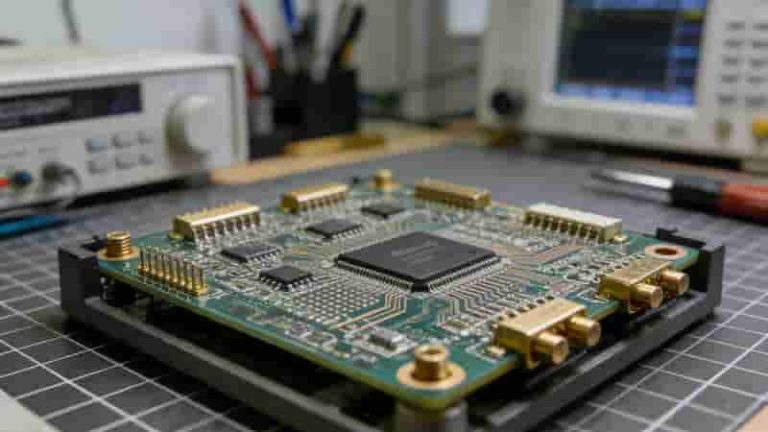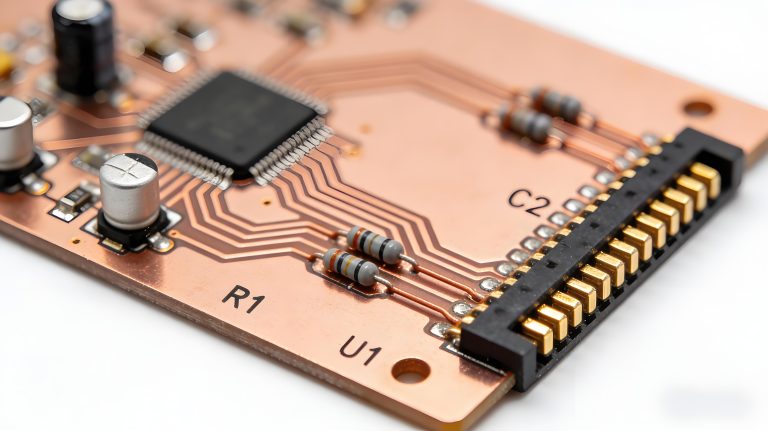
Today, almost all electronic devices use PCBs (PrintedChoosing the right PCB materials is critical for your device performance. This PCB Materials Guide covers FR-4, PTFE, metal substrates, and selection principles. Learn how to pick the correct PCB substrate for high-temperature, high-frequency, or heat-dissipating applications – with a brand comparison table and FAQs.
High-quality PCB materials give PCBs 3 key benefits:
- Shrink device size (complex circuits fit on small boards)
- Make it easy to place tiny components
- Hold components steady + enable electrical conductivity
Your project’s performance depends on the PCB substrate you select:
Your project’s performance depends on your PCB material. Cheap PCBs often fail to deliver accurate results.
To avoid project risks, follow 3 simple steps:
- Clear your project needs (e.g., temperature resistance, usage)
- Talk with your PCB manufacturer
- Learn basic traits of different PCB materials to choose the right substrate
What is PCB Material?
A PCB (Printed Circuit Board) is a physical board that creates conductive paths to connect electronic components. It’s a must-have for all electronic devices—serving as the core carrier to make software functions work.
Different devices need different PCBs: varying circuit designs, components, and most importantly, PCB materials.
PCB materials mainly include insulating layers, which act as the base to hold electronic components. To make a high-quality PCB, choosing the right material is key—since PCB material directly decides the board’s performance and quality.
The Classification of PCB Materials
General PCB materials fall into two main categories: rigid substrate materials and flexible substrate materials.
a) Rigid Printed Circuit Board (Rigid PCB / RPCB)
The core material for Rigid PCBs is Copper-Clad Laminate (CCL), made from reinforcing materials. Its production steps are simple:
- Dry the raw material, then cut it to the required size.
- Laminate the pieces into blanks (pure insulator, no conductive paths yet).
- Add a copper foil on top, then press with high temperature and pressure to form.
Key details:
- Copper foil: Uses pure copper (good conductivity & weldability), common thickness 35-50μm.
- CCL thickness: 1.0mm, 1.5mm, 2.0mm (most used).
b) Common Flexible PCB Materials
Flat Rigid PCBs can’t fit all devices (many have irregular shapes). That’s where Flexible PCBs come in—they’re in high demand for their key advantage: easy folding and bending (no impact on conductivity, current flows smoothly).
Common flexible PCB materials are Flexible Copper-Clad Laminate (FCCL), including:
- Polyester film
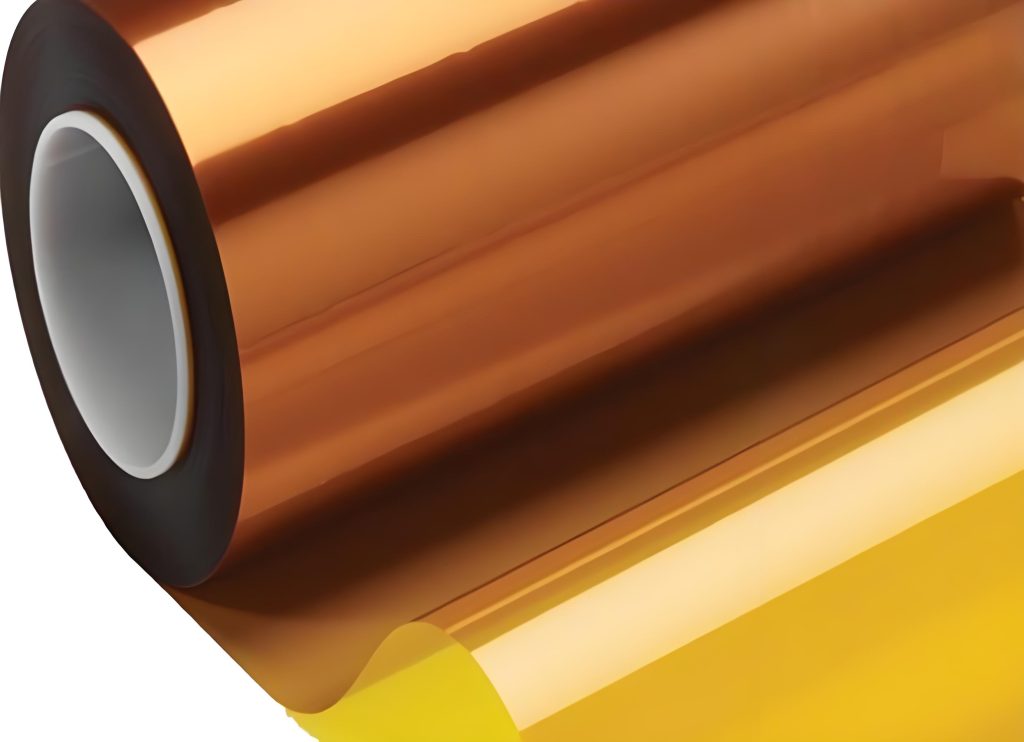
- Polyimide film
- Fluorinated ethylene propylene film
Types of Materials Used for PCB Manufacturing
Three main materials are used in PCB fabrication, each with unique uses:
1. FR-4
The most common PCB material—a glass-reinforced epoxy laminate sheet.
Key benefits:
- Flame-retardant and water-resistant
- Excellent strength-to-weight ratio
- High tensile strength
Related: Why choose FR4 for PCBs? / FR4 for high Tg PCBs? / What is FR-4 in PCB fabrication?
2. PTFE (Teflon)
A plastic material with no electrical resistance, ideal for high-speed, high-frequency applications.
Key benefits:
- Exceptionally flexible (suits tight tolerances)
- Extremely lightweight (works across industries)
- Flame-resistant, high physical strength, and temperature-stable
3. Metal
Traditional metals like copper, aluminum, and iron are still widely used.
Key benefits:
- Supports Surface Mount Technology (SMT) for component integration
- High mechanical durability (extends PCB lifespan)
Common metal-based PCBs: Copper-clad PCB, aluminum PCB, LED PCB, metal-core PCB
All PCB materials have pros and cons. Choose based on:
- Your application needs
- Desired performance results
- Environmental factors
- Other project constraints
Principles of Selecting PCB Substrate
Choosing the right PCB substrate becomes easy once you know your project’s purpose and use environment. Follow these 4 simple principles:
1. For general electronic products
If your PCB is for standard electronics (normal temperature, regular frequency), FR-4 is ideal.
- It’s cost-effective and meets most basic needs.
2. For high-temperature environments
If the PCB will work in high-temperature conditions, pick a high-temperature resistant substrate (e.g., High-Tg PCB).
Learn more: Unveil the mystery of high TG PCB circuit boards Materials
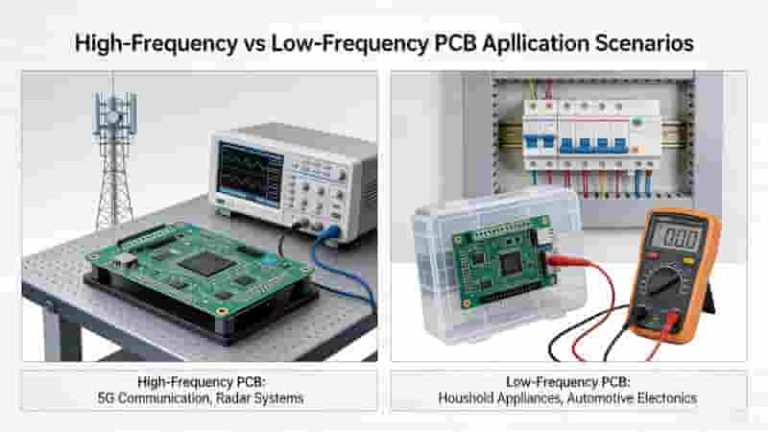
3. For high-frequency circuits
If your circuit has high-frequency components, use PTFE glass fiber substrates.
- They’re designed to handle high-frequency signals reliably.
4. For heat-dissipating components
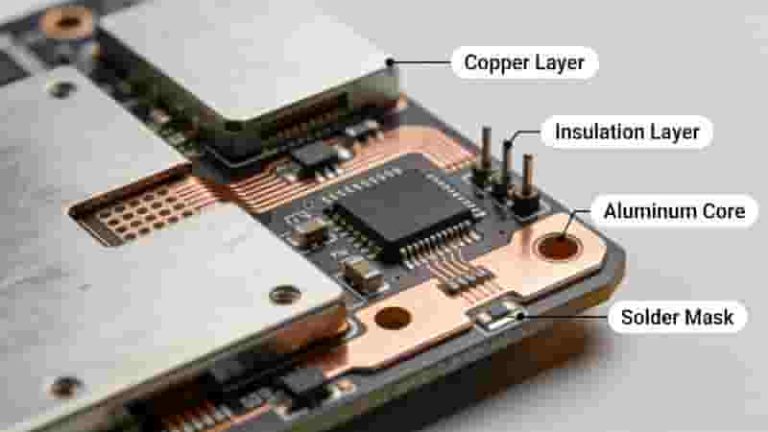
If your circuit has parts that generate lots of heat (risk of bending regular PCBs), choose metal substrates.
- They efficiently dissipate heat to protect the PCB.
Factors to Consider When Selecting PCB Materials
To pick the right PCB material, focus on these 7 key factors. You can also discuss them with your PCB manufacturer for better alignment:
a) Glass Transition Temperature (Tg)
- Choose a substrate with high Tg (higher than the circuit’s operating temperature).
- Why: Prevents melting or bending during use, and improves heat dissipation.
b) Coefficient of Thermal Expansion (CTE)
- Prioritize materials with low CTE.
- Why: High CTE causes the PCB to expand (length/width/thickness) with temperature, risking damage to the board and components.
c) Heat Resistance
- General requirement: 250℃ for 50 seconds.
- Tip: If you need higher resistance, confirm with your manufacturer.
d) Flatness
- Standard: Warpage must be less than 0.0075mm/mm.
- Why: Ensures stable component placement and performance.
e) Dielectric Constant & Losses
- Look for: Excellent dielectric constant (for good insulation) + low dielectric losses (to save energy).
f) Degree of Bending
- Choose materials with low bending tendency (e.g., FR-4).
- Critical for large PCBs (over 3.2×1.6mm) – avoid warpage, cracks, or scratches.
g) Cost Factor
- Balance features and budget: Don’t pay for unnecessary functions (e.g., filling/buried vias, ultra-narrow spacing).
- These add cost (require special machinery) – only select what your project needs.
Learn more: What factors determine the price of PCB?
The Metal Heat Dissipation Substrate
Metal heat dissipation substrates mainly include two types: aluminum substrates and copper substrates. As a professional PCB manufacturer, we recommend the cost-effective aluminum substrate for most cases.
Key Comparison: Aluminum vs. Copper Substrates
| Aspect | Aluminum Substrate | Copper Substrate |
|---|---|---|
| Thermal Conductivity | Good | Better |
| Cost | Lower (budget-friendly) | Much higher |
| Weight | Lighter | Heavier |
For most projects, aluminum substrates strike the best balance—they meet heat dissipation needs without the high cost or weight of copper.
Practical Tip for High-Power Lamps
Many PCB manufacturers use a temperature control method for high-power lamp applications:
- Add a temperature control switch at the aluminum substrate’s potential hot spot.
- Set a threshold (e.g., ~65°C).
- When the temperature exceeds 65°C, the current drops automatically.
This keeps the substrate safe—while the light may dim slightly, it’s barely noticeable, making the method highly feasible.
PCB Material Brands & Types Classification Table
Below is a comprehensive reference table of mainstream PCB material brands and material types, helping you quickly identify suitable options for your project.
| Category | Name | Key Features | Typical Applications |
|---|---|---|---|
| Top 5 Global PCB Material Brands | Isola | High thermal stability, excellent dielectric properties | High-reliability electronics (automotive, industrial control) |
| Rogers | Specialized in high-frequency materials, low signal loss | RF/microwave devices, 5G equipment, aerospace electronics | |
| Panasonic | Consistent quality, wide material range | Consumer electronics, medical devices, automotive PCBs | |
| DuPont | Advanced polymer materials, strong heat resistance | High-performance PCBs, flexible circuits | |
| Arlon | High-frequency & high-temperature substrates | Telecom equipment, industrial sensors | |
| Other Reliable Global Brands | Bergquist | Thermal management materials, good heat dissipation | LED lighting, power supplies |
| Kingboard | Cost-effective FR-4 series, large production scale | General consumer electronics, basic industrial PCBs | |
| Shengyi | High-quality FR-4, localized supply chain (Asia-focused) | Automotive electronics, home appliances | |
| Taconic | High-frequency PTFE materials, low dielectric loss | Wireless communication devices, radar systems | |
| Ventec | Environmentally friendly materials, RoHS compliant | Green electronics, consumer & industrial PCBs | |
| Regional Specialized Brands | Chin-Shi | Customizable substrate solutions, flexible MOQs | Small-batch industrial PCBs, specialized electronics |
| EMC | Focus on rigid-flex PCB materials, good bending resistance | Wearable devices, compact electronic products | |
| Flame-Retardant (FR) Materials | FR-4 | Most common, good balance of cost & performance | 80% of general PCBs (computers, smartphones, home appliances) |
| FR-5 | Higher Tg (≥170℃), better heat resistance than FR-4 | High-temperature environments (automotive engine compartments, industrial controllers) | |
| FR-1/FR-2/FR-3 | Low cost, basic performance | Simple electronics (toys, low-power adapters) | |
| Composite Epoxy (CEM) Materials | CEM-1 | Paper-based core, epoxy resin, low cost | Basic consumer electronics (remote controls, simple sensors) |
| CEM-3 | Glass fiber core, better mechanical strength than CEM-1 | Industrial control panels, medium-power supplies | |
| High-Performance Special Materials | PTFE (Teflon) | Ultra-low dielectric constant, high frequency resistance | High-frequency devices (satellite communication, 5G base stations) |
| Polyimide (Kapton) | Extreme temperature resistance (-269℃ to 400℃), flexible | Aerospace electronics, high-temperature sensors, flexible PCBs | |
| Rogers 4000 Series | High thermal conductivity, low signal loss | RF antennas, microwave modules | |
| Duroid | High-frequency stability, low dielectric loss | Precision communication equipment, test instruments |


Is FR-4 a Kind of Circuit Board Material?
No—FR-4 is not a specific material name, but a flammability grade designation.
This grade indicates the material has self-extinguishing properties (it stops burning on its own when the ignition source is removed). You’ll find FR-4-grade materials used in many circuit boards, making them widely common in PCB manufacturing.
While FR-4-grade materials typically have useful traits like high-temperature resistance, insulation, and flame retardancy, remember:
- The grade defines fire safety performance, not all material properties.
- When choosing PCB materials, focus on your project’s specific needs (e.g., heat resistance, conductivity) first—then confirm if the material meets the FR-4 grade standard.
The Most Important Point to Choose PCB Substrate: Quality First
Everyone wants great service at a low price—but when choosing a PCB substrate, quality always comes first.
Your goal should be a substrate that balances high quality and reasonable cost, not just the cheapest option. Whether your PCB is for home appliances, consumer electronics, or industrial equipment, quality directly impacts performance.
No matter the budget, the substrate must maintain reliable performance throughout its entire service life. Cutting corners on quality often leads to project delays, repairs, or failures—costing more in the long run.
What Kinds of PCB Materials Can We Provide?
We have a well-established PCB material supply chain based in Shenzhen, China, with a continuously optimized supplier management system.
Our PCB material procurement follows strict standards, and we implement comprehensive quality control measures to ensure top-tier quality for all customized PCB products.
As a provider of one-stop PCB manufacturing and assembly services for global clients, we can handle a wide range of popular, widely used laminate and substrate materials—including FR-4, Rogers, and more.
If your project requires special PCB materials, simply share your needs with us. For more details about our services, feel free to contact us—we also offer instant quotations.