What is a Blank PCB? A Complete Guide to Bare Circuit Boards
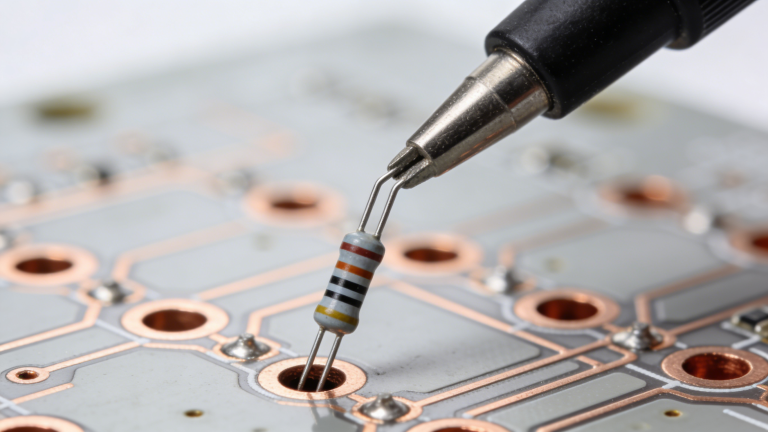
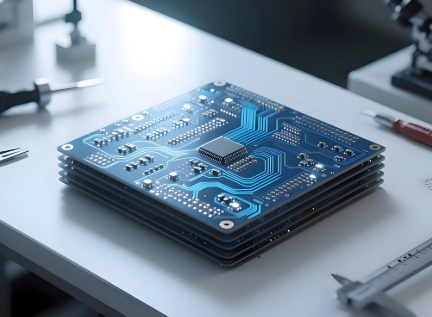
A blank PCB (also called a bare PCB) is simply the base of an electronic circuit board—it has no electronic parts (like resistors or chips) soldered on it yet.
For anyone new to electronics, think of it as a “blank canvas”: you can add the exact parts you need later to build your project. We make blank PCBs that let you create multiple circuit designs easily—they’re not just cost-saving, but also help get your electronic products to market faster.

Introducing Blank PCBs
A blank PCB is the foundation of any electronic circuit—it’s just the base board, with no electronic parts (like chips or resistors) soldered on yet. It’s also called a “bare PCB,” and its job is to connect the inputs, outputs, and all parts of an electronic device later.
If you want to design or make circuit boards efficiently, knowing what a blank PCB is and how it works matters. In this guide, we’ll break down everything you need to know about blank PCBs—no professional jargon, just easy-to-understand details.
A. Definition of a Blank PCB
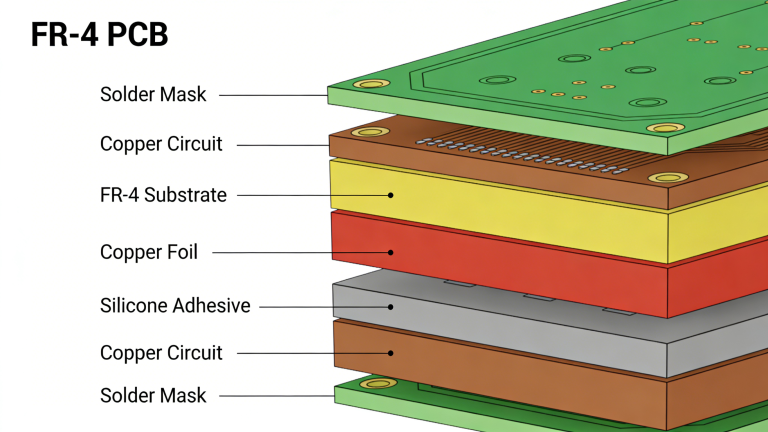
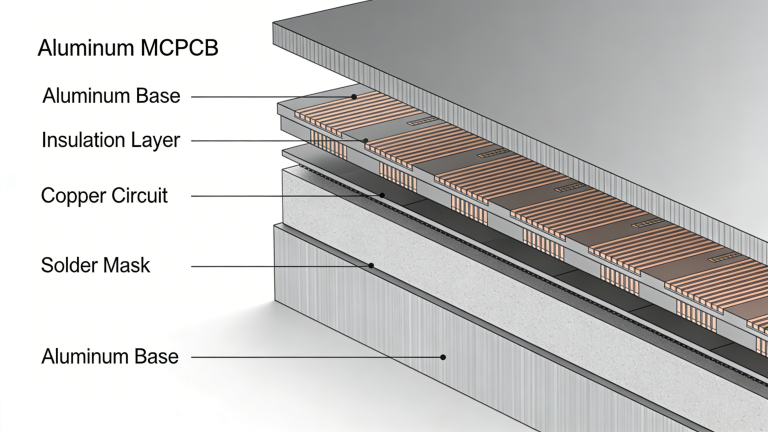
A blank PCB starts as a flat, non-conductive board (most often made of FR-4, a common strong composite material). Then we add thin copper layers on top, using a simple process to etch patterns into the copper. These patterned copper layers become the “paths” that connect electronic parts later, matching exactly what your circuit design needs.
It’s only called a “blank” or “bare” PCB before we add parts like ICs, resistors, or capacitors. And blank PCBs come in different types:
- Basic single-sided ones (copper on just one side) for simple projects;
- Complex multilayer ones (up to 20+ copper layers stacked) for more advanced devices.
B. Also Known as Bare PCBs
Blank PCBs are called “bare PCBs” for a simple reason—they have no electrical parts mounted on them yet. These base boards only have two key things: the insulating base (like FR-4) and the conductive copper patterns—no extra parts or devices attached.
You might hear people call them “base boards,” “empty boards,” or “unfinished boards too. But in most manufacturing and design work, everyone sticks to “blank PCB” or “bare PCB”—they mean the same thing.
C. Base for Building Circuit Boards
Blank PCBs are the “platform” where all circuit parts get assembled—think processors, capacitors, switches, and chips. The layered copper paths on the blank PCB let power and signals move smoothly between different parts, so the circuit works exactly as you want it to.
For more advanced blank PCBs (like multilayer ones), we even add useful features during production—things like USB ports or display connectors. This makes it easier to assemble the PCB later, or integrate it into the final electronic device, no matter what your project needs.
When you understand what blank PCBs can do and how we make them, you’ll be able to develop better electronic products—whether you’re a beginner or a business.
Benefits of Using Blank PCBs
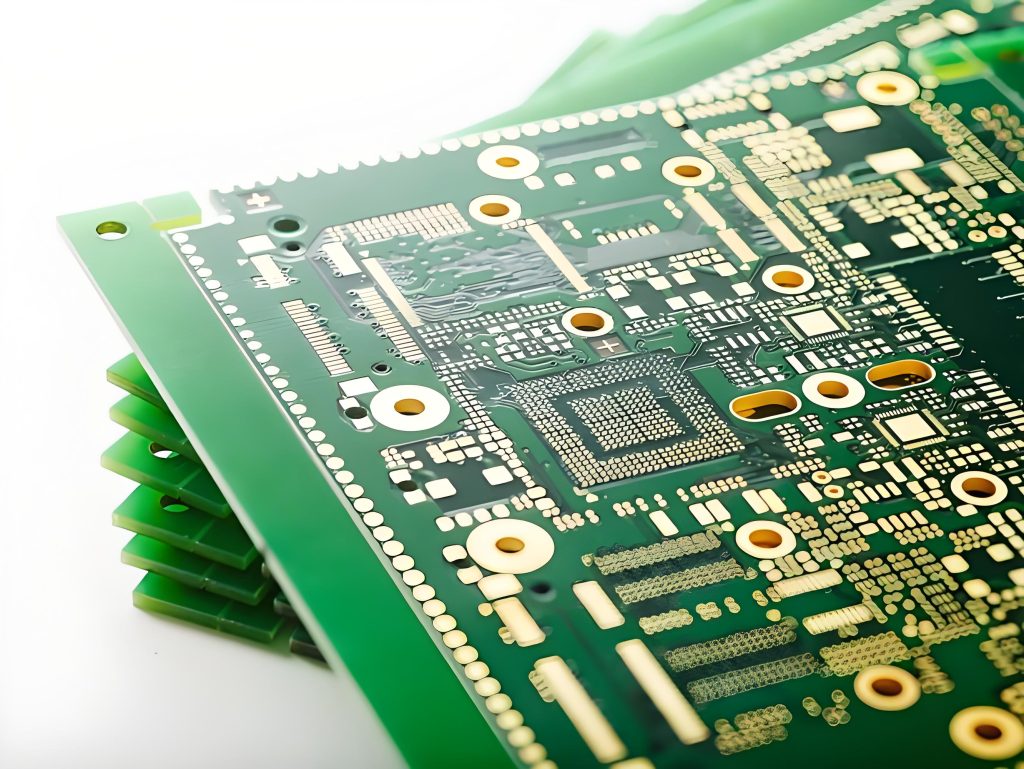
Compared to assembling circuits on perf boards or strip boards (old-fashioned prototyping methods), blank PCBs have way more advantages. These benefits make them a must-have for designing and making modern electronics—and we make sure you get the most out of them.
A. Flexibility & Customization for Any Design
Blank PCBs let you “build to order” based on what your circuit needs—no limits on how you design.
- Layer options: We can make blank PCBs with 1 layer (simple projects, like a small LED light) up to 32 layers (complex devices, like a smartphone circuit)—so even tricky circuits fit without extra cost.
- Size & shape freedom: Most blank PCBs are rectangular, but we can make them circular, triangular, or even odd shapes (to fit tight spaces in devices like wearables).
- Exact customizations: Instead of manually wiring circuits, we tailor the blank PCB to your needs—adding the exact copper paths, connection densities, heat sinks, or interfaces (like USB ports) you require.
B. Save Money (Especially for Bulk Orders)
Blank PCBs cut costs way more than manual assembly—here’s how:
- Bulk manufacturing savings: When you order more blank PCBs, the cost per board drops. Our efficient production process spreads out fixed costs (like equipment and labor), so you pay less for each unit.
- No waste: You only get the base board you need—no extra parts or wiring that go unused. This lets you keep product prices low (and competitive) while keeping your profit margins steady.
- Avoid extra costs: Manual assembly often means redoing work if something’s wrong. Blank PCBs reduce mistakes, so you don’t waste money on fixing errors.
C. Get Your Product to Market Faster
Blank PCBs speed up how quickly you turn a design into a sellable product—no more waiting on slow prototyping.
- Skip manual prototyping: Instead of hand-building multiple test circuits, you can test your design directly on our blank PCBs. Most design checks (like “does this circuit work?”) happen right on the board.
- Fix issues fast: If there’s a problem with the circuit (like a wrong copper path), you only need a few quick iterations of the blank PCB to fix it—no long delays before starting production.
- Shorten development time: By cutting down on prototyping and error-fixing time, blank PCBs help you launch your electronic product weeks (or even months) sooner than old methods.
D. Easy Prototyping & Testing (No Expert Skills Needed)
Blank PCBs make testing your circuit designs simple—even if you’re new to electronics.
- Test multiple ideas fast: You can try different design versions on our blank PCBs quickly, instead of manually rewiring perf boards each time.
- Check everything that matters: Prototyping on blank PCBs lets you verify if the circuit works, if it overheats, if signals pass correctly, and if there’s interference—all before finalizing the design.
- Catch flaws early: Fixing issues during prototyping (not production) saves you time and money. For example, if a copper path is too thin, you can adjust the blank PCB design once—instead of recalling hundreds of finished products.
With blank PCBs, you’ll work faster, avoid mistakes, and get your design right the first time.
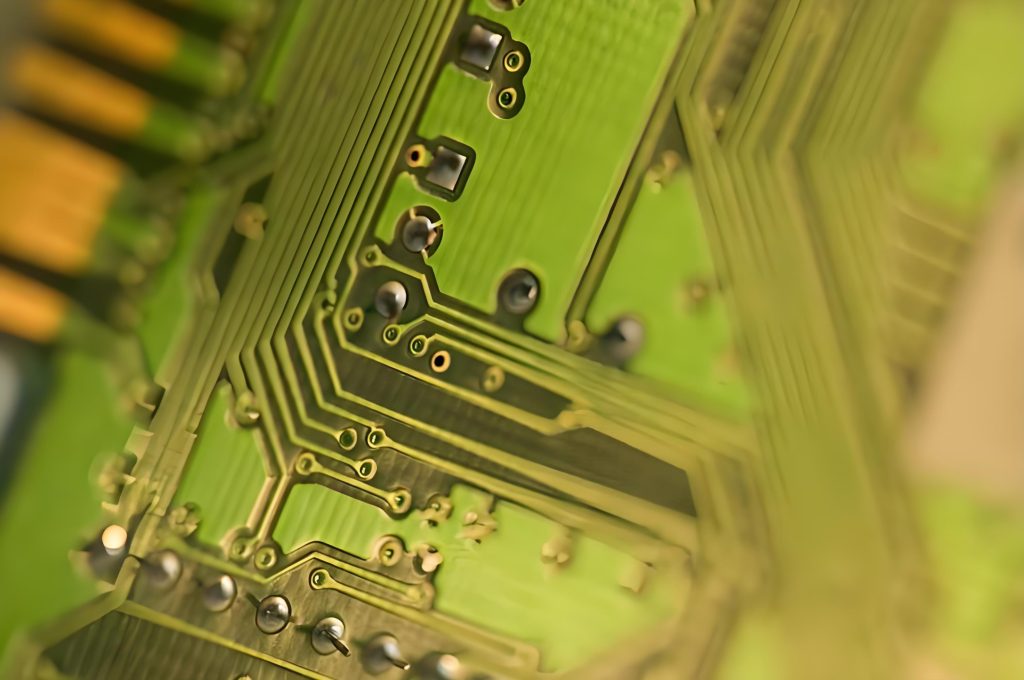
Blank PCB Components
Blank PCBs might look simple from the outside, but they’re made of several carefully chosen parts—each doing a key job to make sure your electronic projects work well. Understanding these parts helps you pick the right blank PCB for your needs, and we’re here to break it down in plain language.
A. Substrate Materials (The “Base Board”): Mostly FR-4
The substrate is the flat, non-conductive base of a blank PCB—think of it as the “foundation” where all other parts sit.
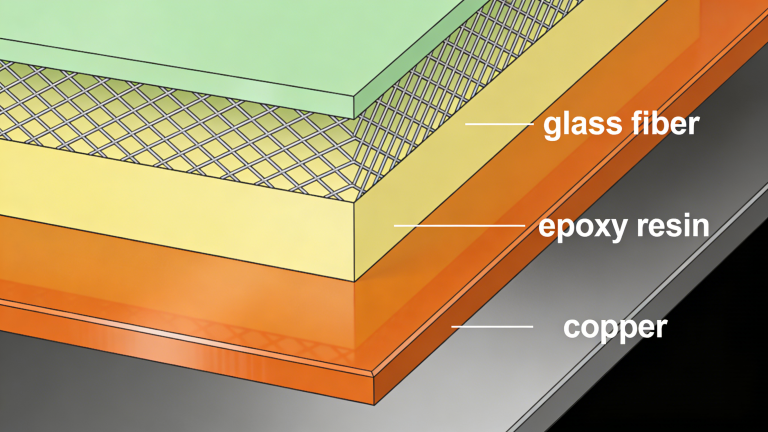
- Most common: FR-4: We mainly use FR-4 (a glass epoxy material) for substrates because it’s strong, heat-resistant, and works well for most electronics (like TVs, phones, or small projects).
- Other options for special needs: For high-frequency devices (like routers) or flexible PCBs (like smartwatch bands), we use materials like CEM-1 instead—they’re better suited for those specific jobs.
- What it does: The substrate keeps the copper layers from touching each other (so no short circuits) and lets us add small holes (called “vias”) to connect layers. It also stays stable even when the PCB gets warm, so the tiny circuit patterns don’t shift.
B. Layers: Single, Double, or Multi-Layer (Choose Based on How Complex Your Project Is)
Blank PCBs have thin copper layers (the “conductive paths” that carry power/signals)—and you can pick how many layers you need:
- Single-layer: Copper only on one side of the substrate. Great for simple projects (like a basic LED light or a small sensor).
- Double-layer: Copper on both sides of the substrate. Good for slightly more complex circuits (like a small Arduino project) where you need more paths.
- Multi-layer: 3 to 20+ copper layers, stacked with substrate in between. Used for advanced devices (like smartphones, laptops) where you need lots of paths but little space.
- How layers connect: For double/multi-layer PCBs, we drill small holes (“blind vias” or “buried vias”) to link the copper layers—so signals can move between top, bottom, and inner layers easily.
C. Stackup: How Layers Are Arranged (For Special Needs)
“Stackup” just means how we arrange the copper layers and substrate to fit your device’s needs. It’s not just about the number of layers—we also adjust thickness, material, and copper weight:
- HDI stackup (for tiny devices): For small, dense electronics (like smartwatches or IoT sensors), we use thinner substrate and more tightly packed copper layers. This lets us fit lots of paths in a tiny space.
- High-frequency stackup (for fast signals): For devices that need fast signal transmission (like routers or satellite equipment), we design the stackup to control “impedance” (a type of electrical resistance). This keeps signals from getting distorted. We’ll help you choose the right stackup—just tell us what your blank PCB will be used for.
D. Finishes & Coatings (To Protect the PCB & Make It Easy to Use)
These are thin layers added to the blank PCB—they don’t carry signals, but they’re crucial for durability and usability:
- HASL (Hot Air Solder Leveling): We coat the copper with tin (or lead-free tin) and use hot air to smooth it. This makes it easier to solder parts onto the PCB and keeps it usable for longer.
- Immersion Silver/Tin: A thin layer of silver or tin dipped onto the copper. Prevents the copper from rusting (oxidation) and ensures strong solder joints.
- Gold Plating: We plate parts like USB ports or connector pins with gold. Gold conducts electricity well and doesn’t corrode—great for parts that get used a lot.
- Nickel/Gold Coating: A mix of nickel (for strength) and gold (for conductivity) that shields copper from damage (like moisture or dust).
- Conformal Coating: A thin, flexible layer (like plastic) that covers the whole PCB. Protects it from dirt, spills, or small leaks—used for PCBs in harsh environments (like cars or industrial machines).
All our blank PCBs use high-quality finishes—so they last longer and work better, no matter what project you’re building.
Blank PCB Surface Finishes Comparison Table
| Finish Type | Material | Key Benefit | Best For |
|---|---|---|---|
| HASL | Tin / Lead-free Tin | Easy soldering, low cost | General-purpose PCBs |
| Immersion Silver | Silver | Prevents oxidation, strong joints | High-frequency boards |
| Immersion Tin | Tin | Flat surface, lead-free | Fine-pitch components |
| Gold Plating | Gold | Excellent conductivity, corrosion-resistant | Connectors, USB ports |
| Nickel/Gold | Nickel + Gold | Durable, moisture protection | Harsh environments |
| Conformal Coating | Plastic polymer | Full board protection from dirt/spills | Automotive, industrial |
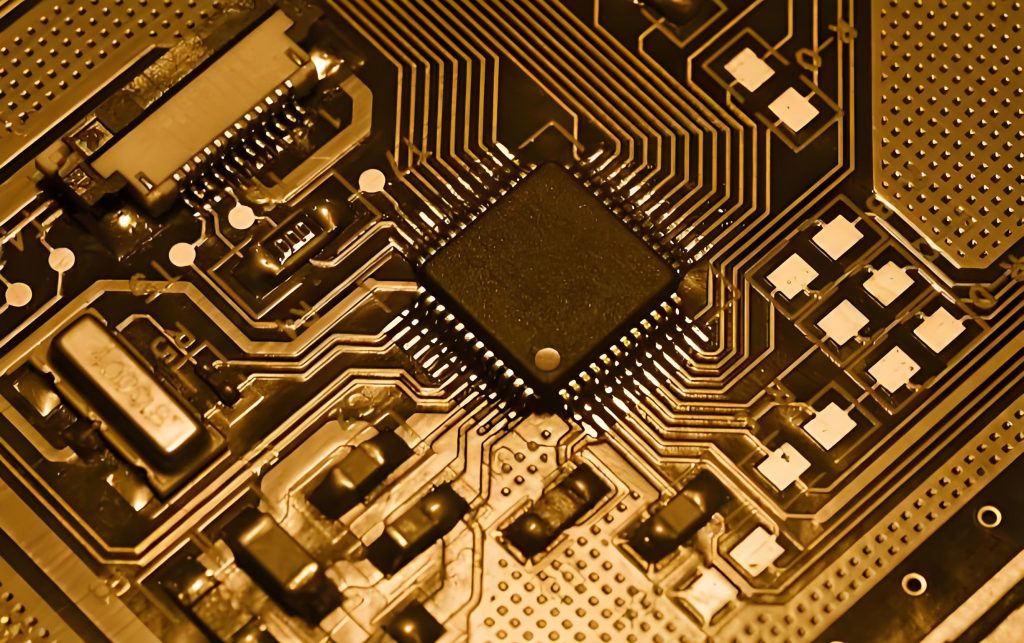
Blank PCB Manufacturing Process
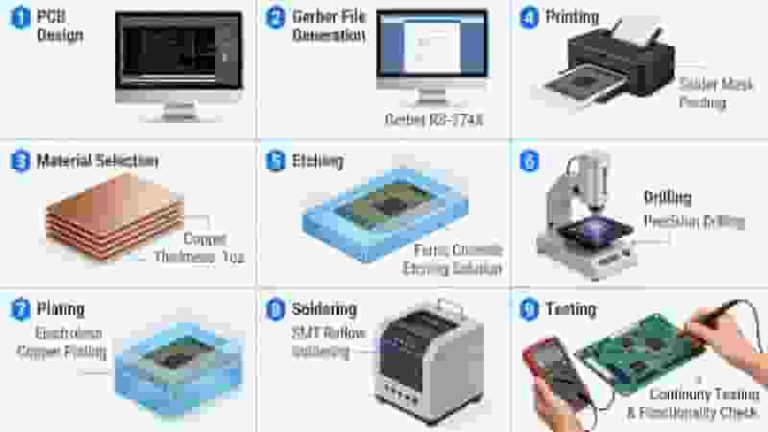
Blank PCBs can be made in small batches (for testing your design) or large quantities (for mass-produced products). The process has several steps, but we’ll break it down simply—from picking good materials to making sure every board works perfectly. Here’s exactly how we make your blank PCBs:
A. Prototyping vs Production (Two Modes for Different Needs)
We offer two manufacturing modes—choose based on what you’re working on:
- Prototyping: For testing your design (e.g., 5-10 blank PCBs). We prioritize speed (turnaround in 3 days) to help you check if the circuit works—no need for fancy cost-saving steps.
- Production: For large orders (100+ blank PCBs). We refine the process to make more boards at once (higher “yield”) and lower the cost per unit—great for when your design is final and you’re ready to sell products. The key? Our design and manufacturing teams work together closely—so whether you need prototypes or production runs, we avoid delays.
B. Sourcing Quality Raw Materials (Start with Good “Ingredients”)
A good blank PCB starts with good materials—we never cut corners here:
- What we use: We source high-purity materials like FR-4 substrate (the base board), thin copper foil, glass fibers, and resins—all matching your design’s needs (e.g., heat-resistant materials for car PCBs).
- Strict standards: We only work with reliable suppliers, and every batch of materials is tracked (so we can trace back if something’s off). This ensures every blank PCB we make is consistent—no “hit-or-miss” quality.
C. Panel Cutting and Preparation (Cut the Base Board to Size)
First, we get the substrate ready for manufacturing:
- Cut to size: We take large sheets of substrate (like FR-4) and cut them into smaller “panels” that match your blank PCB’s dimensions (e.g., 10cm×15cm).
- Smooth and clean: We “bevel” the edges (round them so they don’t scratch) and clean the surface. Then we drill small test holes (if needed) to prep for the next steps.
- Check quality: An automated camera inspects each panel—if there are cracks, stains, or unevenness, we toss it out. Only perfect panels move forward.
D. Imaging and Etching Copper Layers (Add the “Conductive Paths”)
This step creates the copper “paths” (the parts that carry power/signals) on the blank PCB:
- Transfer the design: We coat the panel with a light-sensitive “photoresist” layer. Then we shine light through a film with your circuit design—this “prints” the design onto the photoresist.
- Etch away extra copper: We dip the panel in acid (safe, controlled!)—the acid removes copper that’s not covered by the photoresist. What’s left? Exactly the copper paths your design needs.
- Repeat for multi-layer: If you need a multi-layer blank PCB, we repeat this step for each copper layer—stacking them with substrate in between.
E. Drilling Holes and Vias (Add Holes to Connect Layers)
For double/multi-layer PCBs, we need holes to link the copper layers:
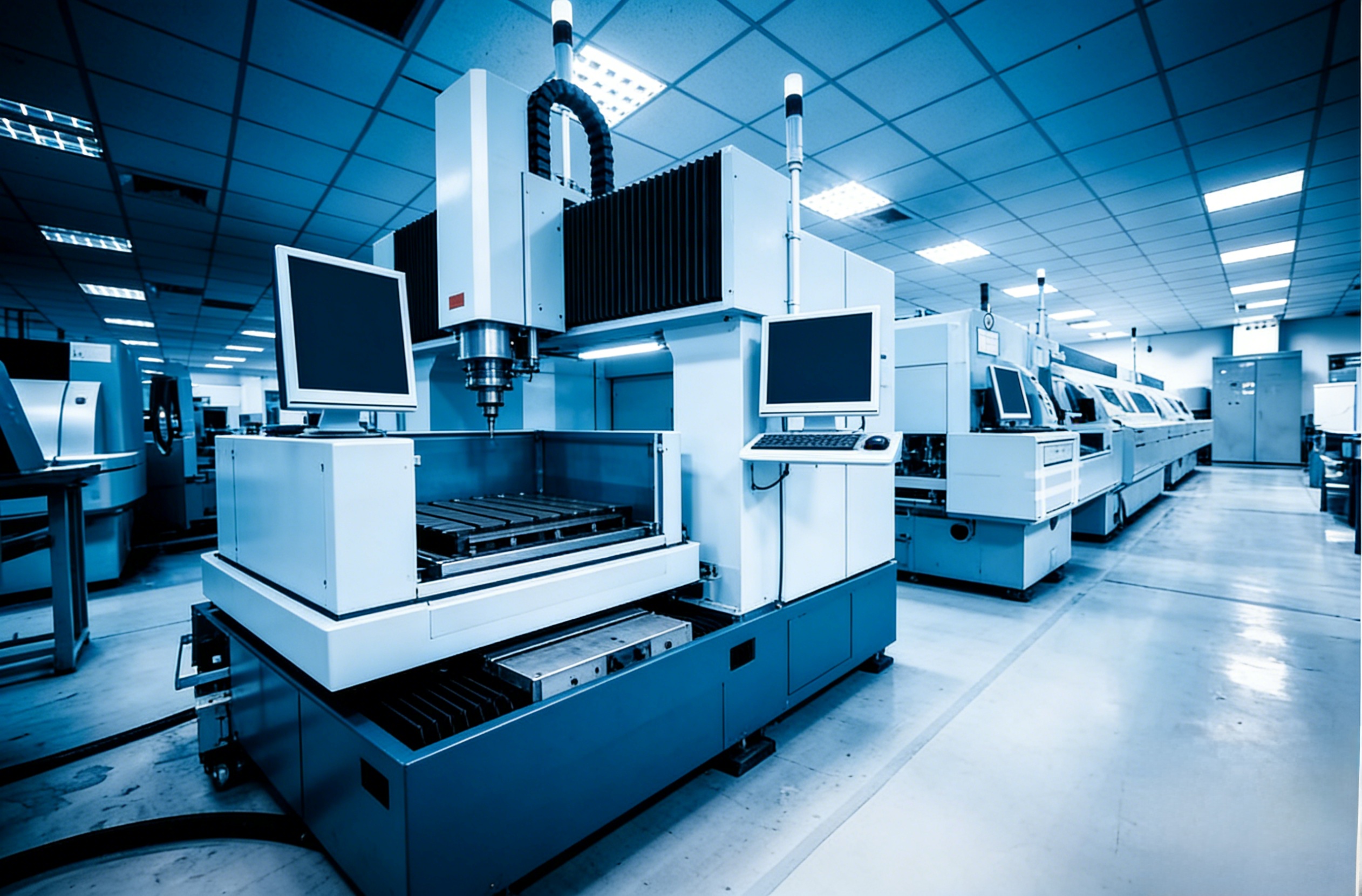
- Precision drilling: We use high-speed machines to drill tiny holes (“vias”) through the panel—some go all the way through (to connect top and bottom layers), others only go partway (“blind vias” for inner layers).
- Clean the holes: We “debur” the holes (remove tiny copper bits) so they’re smooth. This ensures good connections later—no short circuits from leftover debris.
F. Plating, Coating and Finishing (Protect the PCB and Make It Usable)
Now we add layers to protect the blank PCB and make it easy to use:
- Plating: We electroplate the holes with copper (so they conduct electricity) and add thin layers of tin, silver, or gold (depending on your needs—e.g., gold for USB ports that need durability).
- Coating: We add protective coatings—like conformal coating (for PCBs in wet/dusty places) or solder mask (a green/black layer that covers unused copper, preventing short circuits).
- Final touches: We screen-print labels (like part numbers) on the PCB—so you can easily tell which side is top/bottom.
G. Electrical Testing (Make Sure Every Path Works)
No blank PCB leaves our factory without being tested:
- Automated testing: We use two tools—”flying probe” (for small batches) and “bed-of-nails” (for large runs)—to check every copper path. The machines send tiny electrical signals to make sure there are no breaks (open circuits) or accidental connections (short circuits).
- Catch defects early: If a PCB fails the test (e.g., a path is broken), we fix it or discard it—so you only get PCBs that work perfectly.
H. Quality Assurance (One Last Check for Perfection)
We don’t stop at electrical testing—we do a full quality audit:
- Visual inspection: Our team checks every blank PCB by eye (and with cameras) for scratches, uneven coatings, or wrong hole sizes—we follow strict rules for what’s “acceptable.”
- Stress testing: For special orders (like car or aerospace PCBs), we test durability—exposing the PCB to extreme heat/cold or vibration to make sure it holds up.
- Final approval: Only after passing all checks do we package the blank PCBs—ready to ship to you.
With our process, you get blank PCBs that are consistent, durable, and exactly what you designed—no surprises.
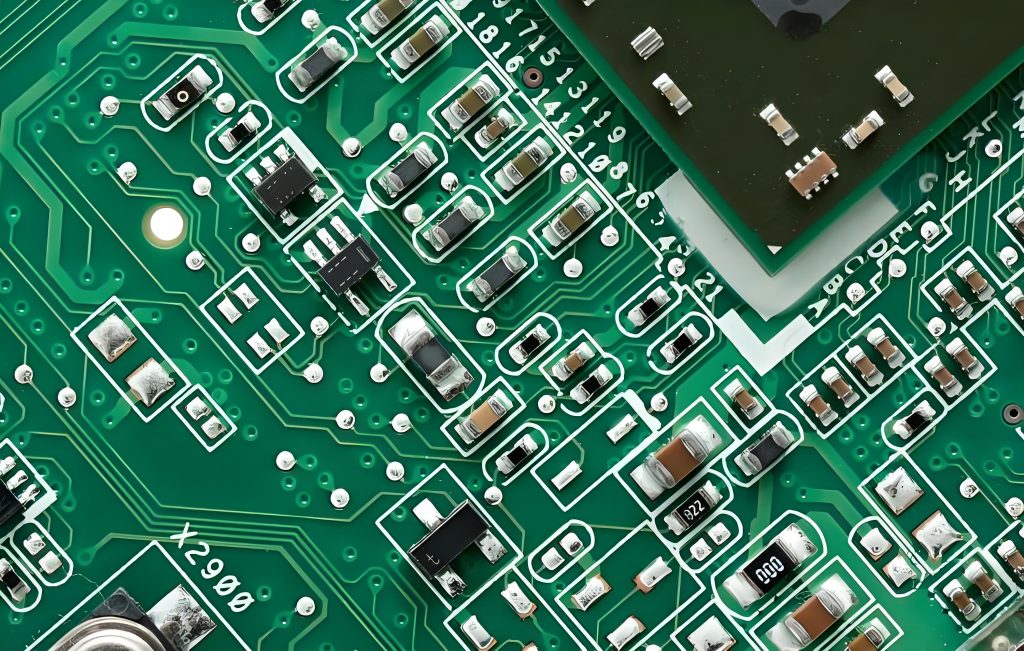
Types of Blank PCBs
Blank PCBs aren’t one-size-fits-all—we make different types to match what your electronic project needs. Whether you need a stiff board for a TV or a bendable one for a smartwatch, here are the 5 key types we offer, explained simply:
A. Rigid Circuit Boards (The Most Common: Stiff and Stable)
Rigid blank PCBs are hard, unbreakable boards—they’re the ones you’ll find in most everyday electronics.
- Why use them: They’re strong, easy to assemble (parts like chips stay put), and keep their shape even when warm. Perfect for devices that don’t need to bend, like TVs, laptops, or desktop routers.
- What we make them with: We mostly use FR-4 (the same strong, heat-resistant material we talked about earlier) for rigid boards. For special cases (like high-frequency devices), we use CEM-1 instead—but FR-4 works for 90% of projects.
- Our edge: We make rigid PCBs in all sizes, from small (like a credit card) to large (for industrial machines)—and they’re always consistent in quality.
B. Flexible Boards (Bendable: For Devices That Move)
Flexible blank PCBs are thin, foldable boards—they can twist and bend without breaking, which opens up new design possibilities.
- Why use them: Great for devices that need to fit tight spaces or move, like smartwatch bands, foldable phone hinges, or the inside of a car’s steering wheel (where wires can’t reach easily).
- What we make them with: We use thin plastic materials (like polyimide or PET) as the base, with adhesive copper foil on top. We also add protective coatings to keep them from getting damaged by moisture or dust.
- Our promise: Our flexible PCBs can bend hundreds of times without cracking the copper paths—they’re durable, not “flimsy.”
C. Rigid-Flex Boards (The Best of Both: Stiff + Bendable)
Rigid-flex blank PCBs mix rigid and flexible parts—so you get stability where you need it, and flexibility where you don’t.
- Why use them: Perfect for devices that need both “stiff spots” (to hold heavy parts like batteries) and “flexible spots” (to connect to moving parts). For example: a camera (rigid part holds the lens, flexible part connects to the screen) or a medical device (rigid part holds sensors, flexible part wraps around a limb).
- How we make them: We bond rigid FR-4 sections to flexible polyimide sections, with copper layers that run through both—so power and signals flow smoothly between stiff and bendy parts.
- Our advantage: We design the rigid-flex ratio exactly to your needs—no more forcing a fully rigid or fully flexible board to work.
D. HDI Boards (Tiny and Dense: For Mini Devices)
HDI (High-Density Interconnect) blank PCBs are super small boards with lots of copper paths packed tightly—they’re made for devices that need to be tiny but powerful.
- Why use them: Ideal for mini electronics like smartphones, IoT sensors (the small ones in smart thermostats), or wearable fitness trackers—where every millimeter counts.
- What makes them special: We use thinner base materials (so the board is slimmer) and smaller holes (“vias”) to fit more copper paths. We also stack more layers (up to 20+) without making the board thick.
- Our skill: We can make HDI PCBs with paths as thin as a human hair—so your tiny device can still have all the features it needs.
E. Special Materials Boards (For Extreme Needs)
These are blank PCBs made with unique materials—for projects that face harsh conditions or have special requirements.
- When to use them:
- Ceramic base: For high-temperature devices like car engine sensors (ceramic doesn’t melt or warp).
- Teflon base: For devices that need fast signal transmission (like radar or satellite equipment) or work in extreme heat (like industrial ovens).
- High-voltage materials: For PCBs in electric cars or power tools (they don’t short circuit under high voltage).
- Our process: We source these special materials from trusted suppliers and test them rigorously—so they hold up in even the toughest environments.
- Our support: Not sure if you need a special material? Tell us what your PCB will be exposed to (heat, voltage, moisture), and we’ll recommend the right one.
No matter what type of blank PCB you need, we’ll make it to fit your project—no more settling for a “close enough” board.
Blank PCB Types Comparison Table
| Type | Flexibility | Material | Key Advantage | Typical Applications |
|---|---|---|---|---|
| Rigid PCB | Stiff, unbendable | FR-4, CEM-1 | Strong, low cost, easy assembly | TVs, laptops, routers |
| Flexible PCB | Bendable, foldable | Polyimide, PET | Fits tight spaces, movable | Smartwatches, foldable phones |
| Rigid-Flex PCB | Partially bendable | FR-4 + Polyimide | Combines strength and flexibility | Cameras, medical devices |
| HDI PCB | Stiff, ultra-thin | FR-4 (thin) | High density, compact size | Smartphones, IoT sensors |
| Special Material | Varies | Ceramic, Teflon, HV materials | Extreme temperature/voltage tolerance | Automotive, aerospace, industrial |
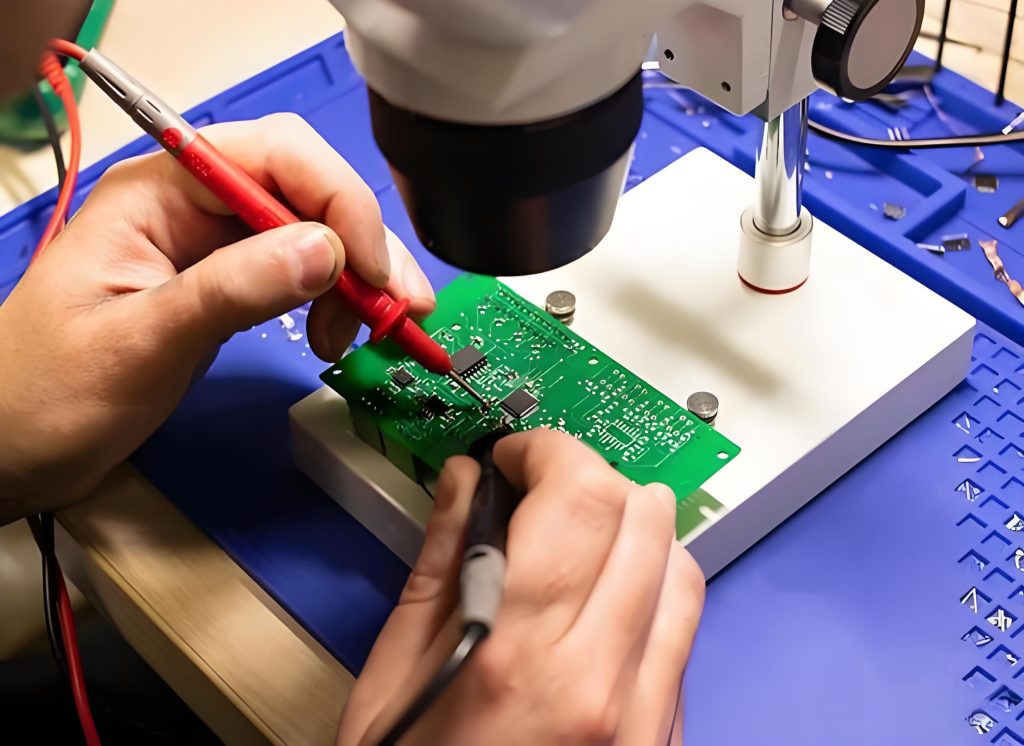
Applications of Blank PCBs
Blank PCBs are super versatile—you’ll find them in almost every electronic device you use. Thanks to our flexible manufacturing, we make blank PCBs that fit all kinds of needs, from everyday gadgets to high-tech equipment. Here are the 6 key areas where our blank PCBs are used:
A. Consumer Electronics (Everyday Gadgets You Use)
Consumer electronics are the biggest users of blank PCBs—they’re in almost everything you use at home:
- What devices? Smartphones, laptops, tablets, TVs, gaming consoles (like PS5/Xbox), and home appliances (fridges, microwaves, air conditioners).
- Why our blank PCBs? We make compact, high-quality blank PCBs that fit tiny spaces (like inside a phone) and handle high volumes—perfect for mass-produced gadgets. Whether it’s a PCB for your phone’s screen or your laptop’s battery, we’ve got you covered.
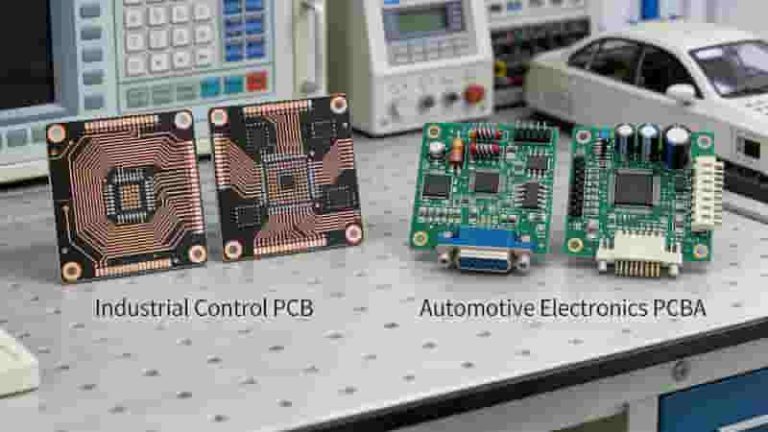
B. Industrial Electronics (Factory Machines & Robotics)
Factories and industrial sites rely on blank PCBs to keep machines running smoothly:
- What devices? Machinery controls (like buttons to operate a conveyor belt), industrial robots (that assemble cars or packages), power converters (to manage electricity in factories), and monitoring systems (that track temperature or pressure).
- Why our blank PCBs? Industrial environments are tough—machines get hot, vibrate a lot, and have electrical noise. We refine our fabrication process to make blank PCBs that tolerate heat, resist vibration, and ignore interference—so your factory equipment doesn’t break down.
C. Automotive Electronics (Cars—More PCBs Than You Think!)
Modern cars use over 1,000 blank PCBs each—they power everything from safety features to entertainment:
- What devices? GPS systems, airbags (the PCB triggers them in a crash), engine controls (to make the car run efficiently), infotainment screens (for music/maps), and even seat heaters.
- Why our blank PCBs? Car environments are harsh—under the hood gets hot, the road causes vibration, and the PCB needs to last for 10+ years. We use specialized fabrication (like heat-resistant materials) to make blank PCBs that meet strict car industry standards.
D. Aerospace and Defense (Planes, Satellites & Military Gear)
Aerospace and defense need blank PCBs that work in extreme conditions—our boards are built to last:
- What devices? Avionics (the electronics in planes that control navigation or communication), satellite systems (that send signals from space), and military equipment (like radios or surveillance gear).
- Why our blank PCBs? These devices face extreme altitude (no air pressure), huge temperature swings (from -50°C to 150°C), and even radiation. We make “ruggedized” blank PCBs that handle all this reliably—some even last for decades in space.
E. Medical Devices (Life-Saving Equipment)
Medical devices need blank PCBs that are precise, reliable, and safe—our boards meet the strictest medical standards:
- What devices? Pacemakers (that keep hearts beating), MRI machines (for medical scans), blood pressure monitors, and surgical tools (like tiny robots for operations).
- Why our blank PCBs? These devices are life-critical—they can’t fail. We make blank PCBs that are small (for implantable devices like pacemakers), biocompatible (safe to put inside the body), and ultra-reliable (tested hundreds of times before shipping).
F. IoT and Wearables (Smart Tiny Devices)
The IoT (Internet of Things) and wearables boom relies on small, cheap, high-performance blank PCBs—we’re right at the center of it:
- What devices? Smartwatches, fitness trackers (like Fitbits), smart thermostats (that connect to your phone), and IoT sensors (that monitor things like plant moisture or home security).
- Why our blank PCBs? These devices need to be tiny (fit on your wrist) and affordable (for mass use). We make blank PCBs that are slim, low-power, and cost-effective—so your smart gadget can do more without costing a lot.
No matter what industry you’re in, we can make a blank PCB that fits your device’s needs—just tell us what you’re building, and we’ll tailor it for you.

Sourcing High Quality Blank PCBs
To get blank PCBs that are high-quality, reliable, and consistent every time, you need to pick the right manufacturing partner. It’s not just about “buying a board”—it’s about finding someone who understands your needs. Here’s how to do it step by step, in simple terms:
A. Research and Qualify PCB Manufacturers (First: Make a Shortlist of Trustworthy Partners)
Don’t just pick the first manufacturer you find—do your homework to narrow down the best options:
- Start with your needs: List what your blank PCB requires (e.g., “flexible,” “for medical devices,” “1000-piece order”). Then look for manufacturers that specialize in that—this avoids “one-size-fits-all” mistakes.
- Build a shortlist: Use online searches (look for reviews) and ask peers (other people in your industry) for recommendations. Aim for 3-5 manufacturers to compare—too many will overwhelm you.
- Check their facilities (onsite or virtual): The best way to confirm quality is to see their factory. Ask for an onsite audit (or a virtual tour if you’re far) to check:
- Do they have clean, organized production lines?
- Do they follow strict quality steps (like testing every board)?
- Are their workers trained? We welcome both onsite and virtual tours—we’re proud of our facilities, and transparency helps you trust us.
B. Evaluate Capabilities, Expertise and Services (Make Sure They Can Do What You Need)
Not all manufacturers can handle every type of blank PCB—you need to confirm they have the right skills and extras:
- Check if they can meet your specs: For example, if you need a 20-layer HDI PCB (for a tiny device), ask if they’ve made that before. Look for expertise in your industry—like if you’re making car parts, pick someone who knows automotive PCBs.
- Look at their equipment: Do they have state-of-the-art machines? Old equipment can lead to mistakes (like uneven copper layers). We use smart manufacturing 4.0 tools—this ensures your blank PCBs are consistent.
- Ask about extra services: Do they offer free design support (to fix your schematic if needed)? Can they handle logistics (shipping to your door)? These “value-added” services save you time and hassle. We don’t just make blank PCBs—we help with design checks, offer fast shipping, and answer your questions anytime.
C. Quality Certifications – ISO, IATF (Certifications = Proof of Quality)
Certifications are like “quality badges”—they show a manufacturer follows international rules. Here’s what to look for:
- ISO 9001: This is the basic quality certification—it means the manufacturer has a system to control quality (from materials to shipping) and fix issues if they happen.
- IATF 16949: If you need PCBs for cars, look for this—it’s a strict certification for automotive parts, ensuring PCBs can handle heat, vibration, and long use.
- Other industry certs: For medical devices, look for ISO 13485; for aerospace, look for AS9100. These third-party audits (not self-claimed) are the only way to be sure of quality. We have ISO 9001 and IATF 16949 certifications—every blank PCB we make follows these strict rules, so you never get a “bad batch.”
D. Reliable Delivery and Support (Make Sure They’ll Be There for You)
Even the best blank PCBs are useless if they arrive late or you can’t get help—prioritize reliability:
- Check if they meet deadlines: Ask for their “on-time delivery rate” (we hit 99% of ours). For prototypes, make sure they can deliver in 3-5 days; for production, confirm they can handle your order size without delays.
- Logistics matter: Do they use trusted shippers (like DHL/FedEx)? Can they track your order so you know when it’ll arrive? We provide real-time tracking for every order—no guessing where your PCBs are.
- Support when you need it: What if your PCB has an issue? Will they reply quickly? Our support team responds within 24 hours, and we work with you to fix problems (like sending replacements if needed).
Sourcing blank PCBs doesn’t have to be stressful—pick a partner that’s transparent, skilled, certified, and reliable. We check all these boxes, and we’ll work with you to get exactly the blank PCBs you need.
We – Your Dependable Blank PCB Manufacturing Partner
Headquartered in China, we have over 14 years of expertise in making high-quality blank PCBs efficiently and at scale—all thanks to our smart manufacturing 4.0 infrastructure (modern machines that ensure consistency).
We never cut corners on quality: our strict quality checks and international certifications (like ISO 9001 and IATF 16949) guarantee every blank PCB meets top standards. Plus, we offer extra help you’ll need—like free engineering support to refine your design, or fast logistics to get your PCBs on time.
Whether you need prototypes (3-day turnaround) or large production runs, we’re here to be your trusted partner—no complicated jargon, just reliable blank PCBs and clear communication every step of the way.
-
What is FR-4 Material in PCB Fabrication? The Complete Engineering Guide
FR-4 is the global industry-standard flame-retardant glass-reinforced epoxy laminate for rigid PCB fabrication. This guide explains definition, composition, properties, grades, selection, and why FR-4 PCB is the top choice for engineers and global buyers. What is FR-4 Material? FR-4 (Flame Retardant Type 4) is a NEMA-defined material grade for flame-resistant epoxy laminates. It is not…
-
What is FR-4 Material in PCB Fabrication? Complete Engineering Guide
FR-4 is the global industry-standard flame-retardant glass-reinforced epoxy laminate for rigid printed circuit boards. Defined by NEMA LI-1 and IPC-4101, it delivers balanced electrical insulation, mechanical strength, thermal stability, UL94 V-0 flame resistance, and cost efficiency for industrial, automotive, telecom, and consumer electronics. What is FR-4 Material? FR-4 (Flame Retardant Type 4) is a material…
-
What is a Surface Mount Device or SMD Component Package?
A Surface Mount Device (SMD) component package is a standardized enclosure designed for direct soldering onto PCB surfaces, enabling high-density assembly, miniaturization, and automated manufacturing in modern electronics. What Is an SMD Component Package? SMD stands for Surface Mount Device, referring to electronic components designed exclusively for Surface Mount Technology (SMT) assembly. An SMD component…
-
Turnkey PCB Assembly Services | Full & Partial Solutions
We provide end-to-end turnkey PCB assembly supporting full and partial models, with SMT assembly, THT, BGA/QFN, rigorous testing, and global logistics for industrial buyers, engineers, and importers. What Is Turnkey PCB Assembly Turnkey PCB assembly is a one-stop manufacturing solution covering PCB fabrication, component sourcing, assembly, testing, and delivery. We manage the full supply chain…
-
Through-hole PCB Assembly Service | IPC Certified THT PCBA Solutions
We provide reliable through-hole PCBAs assembly service for industrial, power, medical, aerospace and automotive applications. Our IPC-standard THT assembly supports prototypes to mass production with wave soldering, selective soldering and full inspection. Through-hole PCB Assembly Service Overview Our through-hole PCB assembly fulfills leaded assembly demands across industries. We deliver single-sided, double-sided and high-density multilayer through-hole…
-
Standard PCB Thickness: Complete Guide for Engineers & Buyers
Standard PCB thickness is critical for mechanical strength, signal integrity, and assembly compatibility. This guide covers definitions, industry standards, influencing factors, manufacturing constraints, and design best practices for global industrial buyers. What Is Standard PCB Thickness The global standard PCB thickness is 1.57 mm (0.062 in), commonly referenced as 1.6 mm for simplicity. This is…