Learn PCB storage and PCBA storage best practices to avoid oxidation, ESD, moisture damage, and ensure reliable performance for industrial electronics.
PCB storage and PCBA storage are critical for manufacturers and buyers alike. Proper storage prevents damage, maintains solderability, and avoids costly failures during assembly or operation.
After production, boards are stored with strict precautions to remain intact through shipping. Once delivered, buyers must continue proper storage to preserve quality until assembly. Bulk orders require long-term reliable storage to avoid component shortages and waste.
Without optimal conditions, PCBs and PCBAs risk oxidation, performance loss, component failure, and total scrappage. This guide covers all essential practices for safe PCB and PCBA storage.
Risks of Improper PCB & PCBA Storage
What Happens If PCBs Are Stored Poorly?
PCBs are highly sensitive to moisture and temperature shifts. Copper oxidizes when exposed to air, even with surface finishes. Over time, finishes degrade, leading to poor solderability and performance issues.
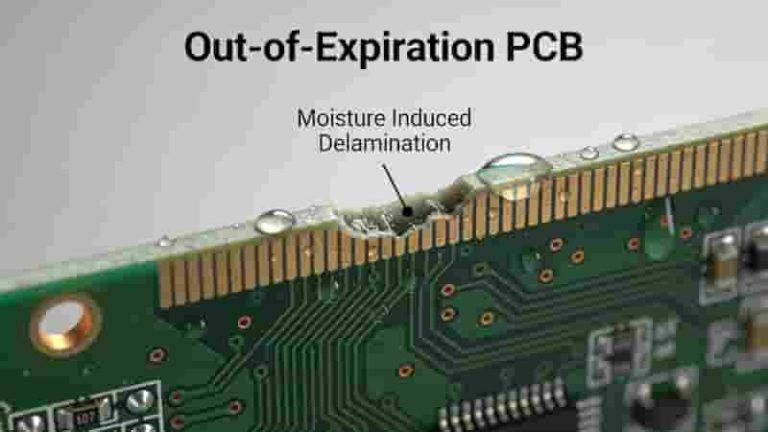
Oxidized PCBs require chemical cleaning, which weakens the surface and increases future risks. Moisture and extreme temperatures cause warping, cracking, and delamination.
What Happens If PCBAs Are Stored Poorly?
PCBAs include electronic components and face additional risks: electrostatic discharge (ESD), moisture absorption, thermal stress, and physical damage.
Moisture trapped in SMD components expands during reflow, causing cracking or “popcorn” failure. ESD instantly damages sensitive parts. Fluctuating temperatures lead to component failure and board damage.
Optimal Environment for PCB & PCBA Storage
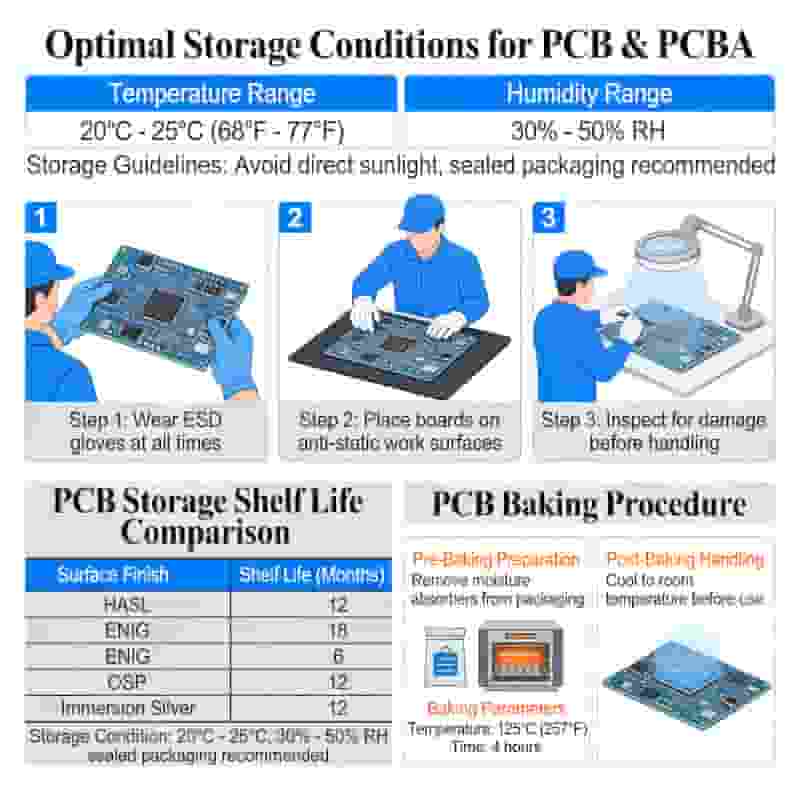
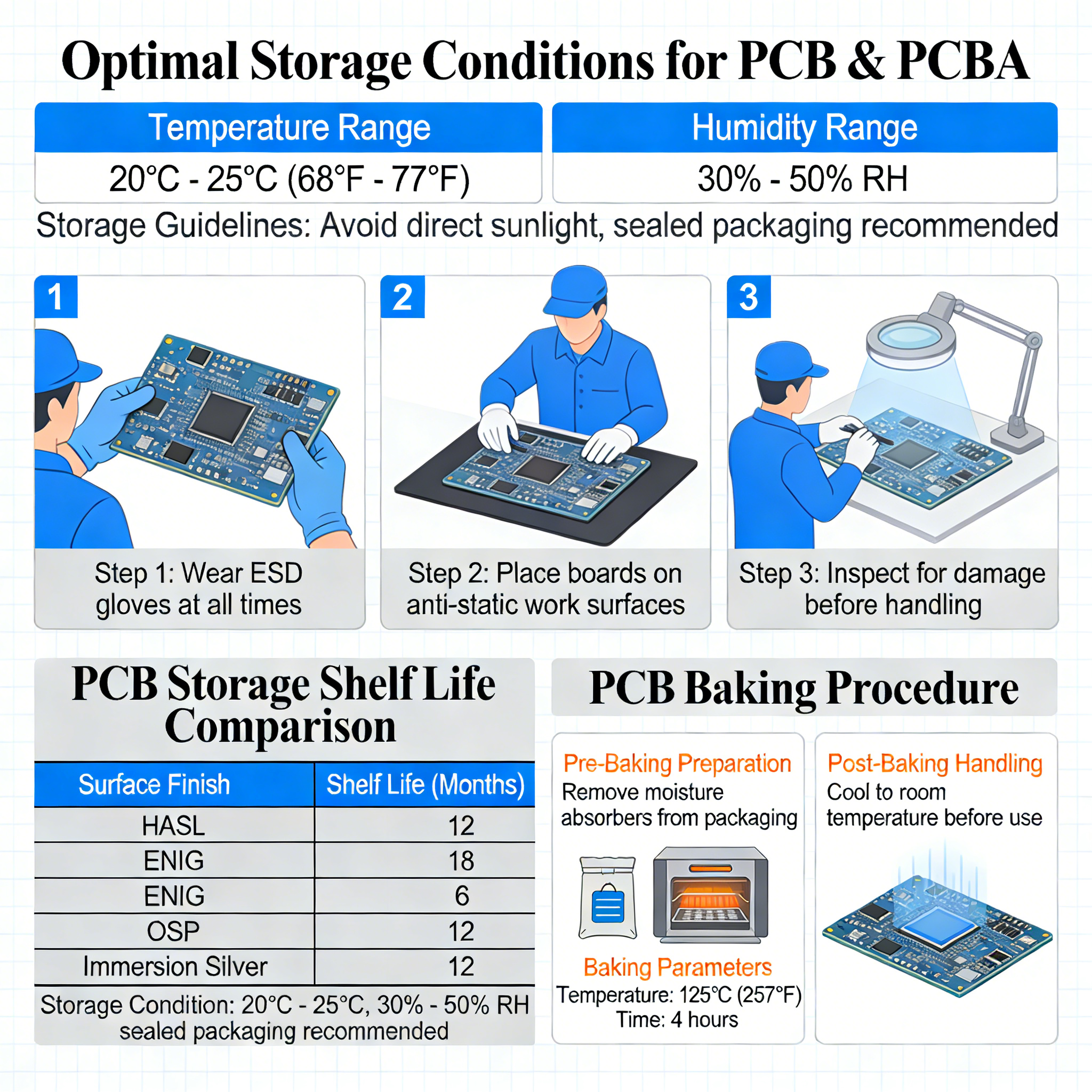
Humidity Control: Keep relative humidity below 65–75% to prevent moisture damage.
Temperature Control: Maintain a stable 23–25°C (73–77°F); avoid rapid fluctuations.
Environment: Clean, dust‑free, and free of corrosive gases or direct sunlight.
Safe Handling for PCB & PCBA Storage
Never touch boards with bare hands; oil and sweat cause contamination and oxidation.
Use ESD‑safe gloves and handle only by the edges.
Avoid scraping, bending, or applying pressure to prevent physical damage.
Packaging for Long‑Term PCB & PCBA Storage
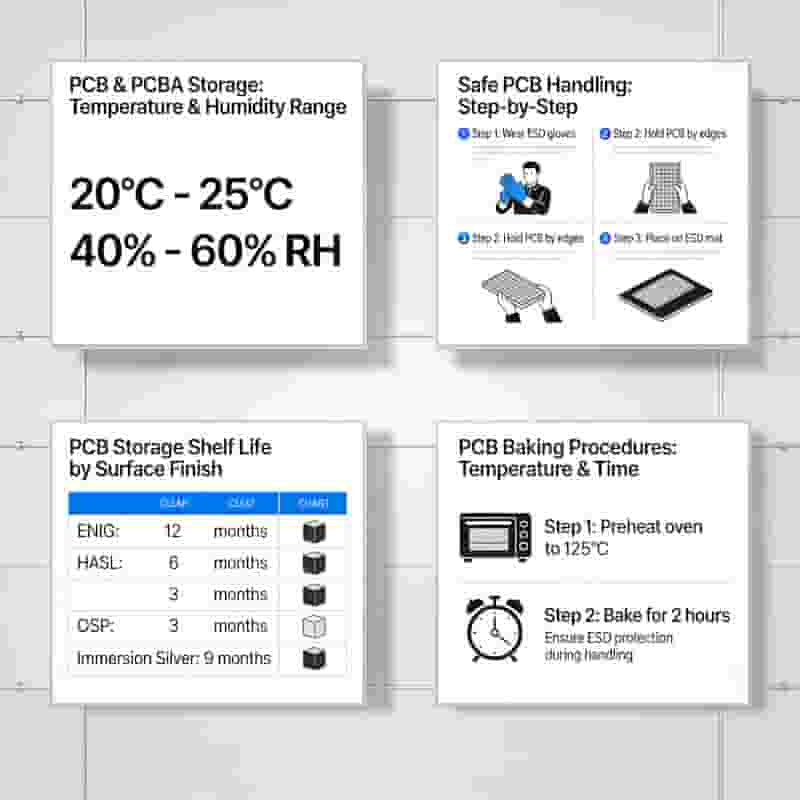
Use anti‑static vacuum packaging for PCB storage to block moisture and ESD.
Include Humidity Indicator Cards (HIC) to monitor internal moisture.
Limit boards per package based on thickness and size.
Seal in cartons with quality documentation and secure packing tape.
PCB Storage Time by Type & Packaging
| PCB Type | Packaging | Valid Storage | Max Storage |
|---|---|---|---|
| Heavy Copper PCB | Moisture‑Proof | 12 months | 12 months |
| Multilayer PCB | Moisture‑Proof | 12 months | 12 months |
| OSP PCB | Ordinary | 3 months | 9 months |
| Aluminum PCB | Ordinary | 6 months | 12 months |
Unpacking & Inspection Before Use
Inspect packaging for damage before opening.
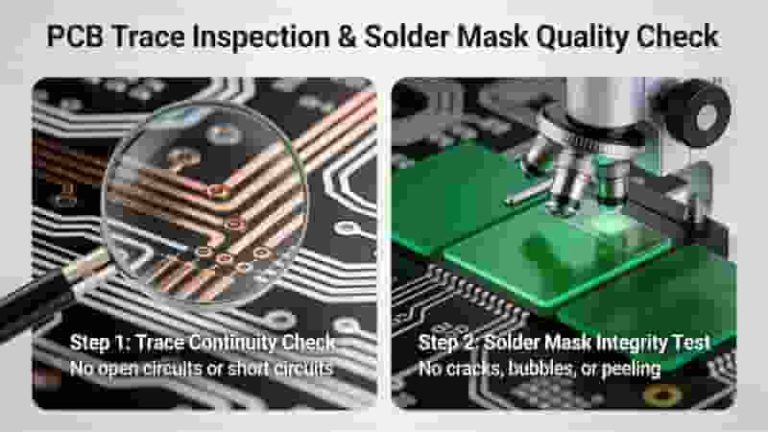
Check for oxidation, blistering, or scratches.
Verify humidity indicator card status.
Confirm production date; typical shelf life is 12 months.
Baking & Drying for PCB & PCBA Recovery
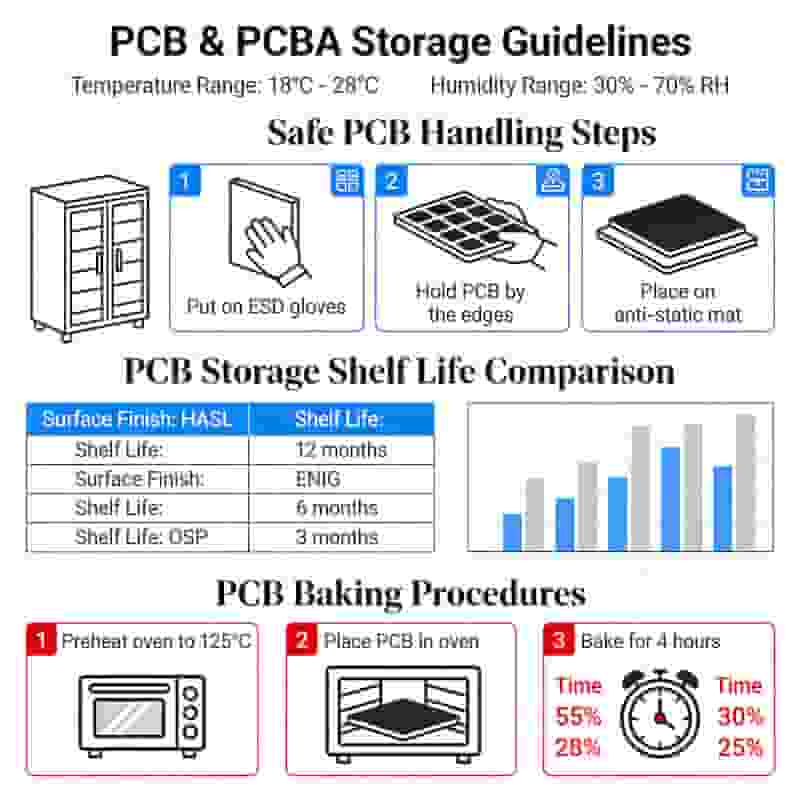
Bake boards if packaging is damaged, humidity is high, or shelf life is exceeded.
Use a convection or vacuum oven at controlled temperatures to remove moisture safely.
| Temp (°C) | Min Time | Avg Time | Equipment |
|---|---|---|---|
| 105–120 | 1.5 h | 2 h | Convection Oven |
| 70–80 | 3 h | 6 h | Convection Oven |
| 50–55 | 1 h | 2 h | Vacuum Oven |
PCBA Packaging & Safe Transportation
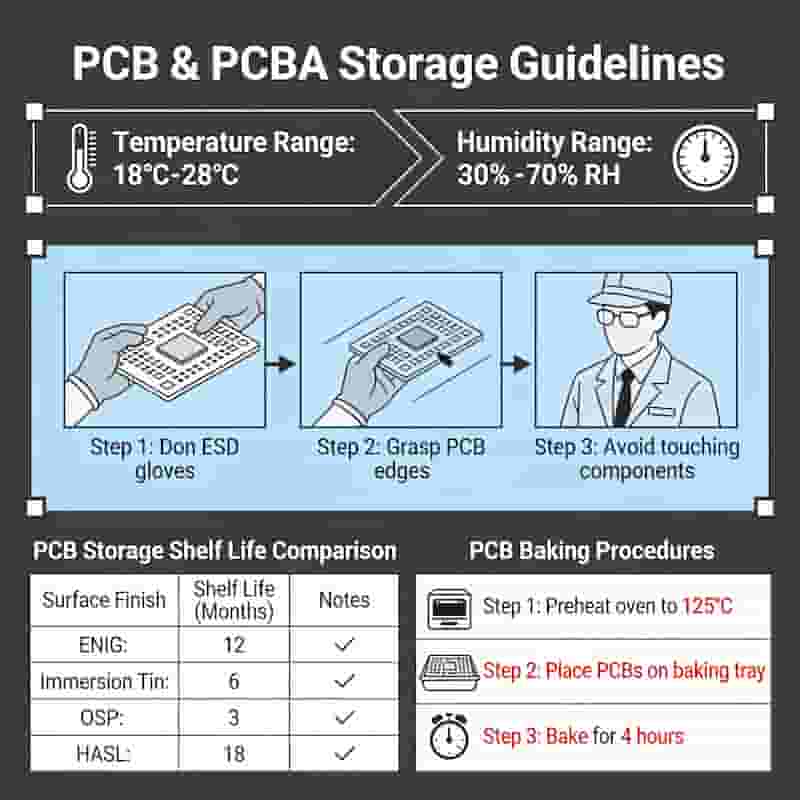
Clean and dry PCBAs fully before packaging.
Apply conformal coating to protect against moisture, dust, and oxidation.
Use anti‑static packaging to prevent ESD damage.
Add anti‑vibration supports to avoid shock during shipping.
Summary
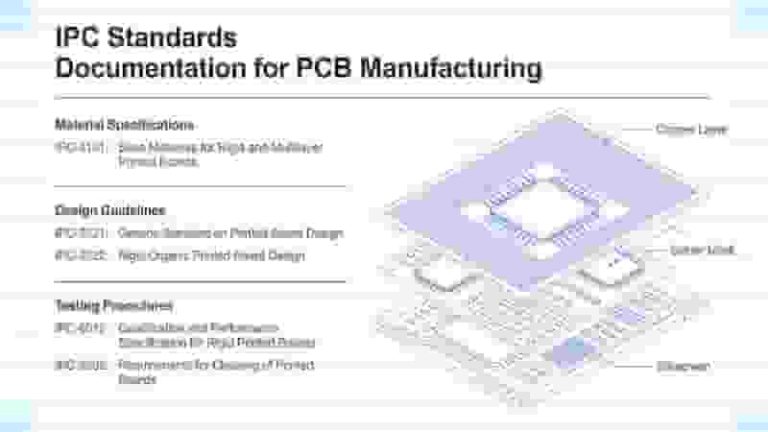
Safe PCB storage and PCBA storage require controlled temperature and humidity, ESD protection, proper handling, and secure packaging. Following IPC guidelines prevents oxidation, moisture damage, and component failure, saving cost and ensuring reliable performance.
Need Reliable PCB & PCBA Solutions?
We provide professional PCB manufacturing, PCBA assembly, and secure global shipping with strict storage and packaging standards to protect your boards from production to delivery.
Contact Us for Inquiry & Quote