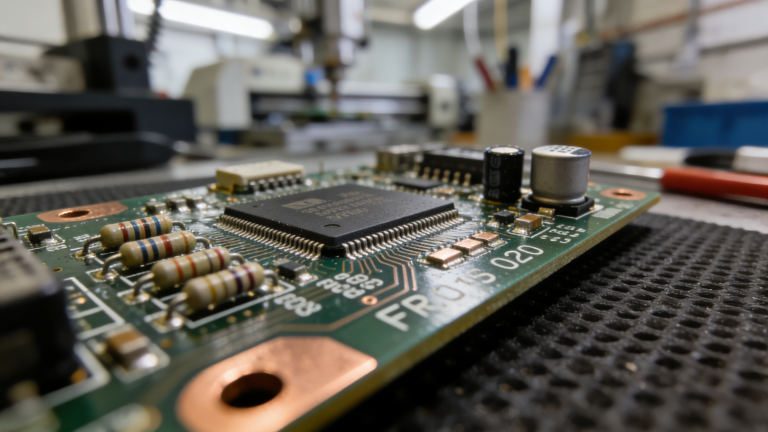
PCB surface finish is a critical factor in PCB design and directly determines the service life, reliability, and solderability of your circuit boards. A proper surface finish protects copper from oxidation and ensures strong, stable soldering during SMT assembly.
The PCB surface finish serves two essential purposes: preventing copper oxidation and enabling reliable soldering. Without a proper finish, copper quickly oxidizes, weakening electrical performance and ruining the board. Choosing the right surface finish ensures longevity and consistent performance.
1. Hot Air Solder Level (HASL)
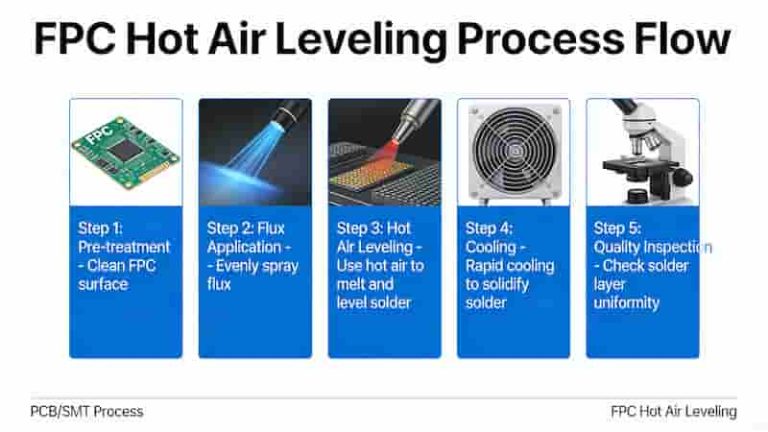
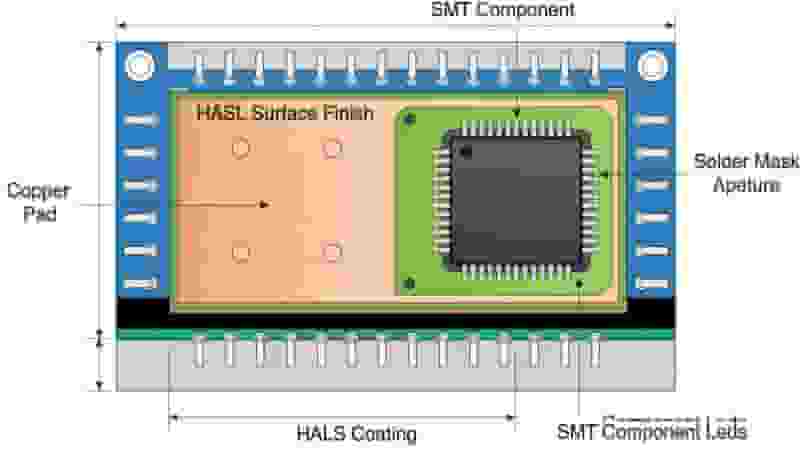
HASL is the most common and low-cost PCB surface finish. The PCB is dipped into molten solder, then hot-air knives level the surface for uniform coverage.
Advantages: Low cost, strong solderability, ideal for large components and SMT.
Disadvantages: Poor planarity, not suitable for fine-pitch devices, high processing temperature (260–270°C), contains lead, not RoHS compliant.
2. Lead-Free HASL (LF HASL)
Lead-Free HASL uses lead-free solder alloy and meets RoHS standards. Performance, advantages, and process are similar to standard HASL.
Advantages: RoHS compliant, low cost, good solderability.
Disadvantages: Limited planarity, not ideal for fine-pitch components.
3. Plated Gold (Hard Gold)
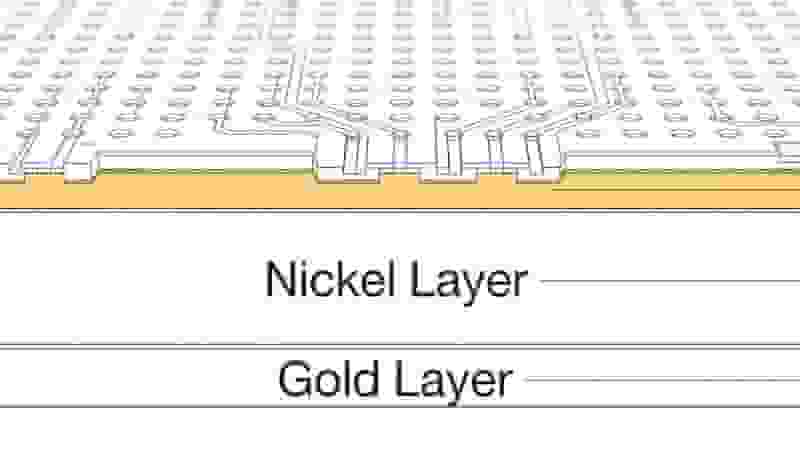
Plated Gold (Hard Gold) is a durable electroplated PCB surface finish with excellent conductivity and oxidation resistance.
Advantages: High durability, strong adhesion, ideal for high-wear areas, outstanding electrical performance.
Disadvantages: High cost, complex processing, poor solderability.
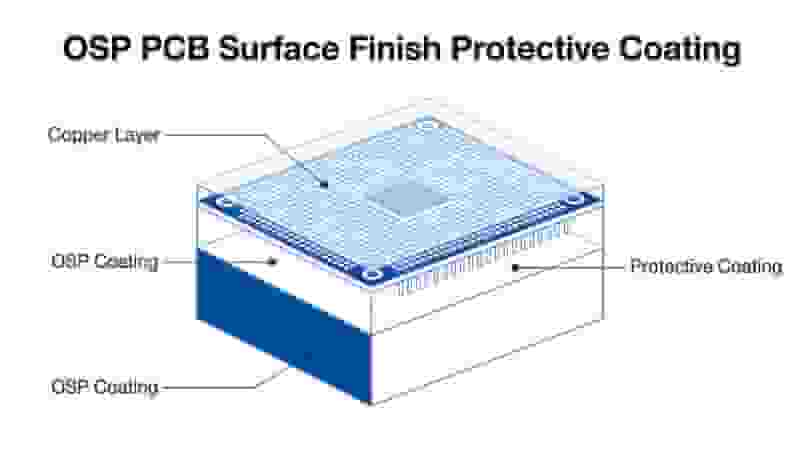
4. Organic Solderability Preservatives (OSP)
OSP is a water-based organic coating that protects copper from oxidation. It is a budget-friendly PCB surface finish for mass production.
Advantages: Ultra-flat surface, eco-friendly, RoHS compliant, low cost, no impact on hole size.
Disadvantages: Short shelf life, sensitive to handling, limited reflow cycles.
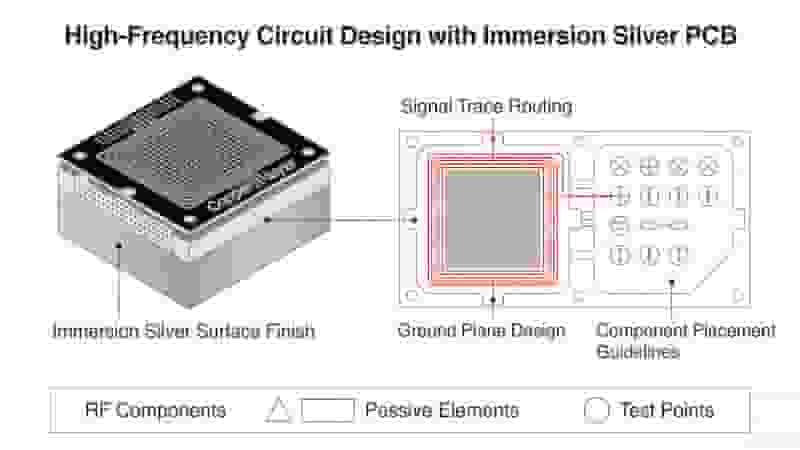
5. Immersion Silver
Immersion Silver is a flat, mid-cost PCB surface finish with excellent conductivity, suitable for fine-pitch applications.
Advantages: Thin flat layer, good conductivity, RoHS compliant, ideal for high-frequency circuits.
Disadvantages: Prone to tarnishing, moderate shelf life.
6. Immersion Tin
Immersion Tin is a lead-free PCB surface finish that offers excellent flatness for small components and fine-pitch technology.
Advantages: Lead-free, flat surface, compatible with all tin-based solders.
Disadvantages: Short shelf life, risk of tin whiskers, sensitive to storage.
7. Electroless Nickel Immersion Gold (ENIG)
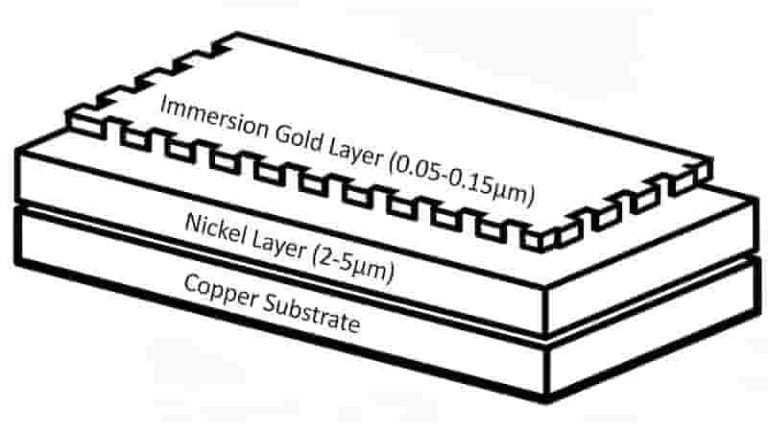
ENIG is a widely used two-layer PCB surface finish consisting of nickel and gold. It offers long shelf life and high reliability.
Advantages: Excellent flatness, long shelf life, RoHS compliant, suitable for BGA and high-precision boards.
Disadvantages: Higher cost, risk of black pad syndrome.
8. Electrolytic Nickel Gold (ENEG)
ENEG is a premium lead-free PCB surface finish with strong adhesion and long-term stability.
Advantages: Flat surface, excellent conductivity, long durability, oxidation resistant.
Disadvantages: High cost.
9. Electroless Nickel Electroless Palladium Immersion Gold (ENEPIG)
ENEPIG is a high-performance three-layer PCB surface finish with exceptional reliability and no black pad risk.
Advantages: Ultra-long shelf life, corrosion resistant, RoHS compliant, ideal for high-reliability electronics.
Disadvantages: Highest cost, complex manufacturing.
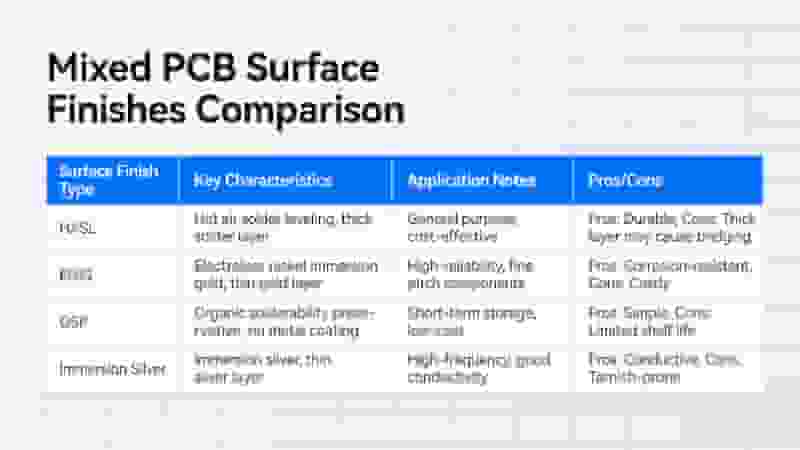
10. Mixed Surface Finish
Mixed PCB surface finish combines two or more finishes on a single board to balance performance and cost.
Common combinations: ENIG + OSP, ENEG + ENIG, ENIG + HASL.
Advantages: Customizable performance, cost-effective for complex boards.
Disadvantages: Complex processing, longer lead times.
Conclusion
Selecting the right PCB surface finish directly affects your product’s performance, durability, and total cost. Each type has unique strengths for specific applications, assembly methods, and environmental requirements.
Understanding these 10 PCB surface finishes helps you make informed decisions for prototyping, mass production, and high-reliability projects.
Need Professional PCB Surface Finish Support?
We provide full PCB surface finish solutions for global export, industrial, and high-tech projects. Contact us for a free quote, technical consultation, or custom PCB manufacturing service.
Get Your Free Quote Now