The Tg value of PCB substrate (glass transition temperature) defines the critical temperature where PCB materials shift from rigid glassy to soft rubbery states. This guide explains Tg value fundamentals, classification, selection rules, reliability impacts, and 2025 best practices for industrial, automotive, telecom, and aerospace designs.
What Is Tg Value of PCB Substrate
The Tg value of PCB substrate is the glass transition temperature at which polymer-based PCB materials change from a rigid glassy state to a flexible rubbery state. Below Tg, substrates maintain high rigidity, dimensional stability, and mechanical strength. Above Tg, materials soften, CTE rises sharply, increasing risks of warpage, delamination, and via cracking.
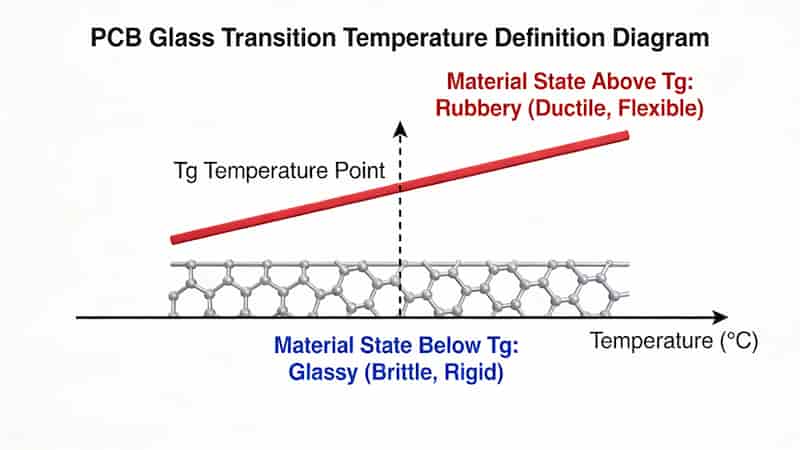
Tg value is measured in °C and is a core thermal parameter for lead‑free soldering, multilayer PCBs, HDI, and high‑reliability applications.
Why Tg Value Is Critical for PCB Reliability
Correct Tg value of PCB substrate directly ensures PCB performance across manufacturing and operation.
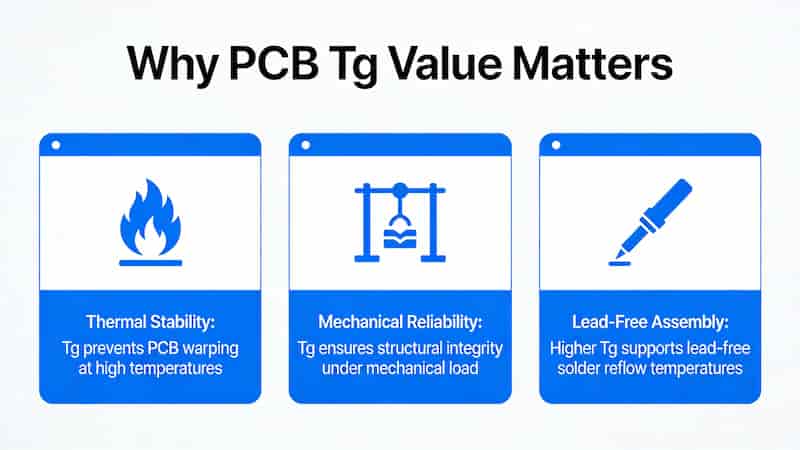
- Thermal stability: Resists deformation during reflow and thermal cycling
- Mechanical reliability: Reduces Z‑axis expansion and via failure
- Electrical performance: Stable dielectric properties under high heat
- Lead‑free assembly compatibility: Meets 245–260°C peak temperatures
- Lifespan: Extends service life in harsh environments
Tg Value Classification & Material Matching
Industry standard Tg value ranges for PCB substrates in 2025:
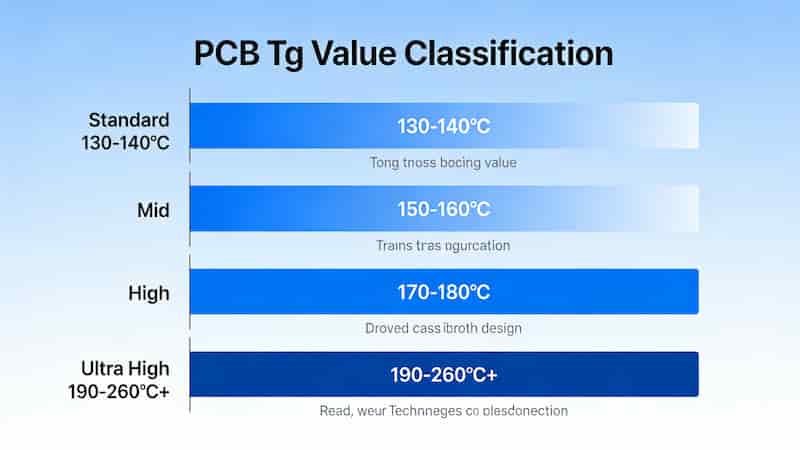
Standard Tg (130–140°C)
Suitable for general consumer electronics with low thermal demands. Common materials include standard FR-4. Not recommended for lead‑free soldering.
Mid Tg (150–160°C)
Used in industrial and communication devices that require moderate heat resistance. Mid-Tg FR-4 materials offer a balance between performance and cost.
High Tg (170–180°C)
Essential for automotive, server, telecom, and multilayer PCBs. Fully compatible with lead‑free assembly and ensures long‑term reliability under high operating temperatures.
Ultra‑high Tg (190–260°C+)
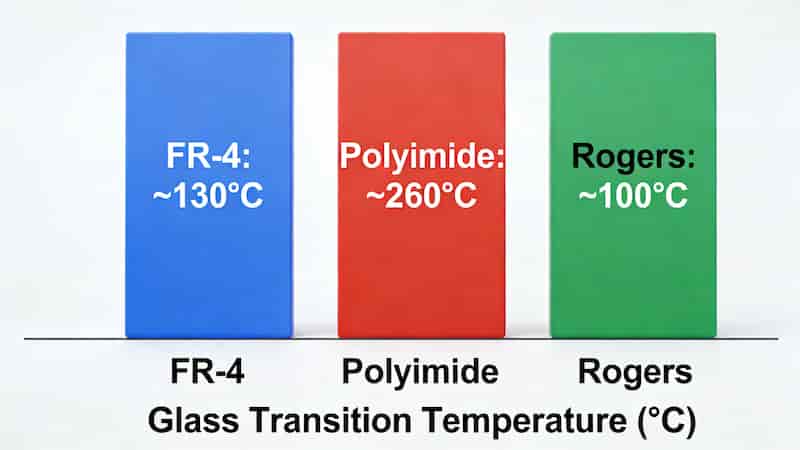
Required for aerospace, military, high‑frequency, and extreme environment applications. Materials include polyimide and Rogers laminates with exceptional thermal stability.
2025 Tg Value Selection Guide for Engineers
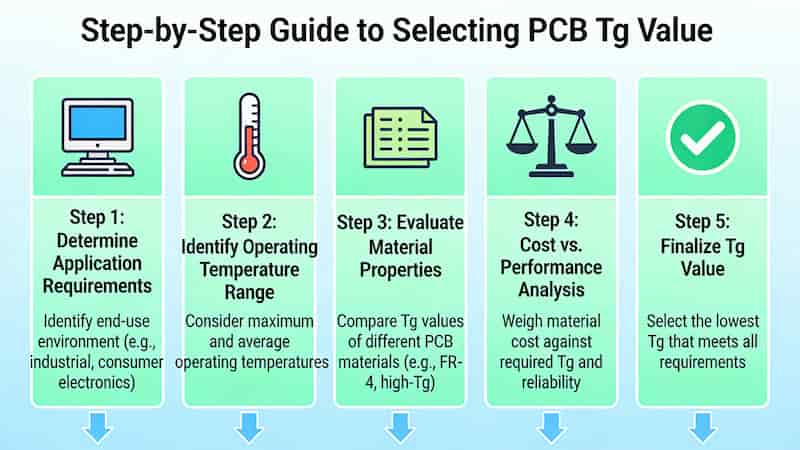
Follow these steps to choose the right Tg value of PCB substrate:
- Set max operating temp + 20–25°C safety margin = minimum Tg
- Lead‑free soldering requires Tg ≥170°C
- Multilayer/HDI designs prefer high Tg materials
- Match Tg to application environment and lifespan
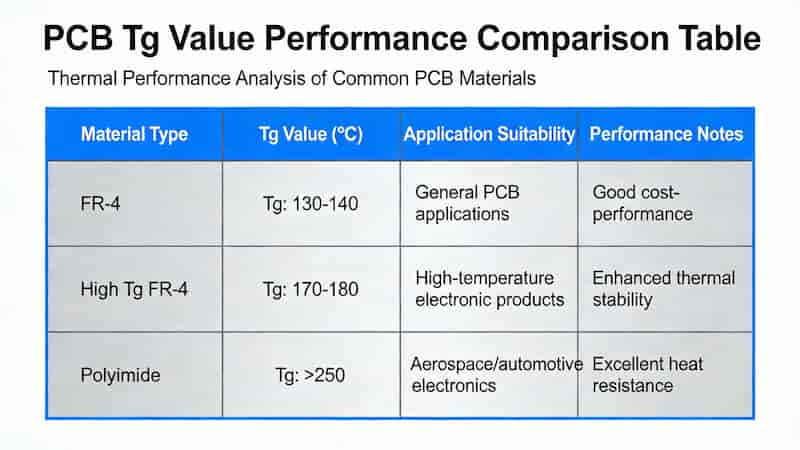
Tg Value Performance Comparison Table
| Tg Grade | Tg Value (°C) | Typical Materials | Applications | Lead‑Free Safe |
|---|---|---|---|---|
| Standard | 130–140 | Standard FR‑4 | Consumer electronics | No |
| Mid | 150–160 | Mid‑Tg FR‑4 | General industrial | Marginal |
| High | 170–180 | High‑Tg FR‑4 | Automotive, Telecom | Yes |
| Ultra High | 190–260+ | Polyimide, Rogers | Aerospace, Defense | Yes |
Summary
The Tg value of PCB substrate is a foundational parameter for thermal stability, mechanical reliability, and electrical performance. Selecting the proper Tg based on operating temperature, assembly process, and application ensures robust, long‑life PCBs. We provide tailored Tg value solutions for 2025 high‑reliability designs.
Inquiry & Custom PCB Service
We specialize in high‑performance PCBs with optimized Tg value of PCB substrate for global industrial buyers. Contact us for free quotes, material recommendations, and custom solutions.