High TG PCB Material: The Ultimate Guide to High-Reliability Circuit Boards
High TG PCB material (Tg ≥170°C) delivers superior thermal stability, low Z‑axis CTE, and long‑term reliability for high‑power, high‑temperature, and high‑density electronic systems. This guide covers core advantages, industry applications, material types, fabrication controls, and how we support your custom High TG PCB projects for global export.
What Is High TG PCB Material
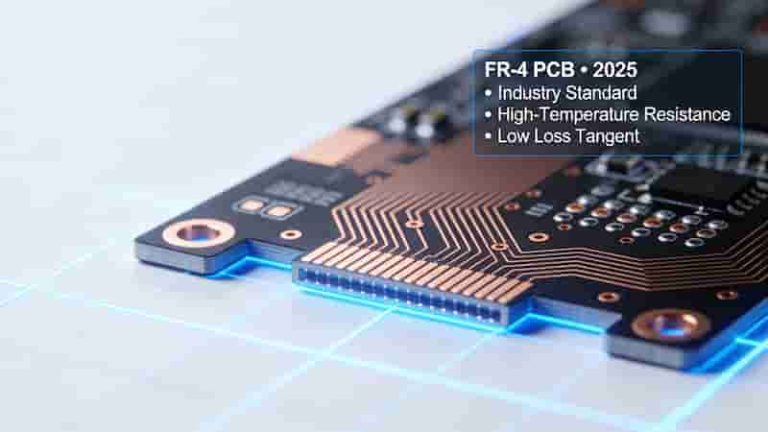
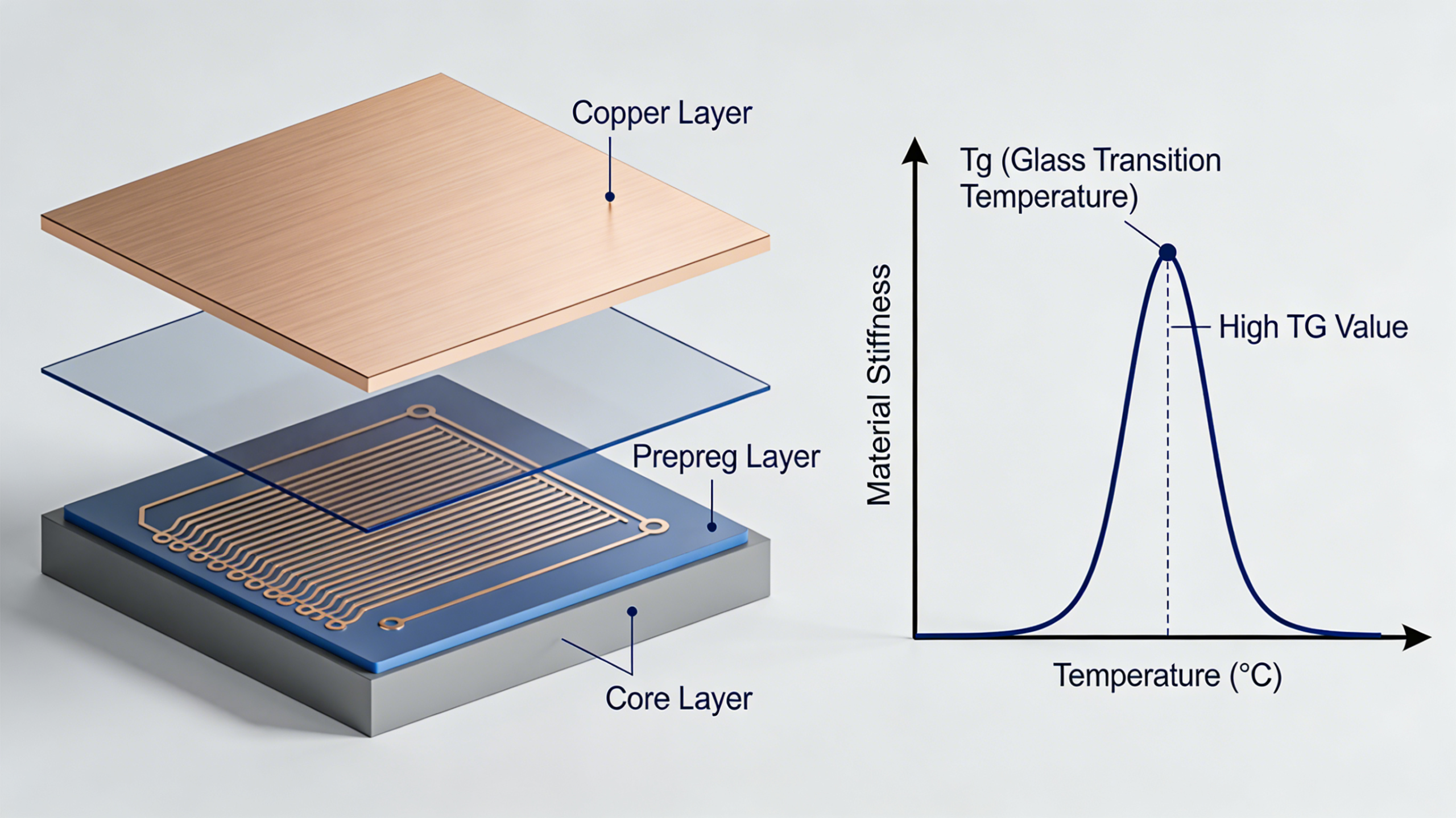
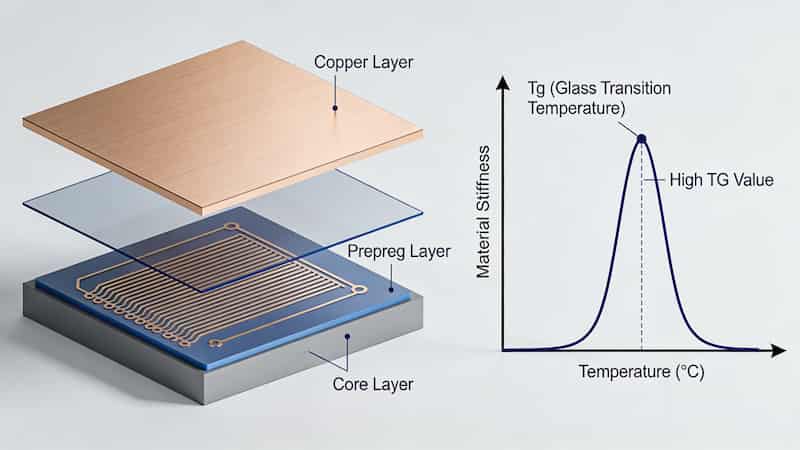
High TG PCB refers to printed circuit board substrates with a glass transition temperature Tg ≥170°C, significantly higher than standard FR‑4 (Tg 130–140°C). These laminates use modified epoxy, polyimide, or BT resin systems to maintain rigidity, dielectric stability, and mechanical strength under sustained high heat and repeated thermal cycling.
Common grades include TG170, TG180, TG190, and ultra‑high TG up to 260°C, widely used in lead‑free soldering, multilayer boards, automotive, industrial, and telecom environments.
Core Benefits of High TG PCB Material
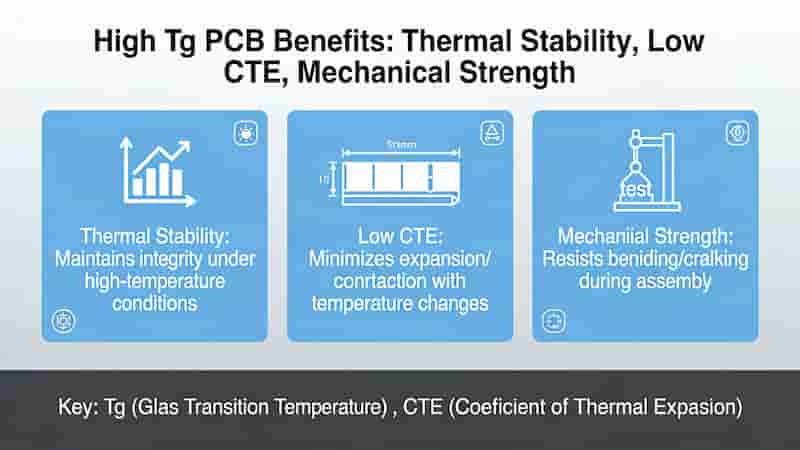
The performance advantages of High TG PCB directly improve product lifespan and operational safety:
Enhanced Thermal Stability
Resists softening at high temperatures; supports lead‑free reflow up to 260°C without warping or delamination.
Low Z‑Axis CTE
Reduces thermal expansion mismatch, lowering via cracking and layer separation in multilayer designs.
High Mechanical Strength
Maintains rigidity and flexural modulus under heat and vibration for harsh environments.
Stable Dielectric Properties
Consistent Dk/Df across temperature ranges preserves signal integrity in high‑speed and RF circuits.
Low Moisture and Chemical Resistance
Minimizes absorption and improves resistance to solvents and harsh industrial conditions.
Longer Service Life
Higher decomposition temperature (Td >340°C) extends reliability in high‑power applications.
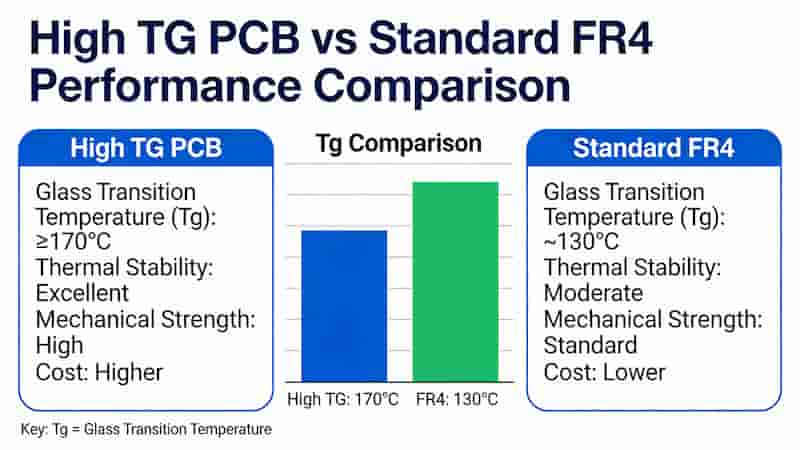
High TG PCB vs Standard FR‑4 Material Comparison
| Parameter | Standard FR‑4 | High TG PCB |
|---|---|---|
| Glass Transition Temp (Tg) | 130–140°C | 170–200°C+ |
| Max Operating Temp | ~110°C | 145–150°C+ |
| Z‑Axis CTE | 70–80 ppm/°C | 50–60 ppm/°C |
| Thermal Decomposition (Td) | ~310°C | 340–360°C+ |
| Lead‑Free Reflow | High risk | Stable, multiple cycles |
| Typical Use | Consumer electronics | Automotive, industrial, telecom |
Key Applications of High TG PCB
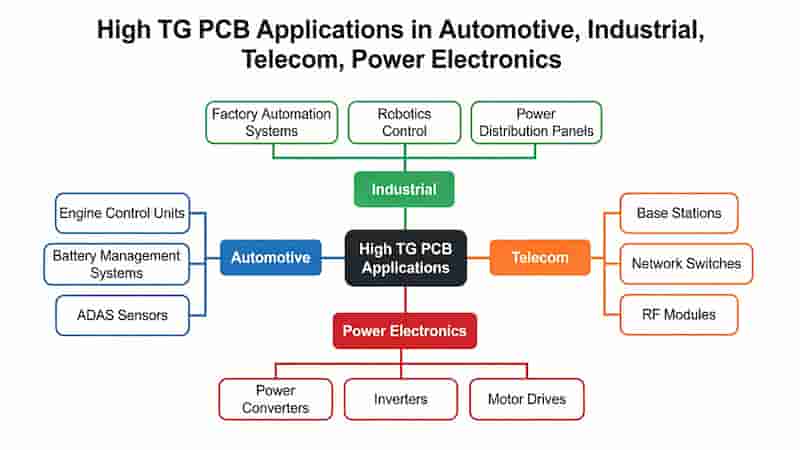
High TG PCB is essential for electronics operating under high heat, high power, or strict reliability requirements:
Automotive Electronics
ECUs, BMS, ADAS, inverter, and under‑hood controls require sustained thermal stability under extreme temperatures.
Industrial Automation
Inverters, PLCs, servo drives, welding equipment, and factory controllers depend on reliable performance under continuous high loads.
Telecom and Datacom
5G base stations, servers, routers, and high‑speed communication boards need stable dielectric properties at elevated temperatures.
Power Electronics
Power supplies, LED drivers, battery chargers, and energy storage systems benefit from high thermal endurance.
Aerospace and Defense
Avionics, satellite communication, and rugged military circuits demand extreme reliability under harsh conditions.
High-Density Multilayer PCBs
8+ layer HDI designs with fine lines and microvias use High TG materials to prevent via cracking and layer separation.
High TG PCB Fabrication Solutions and Process Controls
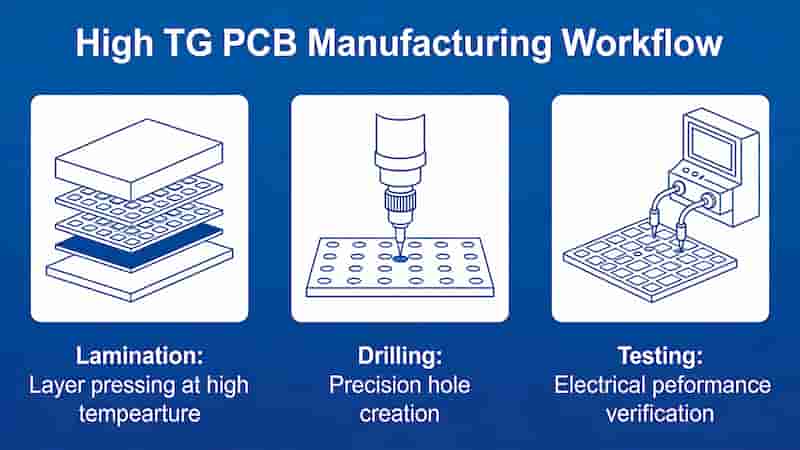
Producing reliable High TG PCB requires strict process control to preserve material performance:
Material Pre-Baking
Removes moisture to prevent delamination during lamination and reflow.
Precision Lamination
Controlled temperature and pressure profiles optimized for high‑TG resins.
Drilling and Desmear
Specialized parameters for hard, high‑TG substrates to ensure clean via walls.
Plating Control
Uniform copper deposition for stable via reliability under thermal stress.
Solder Mask and Surface Finish
High‑temp compatible materials for repeated thermal cycles.
Testing and Validation
Thermal shock, Tg, CTE, and electrical testing per IPC standards.
We support full customization: layer count (2–30+), thickness, copper weight, surface finishes (HASL, ENIG, Immersion Silver), and rigid‑flex designs using certified High TG PCB materials.
Conclusion
High TG PCB material is a critical upgrade for applications demanding thermal stability, mechanical robustness, and long‑term reliability. With Tg ≥170°C, low CTE, stable dielectrics, and strong chemical resistance, High TG PCB ensures consistent performance in high‑heat, high‑power, and high‑density designs across automotive, industrial, telecom, and aerospace sectors.
Our professional fabrication capabilities deliver compliant, export‑ready High TG PCB solutions tailored to your technical and commercial requirements.
Request Custom High TG PCB Quote and Support
Contact us for your High TG PCB requirements, including custom materials, layer counts, prototypes, mass production, and full export support.
Send your Gerber files, BOM, and specifications to receive a fast, detailed quotation. We provide technical support, DFM analysis, and reliable lead times for global buyers.
Inquire Now for High TG PCB