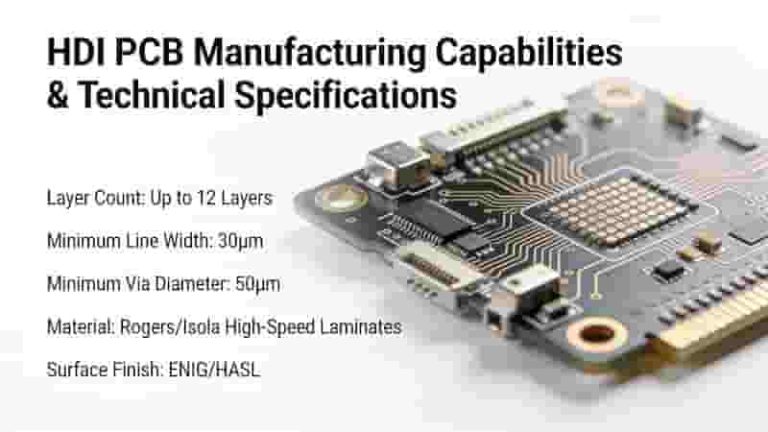
As printed circuit boards pack more components into smaller spaces, microvias enable advanced PCB miniaturization for HDI PCBs. We explain core technology, fabrication, types, reliability, and industrial applications for engineers and global buyers.
What Are Microvias
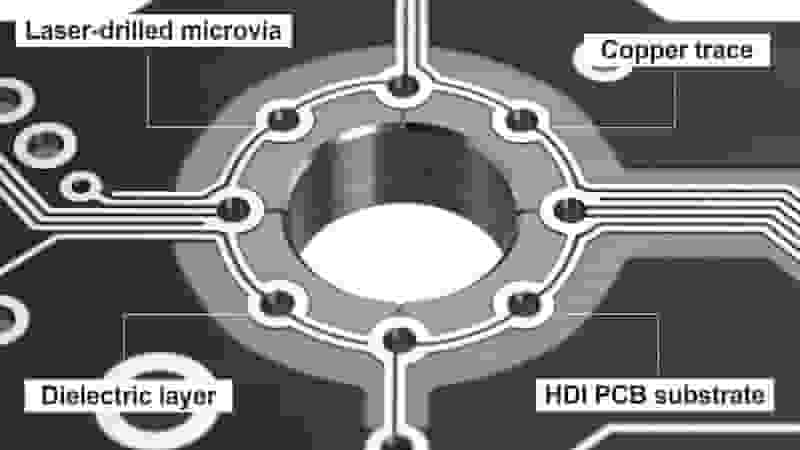
As printed circuit boards are designed to pack ever more components into compact spaces, manufacturers use microvias to enable PCB miniaturization. A microvia is a small laser‑drilled or photo‑imaged interconnect for high‑density HDI PCBs.
Typically 0.005–0.015 inches (0.13–0.38mm) in diameter, microvias reduce board thickness and layer count while preserving electrical performance. They enable greater functionality in shrinking devices including smartphones, wearables, and IoT hardware.
Types of Microvias
Two main processes produce microvias for microvia PCB manufacturing: laser drilling and photoimaging.
Laser‑Drilled Microvias
Laser drilling uses YAG, CO₂, or excimer lasers to create microvias down to 0.005 inches. Benefits include high precision, small capture pads, and high depth‑to‑diameter ratios for multilayer HDI PCBs.
Photoimageable Microvias
UV patterning and copper plating form microvias at lower cost for lower‑density boards. Ideal for large panels where ultra‑fine features are not required.
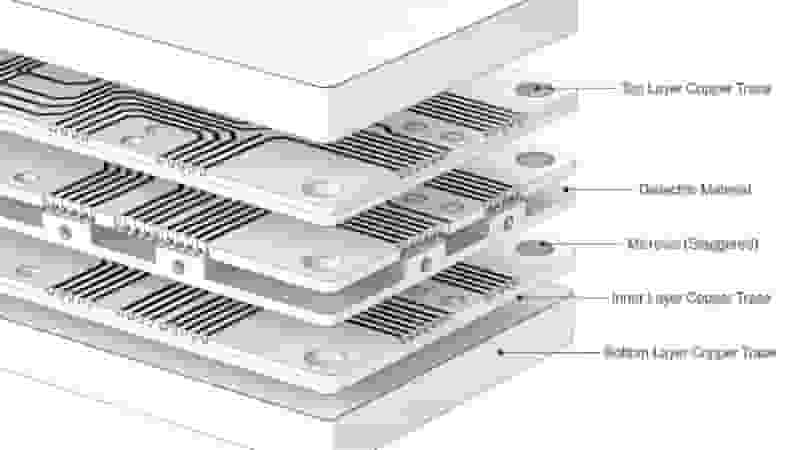
Microvia PCB Technology
Reliable microvias require strict control of stacking, drilling, plating, and quality processes.
Stacked & Staggered Microvias
Stacked microvias align vertically to save space. Staggered microvias reduce mechanical stress for complex PCB miniaturization designs.
Precision Drilling & Plating
Controlled laser pulses and uniform copper plating ensure void‑free interconnections. Electroless and electroplating processes deliver consistent conductivity in microvia PCB production.
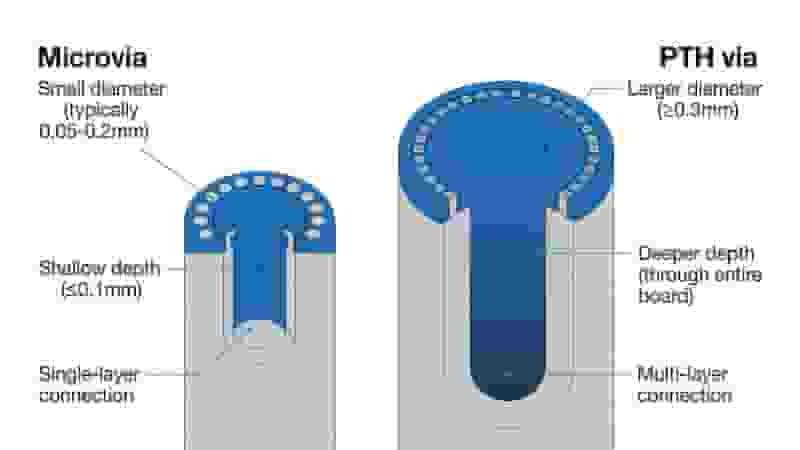
Microvias vs. PTH Vias
| Feature | Microvias | PTH Vias |
|---|---|---|
| Size | ≤0.38mm | Larger |
| Use Case | HDI PCBs, PCB miniaturization | Standard PCBs |
| Routing Space | Maximized | Limited |
Reliability Factors for Microvias
Microvias face thermal and mechanical stress in demanding environments. Key factors include CTE mismatch, capture pad design, and underfill protection. Proper DFM ensures long‑term performance for exported microvia PCB products.
Applications of Microvias
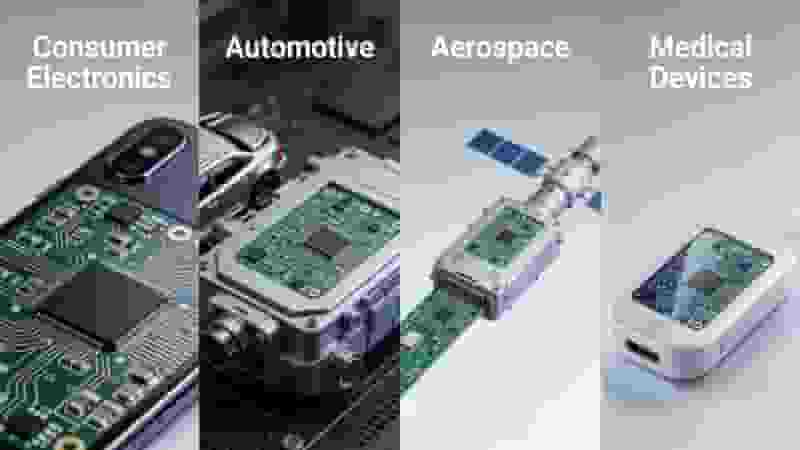
Microvias enable PCB miniaturization across high‑growth industries:
- Consumer Electronics: Smartphones, wearables, IoT devices
- Automotive: Advanced driver assistance and infotainment
- Aerospace & Defense: Guidance and communication systems
- Medical: Implants, ultrasound, and portable diagnostics
Future of Microvias
Advances in laser drilling and plating will shrink microvias further and boost yields. Microvia PCB technology will remain essential for HDI PCBs and next‑generation PCB miniaturization in 5G, AI, and portable electronics.
Our Microvia PCB Capabilities
We specialize in high‑reliability microvia fabrication for global export. Our advanced laser drilling, strict quality control, and DFM optimization support volume production of HDI PCBs for industrial buyers worldwide.
- Advanced laser drilling for precision microvias
- IPC‑standard compliance for global markets
- 100% AOI inspection for quality assurance
- Rapid prototyping and mass production
Conclusion
Microvias are foundational to PCB miniaturization and HDI PCBs. By enabling smaller, lighter, higher‑performance boards, microvia technology supports innovation across every major electronics sector. For reliable, cost‑effective microvia PCB solutions, professional manufacturing and design expertise are critical.
Need Professional Microvia PCBs?
Contact us for a free quote, DFM analysis, and custom microvia PCB solutions for your global projects.
Request a Free Quote
Why Choose Affordable PCB Prototyping?
Quick Turn PCB Assembly Services for Fast Prototypes and Production
Rapid PCB Prototyping | Fast-Turn PCB Fabrication Services
PCB Fabrication Process Flow Chart: Complete Step-by-Step Industrial Guide
Complete Introduction to Flexible Circuit Board Materials