|

What Are Tented Vias? A Complete PCB Design Guide

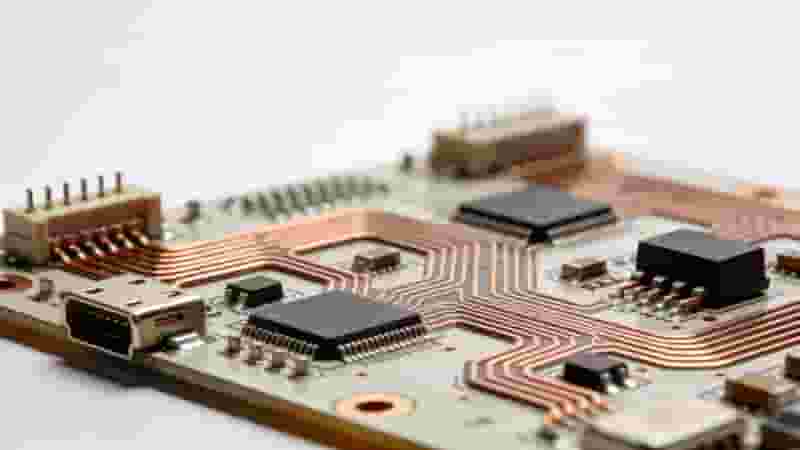
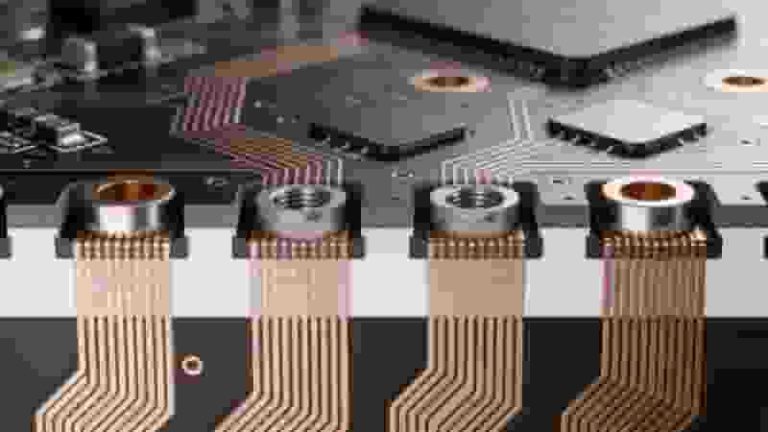
Tented vias application in HDI SMT industrial PCB

Learn what tented vias are, how they work, key benefits, IPC standards, design rules, and best applications for high‑performance PCB manufacturing and assembly.

What Is a Tented Via in PCBs?

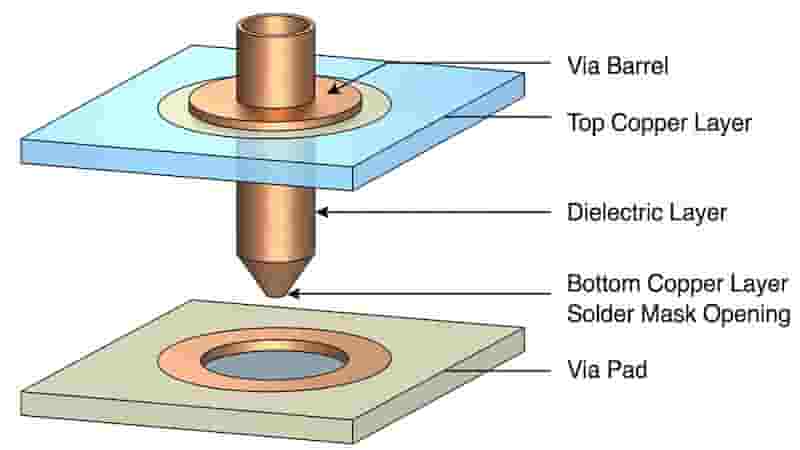
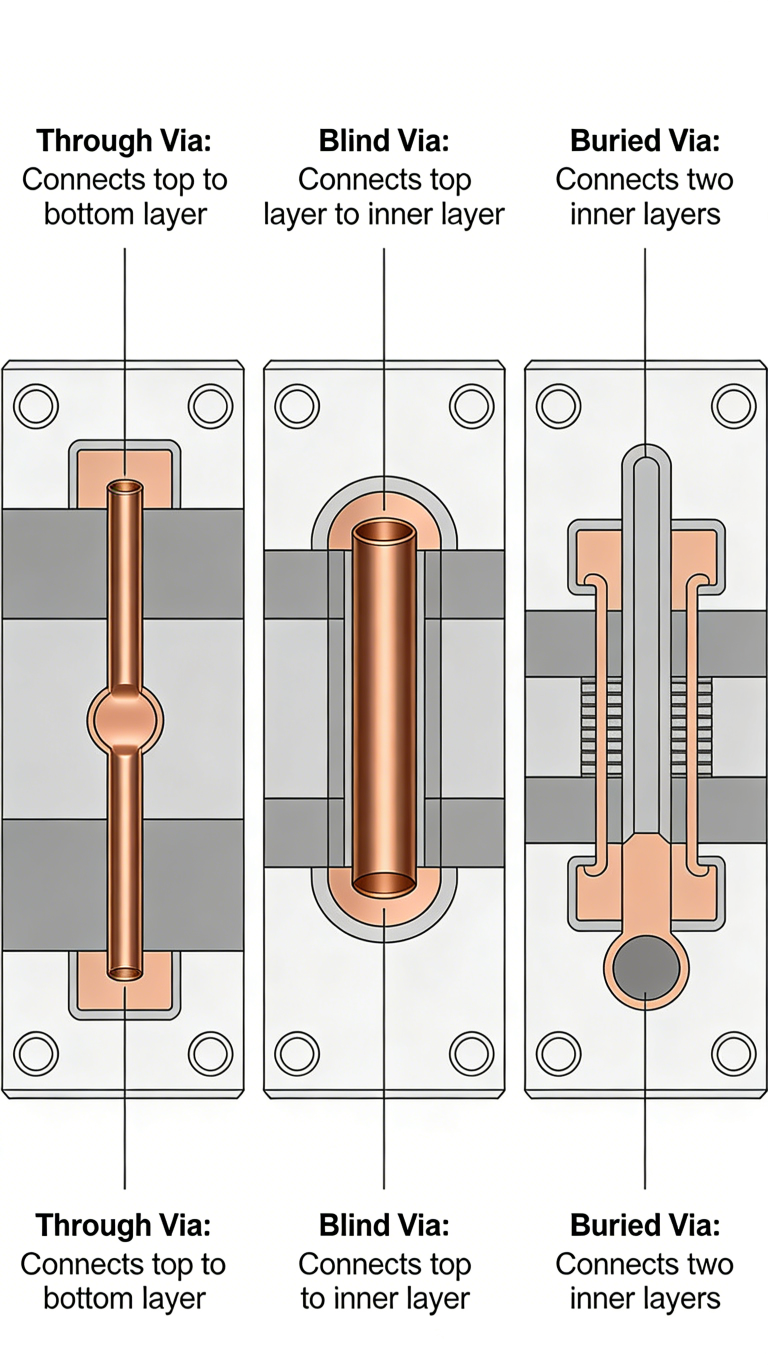
A tented via is a plated through‑hole (PTH), blind via, or buried via fully or partially covered with solder mask on one or both sides of a printed circuit board. The solder mask forms a protective “tent” over the via opening, sealing the hole while keeping the inner barrel conductive.

Unlike exposed vias, tented vias block solder wicking, contamination, and short circuits during SMT assembly and long‑term use. They are widely used in HDI, multilayer, and high‑speed PCB designs.
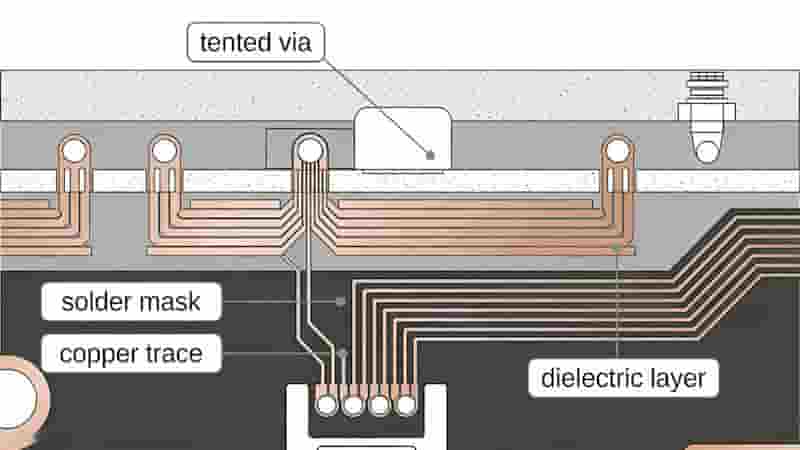
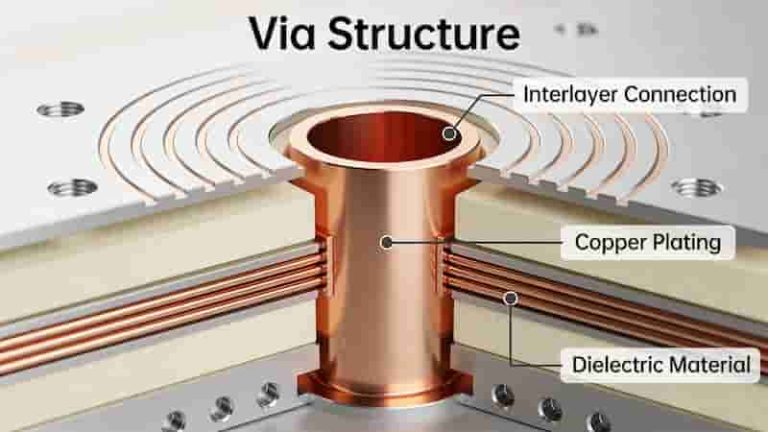
Tented vias PCB cross section structure solder mask protection

Types of Tented Vias (IPC Standards)

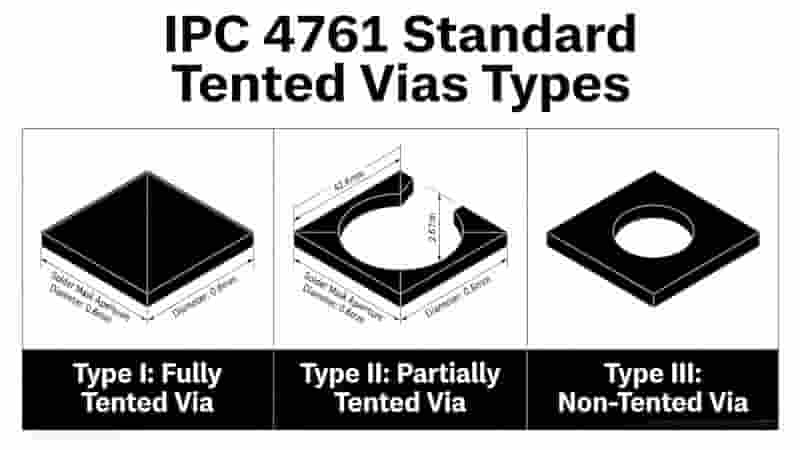
Tented vias follow IPC‑4761 and IPC‑4762 industry standards:

  • IPC‑4761 Type 1a: One‑sided tenting (top or bottom)
  • IPC‑4761 Type 1b: Two‑sided tenting (full coverage)
  • IPC‑4762 Type 2a/2b: Tented with extra solder mask reinforcement
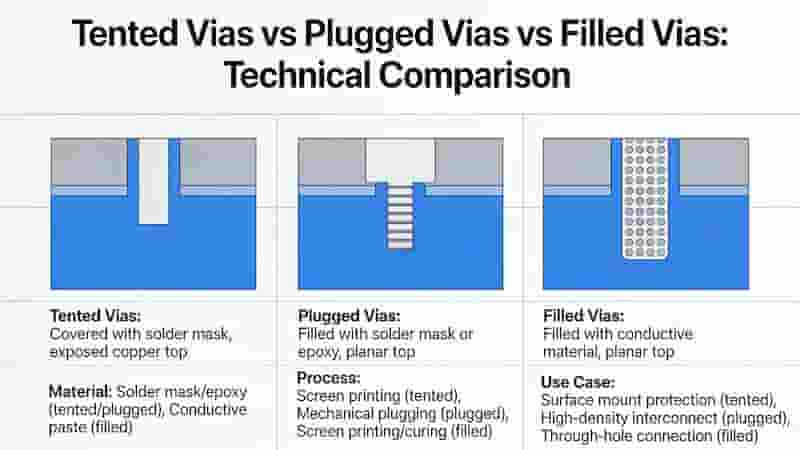
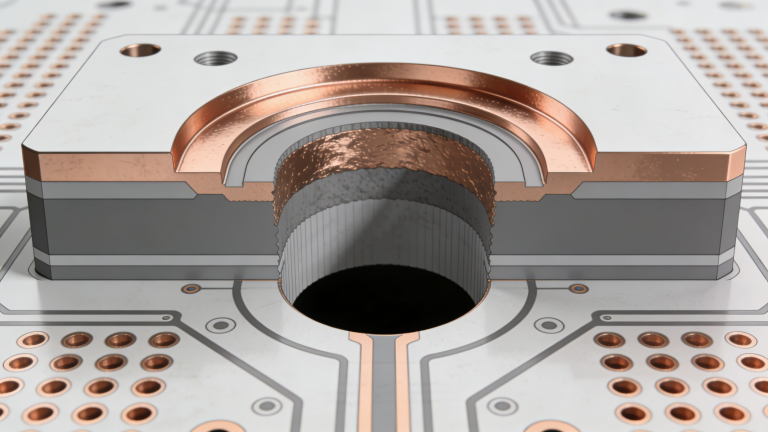
Tented vias IPC 4761 types one side double side

Key Benefits of Tented Vias

  • Prevent solder bridging in fine‑pitch SMT and BGA assemblies
  • Improve insulation and reduce signal leakage in high‑frequency boards
  • Enable trace routing directly over vias in dense layouts
  • Enhance PCB reliability by blocking moisture, dust, and oxidation
  • Support EMI/EMC compliance in industrial and medical electronics

Ideal Applications for Tented Vias

Tented vias deliver the most value in these PCB designs:

  • High‑density interconnect (HDI) PCBs
  • Multilayer boards for industrial controls
  • SMT‑heavy consumer and automotive electronics
  • High‑speed communication and RF circuit boards
  • Medical devices requiring high insulation and stability
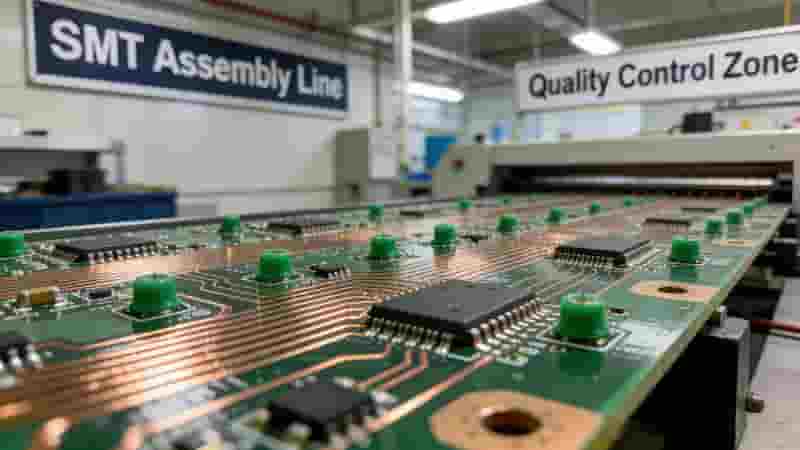
Tented vias application in HDI SMT industrial PCB

How Tented Vias Are Manufactured

Two industry‑standard processes create reliable tented vias:

1. Mask Tenting: Solder mask is retained over vias during the standard imaging process.

2. Paste Tenting: Special solder mask paste is printed directly onto via openings as a secondary step.

Solder mask thickness for tented vias is typically 10–30 microns to ensure proper curing and coverage.

Tented Via Design & DFM Rules

  • Via diameter ≤ 0.3 mm (12 mil) for consistent tenting
  • Minimum clearance ≥ 0.25 mm from SMT pads
  • Avoid tenting vias used for test points or thermal dissipation
  • Use LPI solder mask for uniform coverage
  • Label tented vias clearly in Gerber and drill files
Tented vias PCB design rules DFM guidelines

Conclusion

Tented vias are a cost‑effective, high‑reliability solution for modern PCB design. They improve assembly yield, electrical safety, and long‑term durability while supporting dense, high‑performance layouts. Following IPC standards and proper DFM rules ensures consistent, production‑ready results.

Need High‑Quality PCBs with Reliable Tented Vias?

Get professional PCB manufacturing, DFM analysis, and fast quotes for your custom projects.

Request a Free Quote
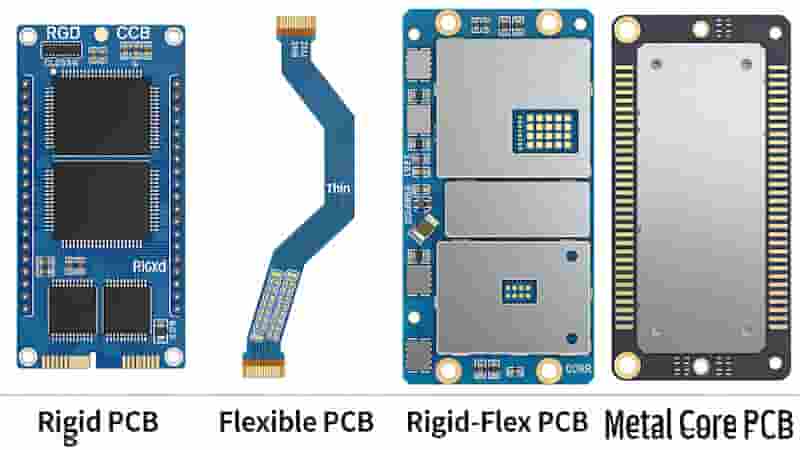
Rigid-Flex PCB structure and core benefits

Rigid-Flex PCB Manufacturing & Prototype Services

Posted on
0 Comments
We are a professional Rigid-Flex PCB manufacturer providing 1–12 layer rigid-flex PCB prototyping, mass production, and assembly services for global industrial buyers, engineers, and procurement teams. ISO, UL, and RoHS certified, we support quick-turn fabrication, free DFM checks, zero MOQ, and full custom solutions.  Key Benefits of Rigid-Flex PCB Rigid-Flex PCB integrates rigid PCB stability…
Multilayer Aluminum PCB for Power Electronics

Aluminum PCB Manufacturing & Assembly Services

Posted on
0 Comments
Reliable aluminum PCB manufacturer & MCPCB supplier in China, providing fast prototypes and small to medium-volume production for LED lighting, power supply and other high-power electronics. About Our Aluminum PCB Services We specialize in aluminum PCB and metal core PCB fabrication, from single-sided aluminum PCBs for LED lamps to complex multilayer aluminum boards for power…
HDI PCB manufacturing capabilities and technical specifications

HDI PCB Manufacturing – Microvia, Blind & Buried Via HDI Boards up to 30 Layers

Posted on
0 Comments
We provide professional HDI PCB manufacturing with laser‑drilled microvias, blind vias, buried vias, and advanced stack‑ups for high‑performance, compact electronic devices. Our services include fast prototyping, controlled impedance, strict quality control, and full DFM engineering support. What Is an HDI PCB and Why Choose It? High‑density interconnect (HDI PCB) offers significantly higher wiring density than…
Automotive Printed Circuit Boards Structure and Basics

Automotive Printed Circuit Boards: Reliable Solutions for Vehicle Electronics

Posted on
0 Comments
Automotive printed circuit boards are critical building blocks for modern vehicles, supporting engine control, infotainment, safety systems, ADAS, and electric powertrains. These boards deliver stable performance under extreme temperatures, vibration, humidity, and EMI while meeting strict automotive quality standards. What Are Automotive PCBs? Automotive printed circuit boards are specially designed and manufactured for vehicle electronic…
Professional PCBA Manufacturing Line SMT Production

Printed Circuit Board Assembly Services | Full Turnkey PCBA Solutions

Posted on
0 Comments
Printed Circuit Board Assembly Services provide professional SMT, through-hole, BGA, and mixed-technology assembly for global electronics buyers. We support prototype to mass production, strict quality control, fast turnaround, and cost-effective one-stop EMS solutions for industrial, automotive, medical, and communication applications. PCBA Expert & Professional Manufacturer We are a professional Printed Circuit Board Assembly Services provider…
OSP PCB Production Line Coating Process

What Is PCB OSP Surface Finish? A Comprehensive Guide

Posted on
0 Comments
OSP (Organic Solderability Preservative) is a lead‑free, water‑based organic coating applied to exposed copper pads on printed circuit boards to prevent oxidation and ensure reliable soldering for SMT assembly. This complete guide covers definition, process, pros & cons, comparisons, storage, assembly best practices, and ideal applications for global engineers and buyers. What Is PCB Surface…

FAQs About PCB Tented Via Definition, Design & Application

A: Tented via means via hole opening is fully or partially covered by solder mask to form protective tent; inner copper barrel remains conductive while blocking external impurity and solder inflow.

A: Prevent solder bridging during SMT, cut high-frequency signal crosstalk, allow routing above vias, block dust/moisture corrosion and optimize EMI performance.

A: IPC-4761 divides into single-side tenting and double-side full tenting; IPC-4762 stands for vias with strengthened extra solder mask covering.

A: Regular LPI mask tenting during solder mask exposure; secondary paste tenting by separately printing mask paste on via holes.

A: Via diameter ≤0.3mm, keep ≥0.25mm spacing away from SMT pads; never tent test vias and thermal relief vias for heat dissipation.

A: HDI high-density boards, multilayer industrial control PCB, automotive SMT boards, high-speed RF and high-reliability medical circuit boards.

A: Standard solder mask thickness ranges 10~30μm to guarantee complete covering and full curing without mask peeling off.

A: Solder mask coverage blocks probe contact; uncovered via pad is required for ICT flying probe electrical testing after PCB finished.

Similar Posts