Rigid Flex PCB Application Industrial Automotive Medical Consumer Electronics

Flexible PCB Cost in 2025: Why It’s Expensive and Proven Ways to Save

Discover why flexible PCB cost rises in 2025 due to premium materials and complex manufacturing. Learn proven strategies to reduce flex PCB pricing, from minimizing layers to bulk ordering, with expert tips to optimize your design for industrial and export applications.

Flexible PCB Cost 2025 Materials Manufacturing Layers Surface Finish

What Are Flexible PCBs and How Do They Work?

A flexible PCB (flex circuit) is a printed circuit board built on flexible substrates such as polyimide or polyester film, allowing repeated bending and shaping inside compact devices. Unlike rigid PCBs that use FR‑4, flex PCBs deliver high adaptability for miniaturized electronics.

They support conductive circuits and component mounting while fitting tight spaces, widely used in smartphones, wearables, medical devices, and automotive systems. According to the IPC 2024 Report, the global flexible PCB market reached $18.36 billion in 2024, growing at 13.7% CAGR through 2030.
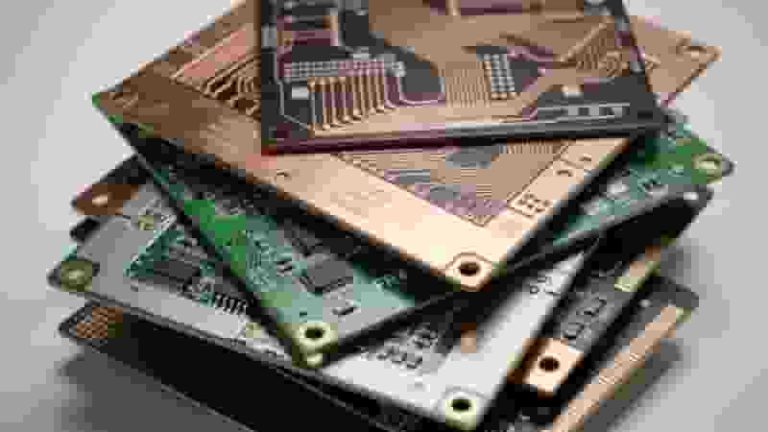
Flexible PCB Structure Polyimide Substrate Conductive Layers Coverlay

Where Are Flexible PCBs Used?

Flexible PCBs are irreplaceable in applications where rigid boards cannot fit:

  • Consumer Electronics: Smartphones, smartwatches, headphones
  • Automotive: Dashboard interconnects, sensors, in‑car connectivity
  • Medical Devices: Hearing aids, minimally invasive tools, catheters
  • Aerospace: Satellites, avionics, lightweight control systems
  • Interconnect modules: Rigid‑flex PCB combinations for complex assemblies
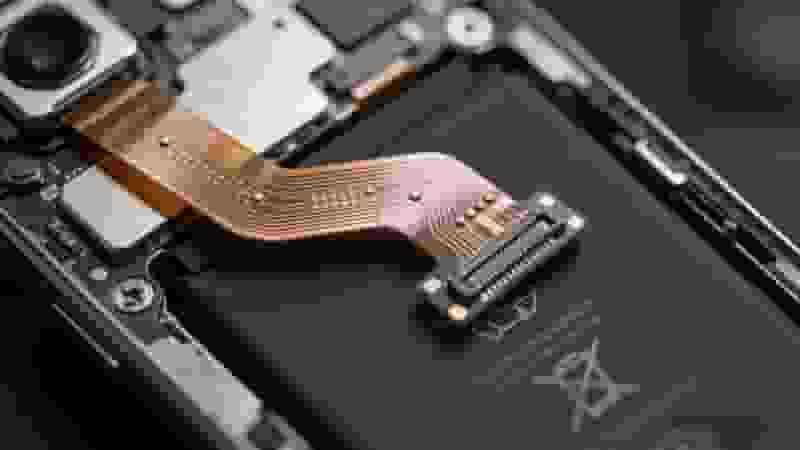
Rigid Flex PCB Application Industrial Automotive Medical Consumer Electronics

Why Is Flexible PCB Cost Higher?

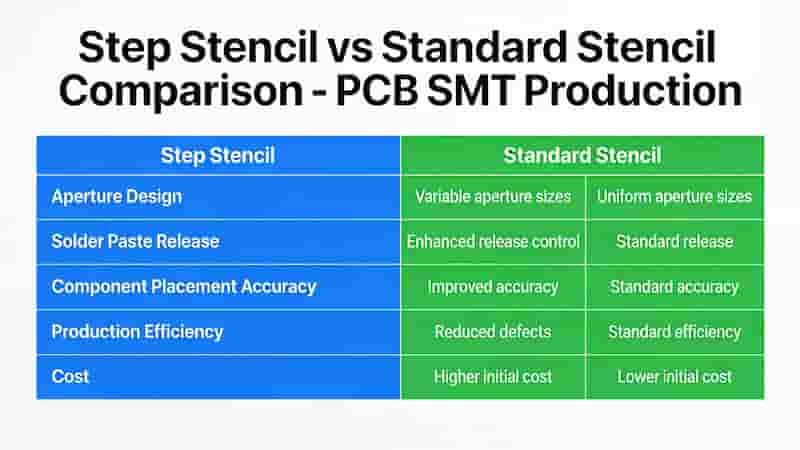
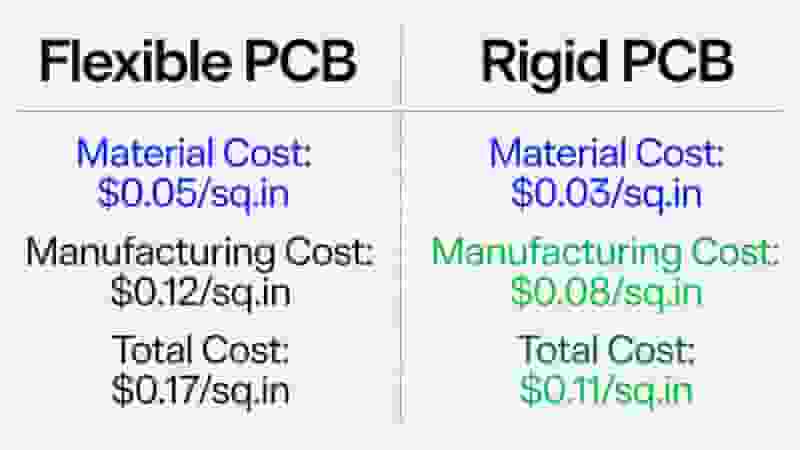
Flexible PCB cost is typically 5–10 times higher than rigid PCBs due to three core factors:

1. Premium Base Materials
Polyimide film costs 5–10x more than FR‑4, with superior heat resistance and mechanical stability.

2. Complex Manufacturing
Precise lamination, bonding, and etching require strict temperature and pressure control, raising production cost and reject rates.

3. Design & Assembly Complexity
Layer count, copper thickness, trace space, microvias, stiffeners, gold fingers, and surface finishes all increase flex PCB pricing.
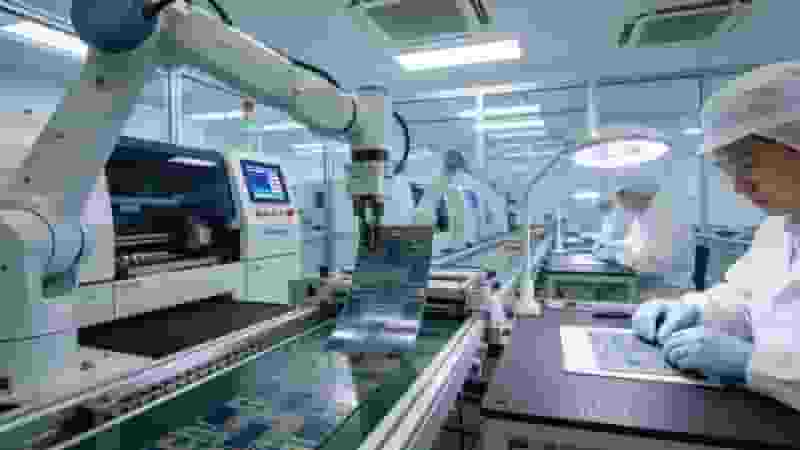
Flexible PCB Cost Drivers Materials Manufacturing Design Layers

Flex vs. Rigid PCB Cost: 2025 Comparison

SpecificationRigid PCB (FR‑4)Flexible PCB (Polyimide)
4‑layer 6×4 inch~$30 per sq. inch$150–$300+ per sq. inch
8‑layer 12×18 inch~$150$1,500–$3,000+

Proven Ways to Reduce Flexible PCB Costs in 2025

Use these practical methods to lower flexible PCB cost without losing performance or reliability:

1. Minimize Layer Count
Cutting 1–2 layers reduces material and processing cost by up to 20% while keeping function intact.

2. Order in Bulk Quantities
Volume orders significantly reduce unit pricing for export and mass production.

3. Simplify Vias and Drilling
Fewer microvias and simplified routing shorten production time and lower cost.

4. Use Rigid‑Flex Hybrid Design
Replace full flex with rigid‑flex where flexibility is not required, balancing cost and performance.

5. Evaluate Cost‑Effective Materials
Polyester film works for low‑stress applications to reduce flex PCB pricing.

Summary

Flexible PCB cost in 2025 is driven by high‑performance materials and complex manufacturing. By optimizing layer count, order volume, design structure, and material selection, you can achieve stable pricing and reliable quality for global industrial and export projects.

Get Your Flexible PCB Cost Quote Now

Contact our team for professional flex PCB manufacturing, custom design, and export solutions.

Request Free Quote

Frequently Asked Questions

Q: How can I reduce flexible PCB costs?
A: Reduce flexible PCB cost by minimizing layers, bulk ordering, simplifying drilling, using rigid‑flex designs, and selecting suitable materials.

Q: Why are flexible PCBs so expensive?
A: They rely on costly polyimide substrates, complex fabrication, and tight tolerances that raise flex PCB pricing compared to rigid boards.

How to Choose the Best Metal Core PCB Manufacturer for Your Project

Posted on
0 Comments
If you’re wondering how to choose the best metal core PCB manufacturer for your project, you’re in the right place. Selecting the right supplier is critical for high-power applications like LED lighting, automotive systems, and power supplies. Why Choosing the Right Metal Core PCB Manufacturer Is Critical In modern electronics, metal core PCBs deliver superior…
PCB Prototype Quality Control and Testing - UK PCB Prototype Manufacturing

UK PCB Prototype Manufacturing: Fast Turnaround, Cost-Effective & IPC-Certified Quality

Posted on
0 Comments
UK PCB prototype manufacturing delivers rapid, reliable printed circuit board prototypes for engineers, procurement teams, and industrial buyers. We provide fast lead times, competitive pricing, and consistent quality compliant with IPC, ISO 9001, RoHS, and REACH standards to support UK and global electronics development. PCB Prototype Capabilities & Specifications Our UK PCB prototype manufacturing supports…
Gold Finger PCB Edge Connector Plating Overview

Gold Finger PCB Fabrication & Manufacturing Service

Posted on
0 Comments
Professional Gold Finger PCB manufacturing with IPC standards, hard gold plating, precision beveling, and reliable quality for industrial connectors, memory modules, and high-reliability electronics. Gold Finger PCB Guide – Quick Navigation What is a Gold Finger PCB? Gold fingers are the gold-plated edge connectors along the side of many PCBs, such as memory cards, graphics…
SMT and PTH High Volume PCB Assembly Process

High Volume PCB Assembly Services

Posted on
0 Comments
With over 14 years of expertise, we deliver cost-effective, scalable high volume PCB assembly for automotive and medical industries. Advanced automation and strict quality control ensure reliable PCBAs with fast global delivery. What Is High Volume PCB Assembly? High volume PCB assembly means large‑scale production of printed circuit board assemblies to fulfill orders of thousands…
Advantages of OSP PCB surface finish for fine pitch SMT

PCB OSP Surface Finish: Complete Technical Guide for Buyers & Engineers

Posted on
0 Comments
OSP (Organic Solderability Preservative) is a lead‑free, RoHS‑compliant organic coating applied to exposed copper pads on printed circuit boards to prevent oxidation and preserve solderability before SMT assembly. This guide explains PCB OSP surface finish in full: process, pros, cons, storage, assembly, comparisons, and best practices for industrial electronics manufacturing. What Is PCB Surface Finish?…
PCB Manufacturing Tg Value Custom Support Service

What Is the Tg Value of PCB Substrate? A Complete Guide for 2025 Designs

Posted on
0 Comments
The Tg value of PCB substrate (glass transition temperature) defines the critical temperature where PCB materials shift from rigid glassy to soft rubbery states. This guide explains Tg value fundamentals, classification, selection rules, reliability impacts, and 2025 best practices for industrial, automotive, telecom, and aerospace designs. What Is Tg Value of PCB Substrate The Tg…

Similar Posts