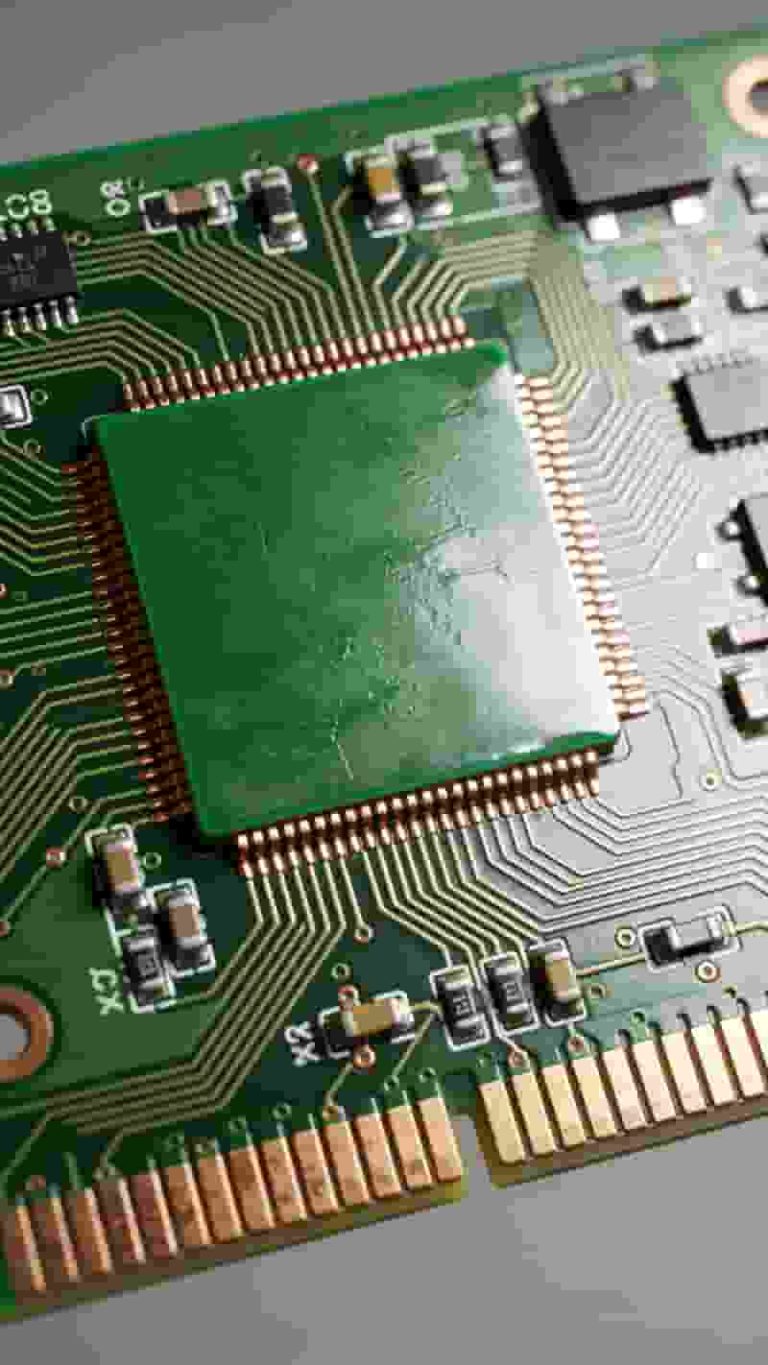
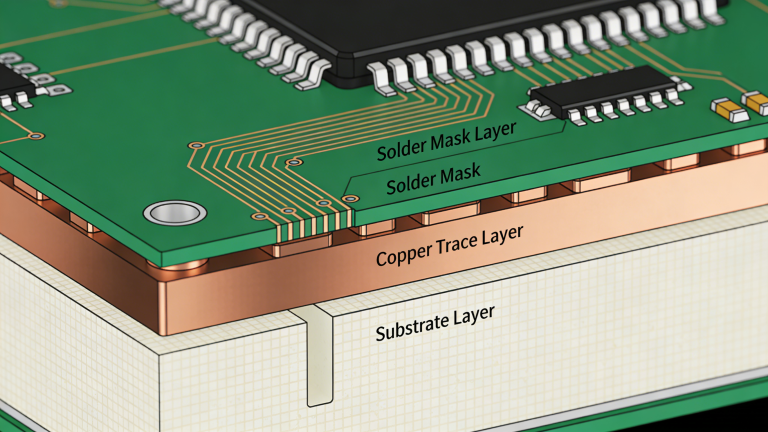
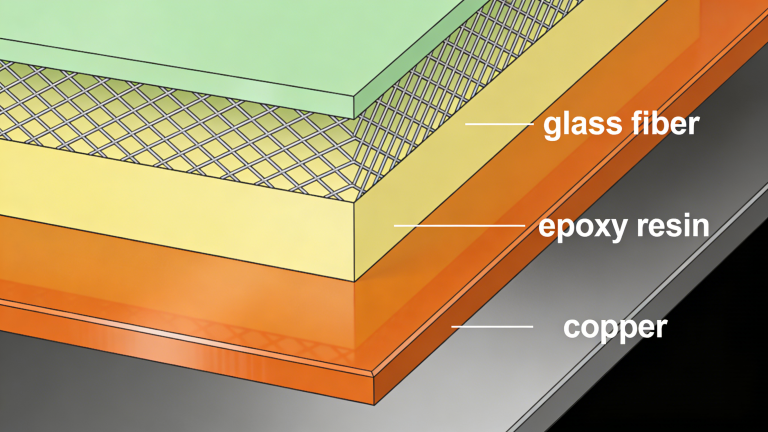
Flexible circuit board materials directly define flexibility, thermal stability, electrical performance, and reliability of FPCs. This professional guide covers substrates, conductors, adhesives, protective layers, stiffeners, and selection standards for global industrial buyers, engineers, and procurement teams.
What Are Flexible Circuit Boards
A flexible circuit board (FPC) is a lightweight, bendable circuit built on flexible insulating substrates. It supports high-density assembly, miniaturization, and 3D wiring, widely used in consumer electronics, automotive, medical, and aerospace applications.
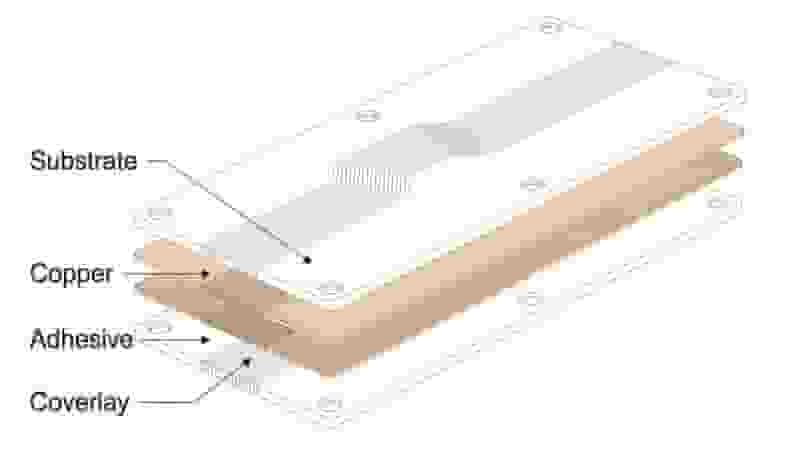
FPCs are classified as adhesive or non-adhesive types, and single-sided, double-sided, or multilayer structures. The performance of flexible circuit board materials determines product lifespan and application suitability.
Core Flexible Circuit Board Materials
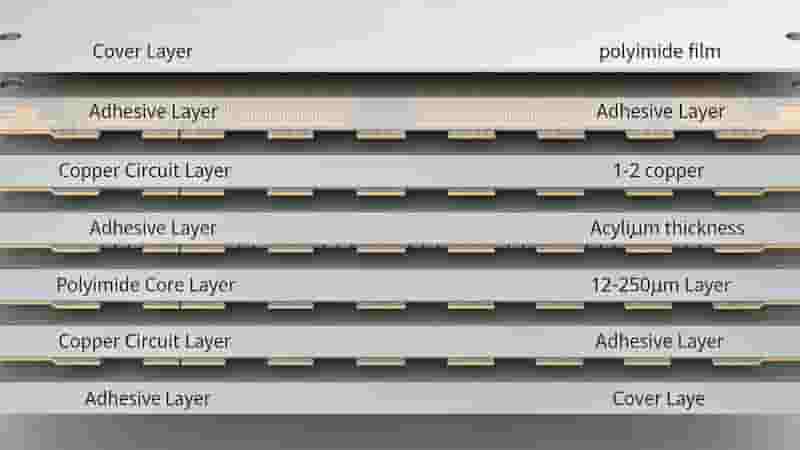
Three fundamental components form flexible circuit board materials: conductive copper foil, insulating substrate, and adhesive layer. Additional layers include coverlay, stiffener, and solder resist for protection and reinforcement.
Material Classification by Structure
Adhesive FPC: Copper foil and substrate bonded with glue; standard and cost-effective for general use.
Non-adhesive FPC: Copper and substrate laminated without adhesive; better flexibility, bonding strength, and flatness; used in high-end applications like COF.
Conductive Copper Foil Types & Properties
Copper foil is the core conductive component of flexible circuit board materials, available as rolled annealed (RA) and electrodeposited (ED) types.
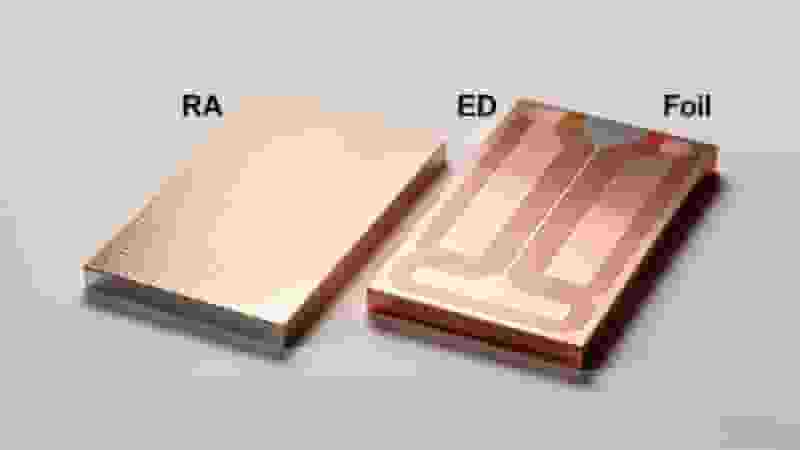
Rolled Annealed (RA) Copper: Elongation 20–45%, excellent flex resistance, ideal for dynamic bending.
Electrodeposited (ED) Copper: Lower cost, elongation 4–40%, suitable for static or low-flex applications.
Standard Thickness:
0.5oz (18μm), 1.0oz (35μm), 2.0oz (70μm). Thickness affects current carrying capacity and flex life.
Insulating Substrate Materials Comparison
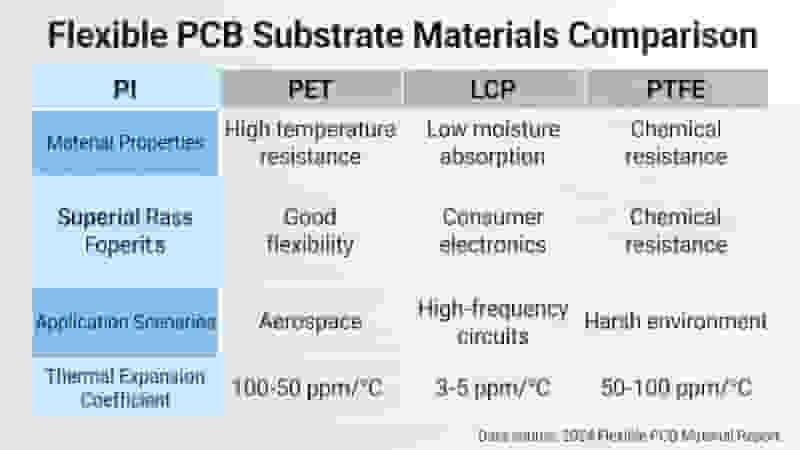
Insulating films are the foundation of flexible circuit board materials. Main types: PI, PET, LCP, PTFE.
Polyimide (PI)
High heat resistance (-200℃ to 400℃), solderable, excellent mechanical and electrical performance. Used in ~80% of industrial flexible circuit board materials.
Polyester (PET)
Low cost, good transparency, limited heat resistance (max 80–100℃). For low-temperature, non-solder consumer products.
LCP & PTFE
LCP: Low dielectric loss, stable at high frequency for 5G and RF.
PTFE: Ultra-low loss, chemical inertness, ideal for high-frequency and medical devices.
| Property | PI | PET | LCP |
|---|---|---|---|
| Heat Resistance | Excellent | Fair | Excellent |
| Solderable | Yes | No | Yes |
| Flex Life | High | Medium | High |
Adhesives & Bonding Systems
Adhesives bond layers in flexible circuit board materials. Main types: acrylic and modified epoxy.
Acrylic Adhesive: Strong heat resistance, good bonding, long shelf life.
Epoxy Adhesive: Balanced performance, stable electrical properties, ideal for multilayer FPC.
Standard thickness: 0.5mil, 1.0mil, 2.0mil. Selection depends on heat, flexibility, and electrical needs.
Protective Layers & Stiffeners
Protective and reinforcing parts extend durability of flexible circuit board materials.
Coverlay
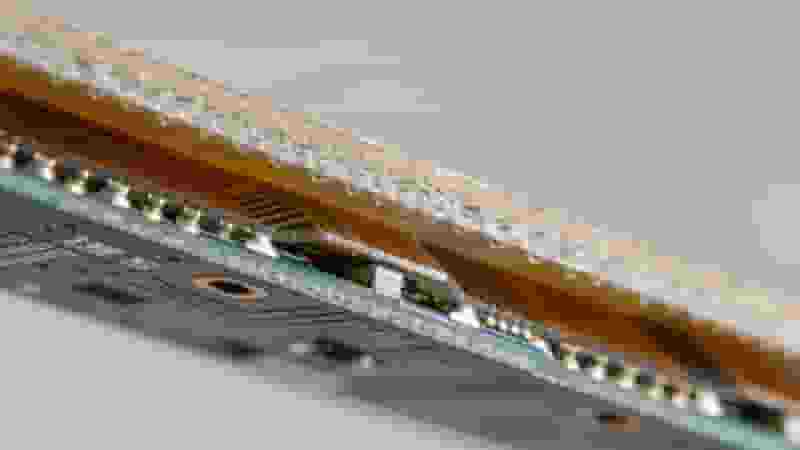
PI-based protective film insulates circuits, resists moisture and abrasion. Thickness: 0.5–5.0mil.
Stiffener Materials
Common options:
- PI: High heat resistance, solderable
- FR4: Strong rigidity, low cost
- PET: Non-solder, low temperature
- Aluminum/Steel: Heat dissipation & strength
Material Selection Guidelines
Choose flexible circuit board materials based on these factors:
- Operating temperature range
- Bending frequency and dynamic stress
- Electrical performance: impedance, signal integrity
- Chemical and environmental exposure
- Assembly process: reflow, wave soldering
- Budget and production volume
Summary
High-quality flexible circuit board materials ensure reliability, longevity, and performance of FPC (Flexible Printed Circuit)products. PI, RA copper, and reliable adhesives remain industry standards for industrial and automotive applications.
Understanding material properties helps engineers and buyers select optimal solutions for cost, performance, and application requirements.
Need Custom Flexible Circuit Board Solutions?
Contact us for material selection, design support, manufacturing, and official quotations. We provide reliable FPC services for global buyers.
Request FPC Quote Now
PCB Manufacturing Process Part 1: MI, Cutting & Drilling – Complete Industrial Guide
Ultimate Guide to Multilayer PCB Layer Stackup & Thickness | Standard 4–14 Layer Configurations
The Best PCB Manufacturer in China | PCB Prototype & Assembly Services
IPC Standards: Complete Guide for PCB Manufacturing & Assembly
Types of Flexible Circuit Boards: The Ultimate Guide to Flex PCBs