FR-4 is the global industry-standard flame-retardant glass-reinforced epoxy laminate for rigid PCB fabrication. This guide explains definition, composition, properties, grades, selection, and why FR-4 PCB is the top choice for engineers and global buyers.
What is FR-4 Material?
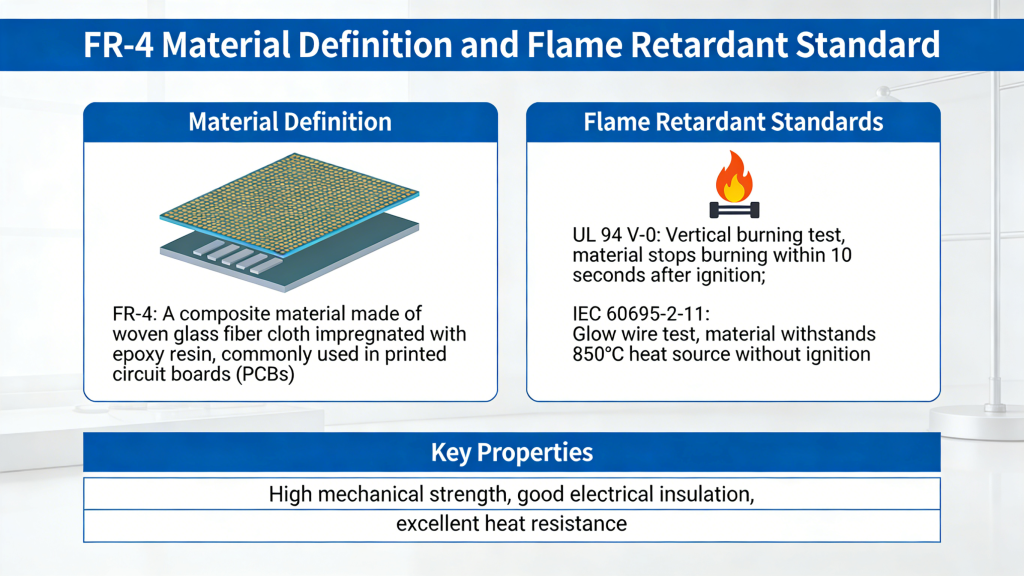
FR-4 (Flame Retardant Type 4) is a NEMA-defined material grade for flame-resistant epoxy laminates. It is not a brand name but an industry standard that meets UL94 V-0 flammability requirements.
FR means the resin self-extinguishes after combustion, preventing fire spread and protecting equipment and personnel. FR-4 uses halogen-containing flame retardants for reliable safety performance.
Composition & Structure of FR-4
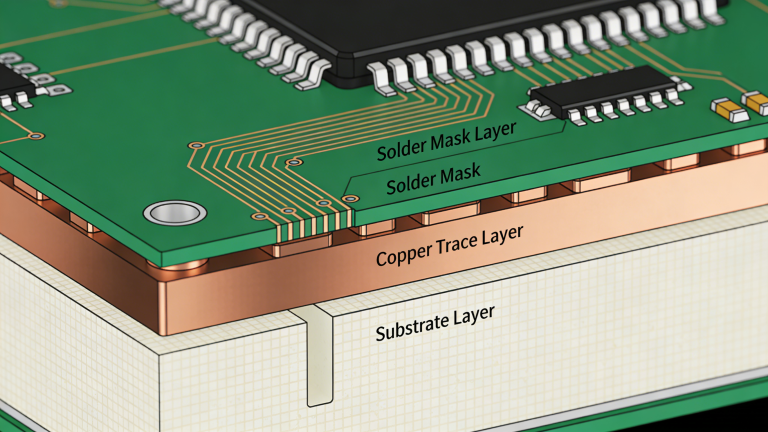
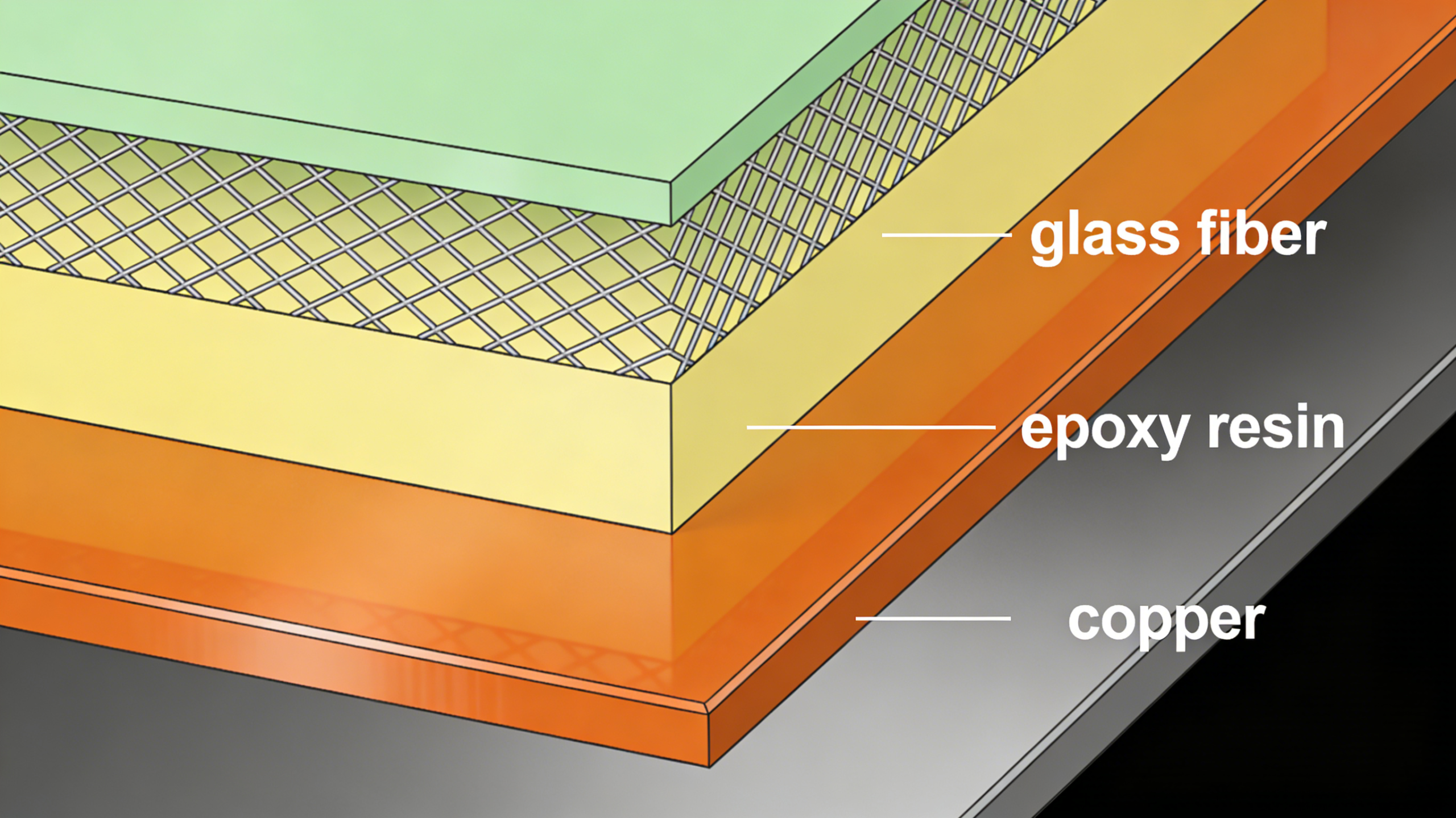
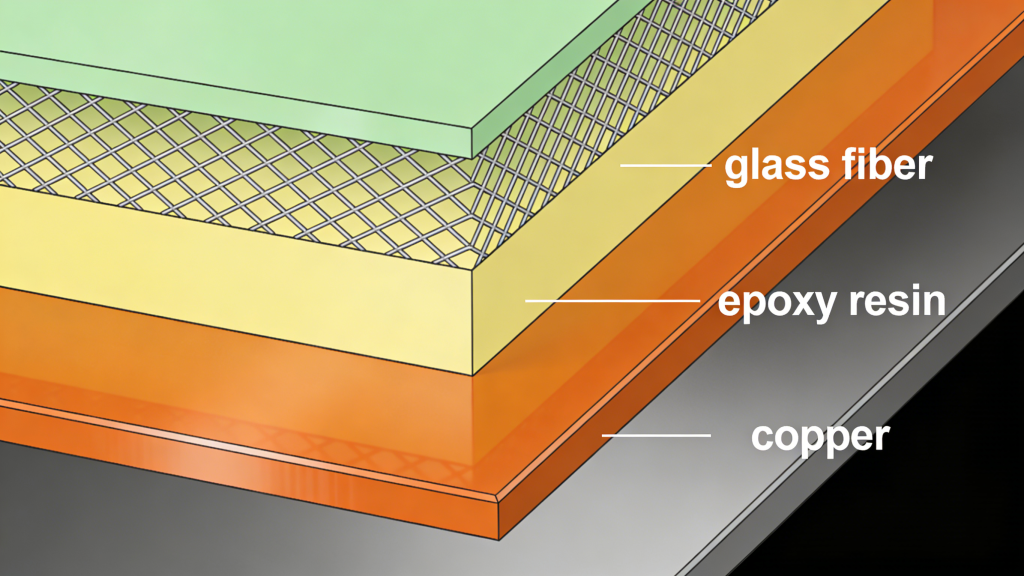
FR-4 is a composite Copper Clad Laminate (CCL) made by hot-pressing:
- Woven electronic-grade E-glass fiber cloth (reinforcement)
- Flame-retardant epoxy resin (binder)
- Thin copper foil (conductive layer)
This structure gives FR-4 PCB excellent mechanical strength, insulation, and thermal stability. Most rigid PCBs rely on FR-4 as their core substrate.
Key Performance Characteristics
FR-4 provides balanced electrical, mechanical, and thermal properties ideal for mass PCB fabrication:
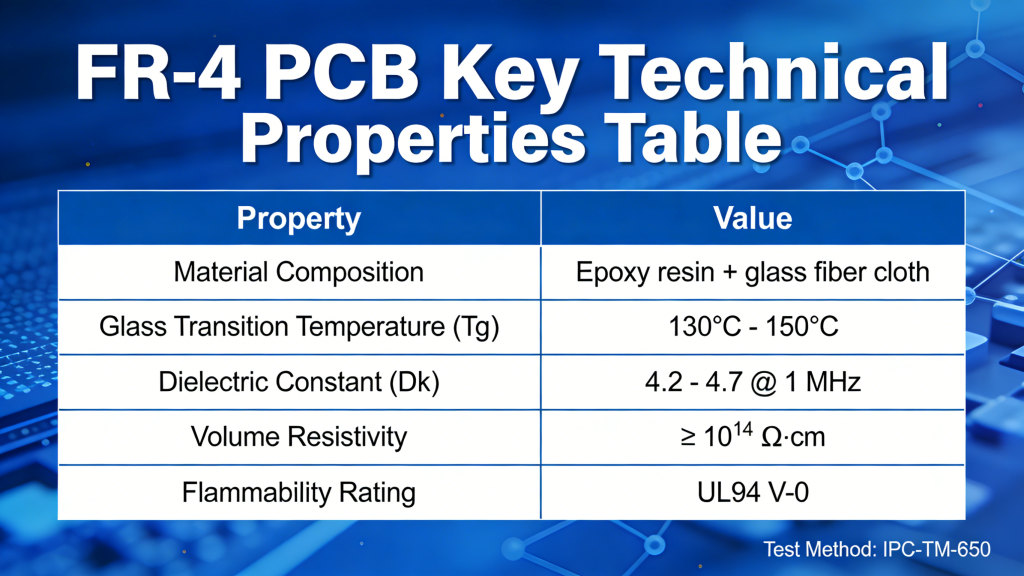
| Property | Typical Value |
|---|---|
| Glass Transition Temperature (Tg) | 130°C, 140°C, 150°C, 170°C, 180°C |
| Dielectric Constant (1MHz) | 4.2–4.7 |
| Dielectric Loss Factor | ≤0.04 |
| Flammability | UL94 V-0 |
| Density | 1.70–1.90 g/cm³ |
| CTI Value | ~600V |
High-Tg FR-4 materials support lead-free soldering and high-reliability applications. We use IPC-4101 certified FR-4 laminates for consistent quality.
FR-4 Grades & Classifications
FR-4 laminates are graded by quality, application, and environmental standard:
- A1 Grade: Military, telecom, automotive, high-end industrial
- A2 Grade: Advanced consumer and industrial electronics
- A3 Grade: Home appliances, standard electronics
- AB1/AB2/AB3: Cost-effective double-sided PCBs
- Halogen-Free FR-4: Eco-friendly, high-reliability applications
Major global FR-4 suppliers include Isola, Nelco, Ventec, Iteq, Panasonic, and ShengYi.
Thickness & Critical Parameters
Standard FR-4 PCB thicknesses: 0.3mm, 0.4mm, 0.5mm, 0.6mm, 0.8mm, 1.0mm, 1.2mm, 1.5mm, 1.6mm, 2.0mm.
Common copper weights: 0.5oz, 1oz, 2oz.
Choose thickness based on product space, weight, impedance control, and component mounting needs. Thinner boards save space; thicker boards improve rigidity.
FR-4 vs Other PCB Materials
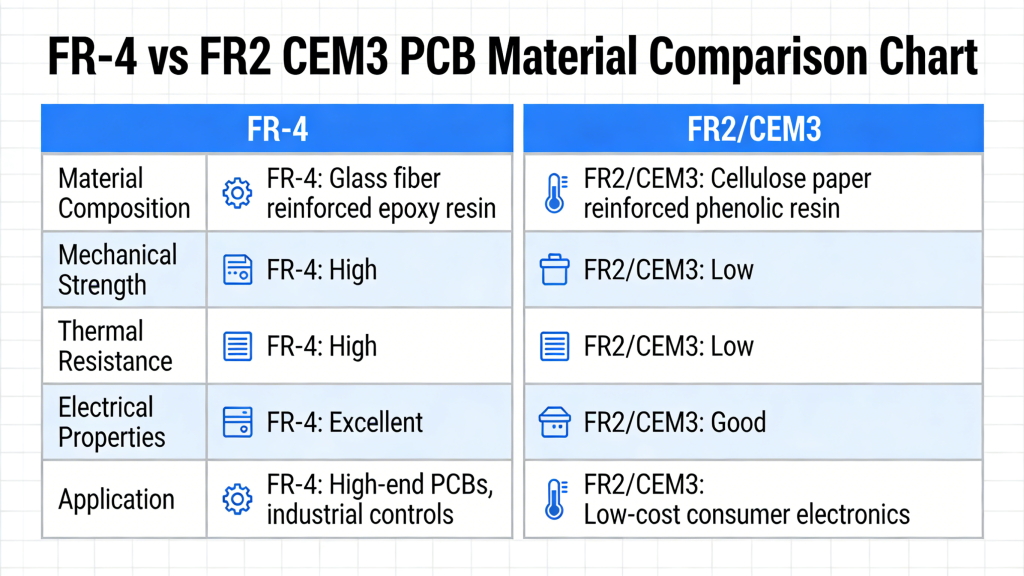
| Material | FR-4 | FR-2 | CEM-3 |
|---|---|---|---|
| Base | Glass Cloth | Paper | Glass Paper |
| Flame Rating | V-0 | V-1 | V-0 |
| Strength | High | Low | Medium |
| Best For | All Rigid PCBs | Simple Devices | Consumer Goods |
How to Choose FR-4 for Your Design
FR-4 is ideal for most rigid PCB applications. Select Tg grade based on operating temperature:
- Standard Tg (130–140°C): Consumer electronics
- Mid Tg (150–160°C): Industrial & telecom
- High Tg (>170°C): Automotive, multilayer, lead-free assembly
For high-frequency/RF designs, consider specialized materials; for all other uses, FR-4 delivers the best balance of performance and cost.
Conclusion
FR-4 is the most trusted and widely used substrate for rigid PCB fabrication. It offers unmatched flame resistance, electrical performance, mechanical strength, and cost efficiency.
Whether you need standard or high-Tg FR-4 PCB, we provide full-spec manufacturing compliant with IPC and UL standards for global export markets.
Need Custom FR-4 PCB Solutions?
Contact us for a free quote, technical consultation, or customized FR-4 PCB manufacturing.
Get Free Quote Now
Aluminum PCB Manufacturing Process: Step-by-Step Guide
How to Choose a Reliable PCB Prototype Manufacturer for Electronics Projects
How to Choose a Reliable PCB Manufacturer in Europe: Complete Guide for Industrial Buyers
PCB Vias: Complete Guide to Types, Design, Reliability & Applications
Through-hole PCB Assembly Service | IPC Certified THT PCBA Solutions