PCBA finished products can typically be stored from 3 months to 10 years under controlled conditions, depending on surface finish, packaging, components, and environment. This guide explains official shelf life standards, storage conditions, and best practices for industrial buyers and engineers.
What Is PCBA (PCB Assembly)?
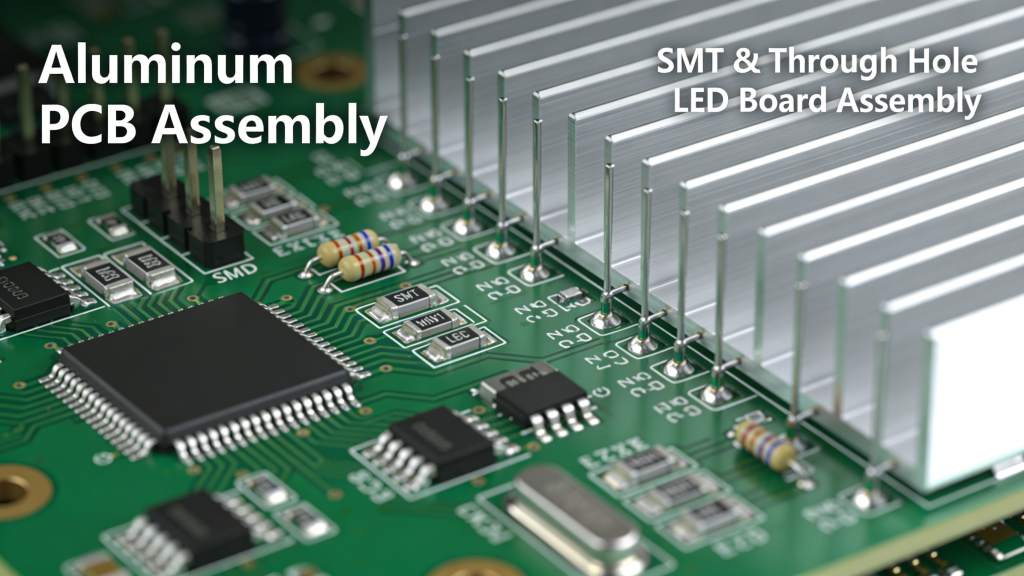
PCBA stands for Printed Circuit Board Assembly, the completed electronic board with components mounted and soldered via SMT and DIP processes. After full production, testing, and inspection, PCBA finished products require proper storage to maintain solderability, reliability, and performance before final assembly.
Standard PCBA Storage Time & Shelf Life
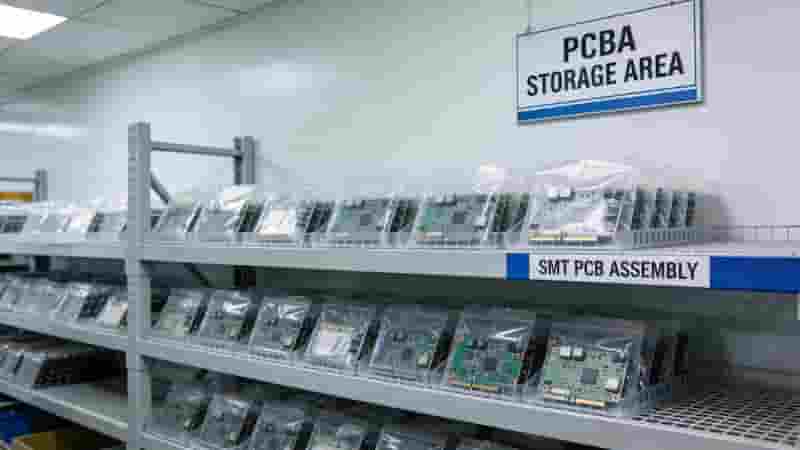
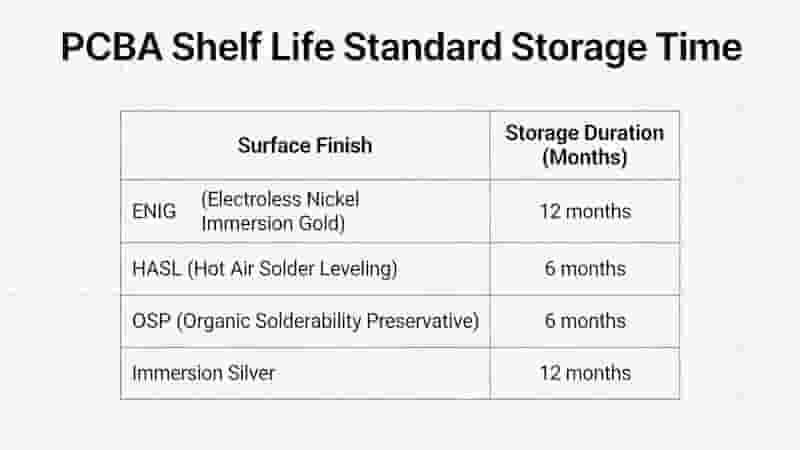
Under industry‑standard vacuum‑sealed dry storage (22±4°C, 30–60%RH), the official shelf life of PCBA finished products is defined as follows:
- HASL: 12 months
- Immersion Gold: 6 months
- Immersion Tin / Immersion Silver / OSP: 3 months
- Conformal‑coated PCBA: up to 9+ months extra
- High‑reliability sealed PCBA: 2–10 years long‑term storage
Key Factors Affecting PCBA Storage Life
The lifespan of PCBA finished products in storage depends on six critical factors:
1. Storage Environment (Temperature & Humidity)
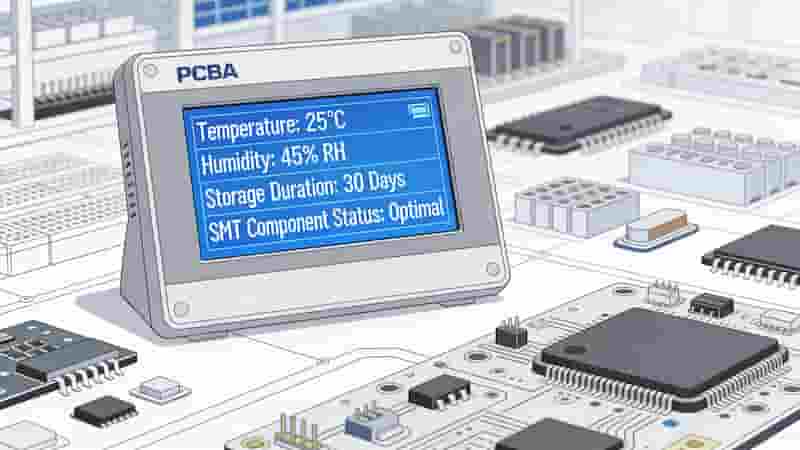
Humidity, dust, and corrosive gases accelerate oxidation and reduce PCBA reliability. Ideal environment: 23±3°C, 55±10%RH, dust‑free, ventilated, no direct sunlight.
2. Component Quality & Life
High‑grade electronic components and stable SMT assembly improve oxidation resistance and extend PCBA finished products storage life.
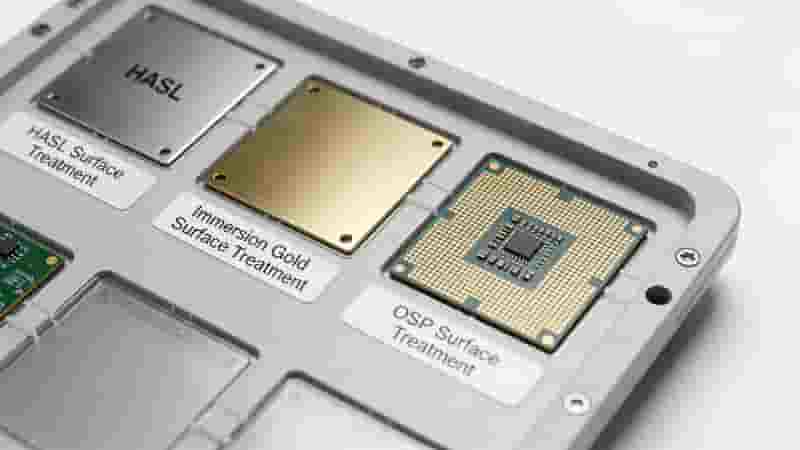
3. PCB Surface Finish
Surface treatment directly determines solderability shelf life. OSP, Immersion Tin, and Immersion Silver have thinner protection layers and shorter PCBA storage periods.
4. Packaging Method
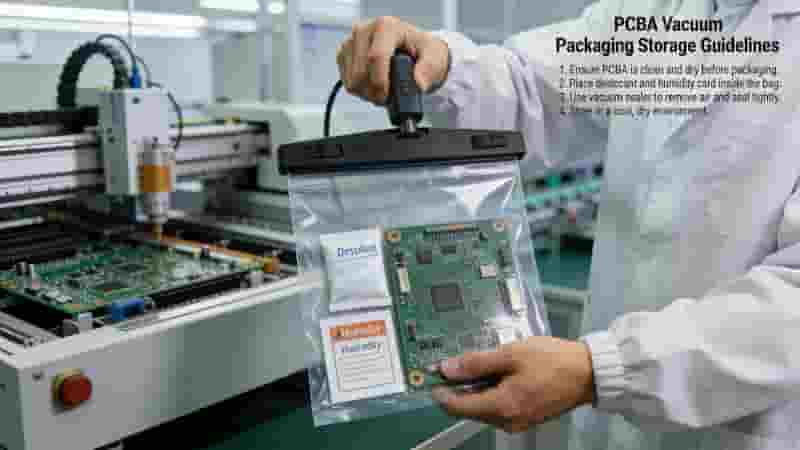
Vacuum packaging with desiccant and anti‑static bubble film effectively blocks moisture and oxygen to preserve PCBA finished products.
5. Operating Load & Usage
High‑load operation accelerates heat and oxidation. Proper derating design preserves long‑term PCBA reliability.
6. Conformal Coating
Conformal coating adds waterproof, dustproof, and anti‑oxidation layers, significantly extending PCBA storage duration.
PCBA Surface Finish Storage Life Comparison
| Surface Finish | Standard Storage Conditions | Shelf Life |
|---|---|---|
| HASL | 22±4°C, 30–60%RH, vacuum packed | 12 months |
| Immersion Gold | 22±4°C, 30–60%RH, vacuum packed | 6 months |
| Immersion Tin | 22±4°C, 30–60%RH, vacuum packed | 3 months |
| Immersion Silver | 22±4°C, 30–60%RH, vacuum packed | 3 months |
| OSP | 22±4°C, 30–60%RH, vacuum packed | 3 months |
How to Extend PCBA Storage Duration
- Use vacuum sealing + desiccant + humidity card
- Maintain temperature & humidity control in warehouse
- Apply conformal coating for long‑term PCBA storage
- Store PCBA finished products off‑ground, away from sunlight & corrosive gases
- Use anti‑static trays and ESD‑safe packaging
- Follow IPC standards for PCB assembly handling
Industrial PCBA Storage Best Practices
For global industrial buyers, PCBA finished products must follow IPC‑standard storage to ensure zero failures during shipping and installation:
- Temperature: ≤25°C
- Humidity: ≤65%RH
- No dust, no corrosive gas
- First‑in‑first‑out (FIFO) inventory
- Regular inspection for oxidation or moisture
Conclusion
PCBA finished products have a standard storage life of 3 to 12 months based on surface finish. With professional packaging, conformal coating, and strict environment control, you can safely extend PCBA storage up to 2–10 years for long‑term inventory and overseas shipping.
Need Reliable PCBA Manufacturing & Storage Support?
We provide full‑process PCB assembly, strict vacuum packaging, professional storage guidance, and safe global shipping for your PCBA finished products. Contact us for a free quote, custom assembly solution, or technical support today.
Inquire Now | Get PCBA Quote
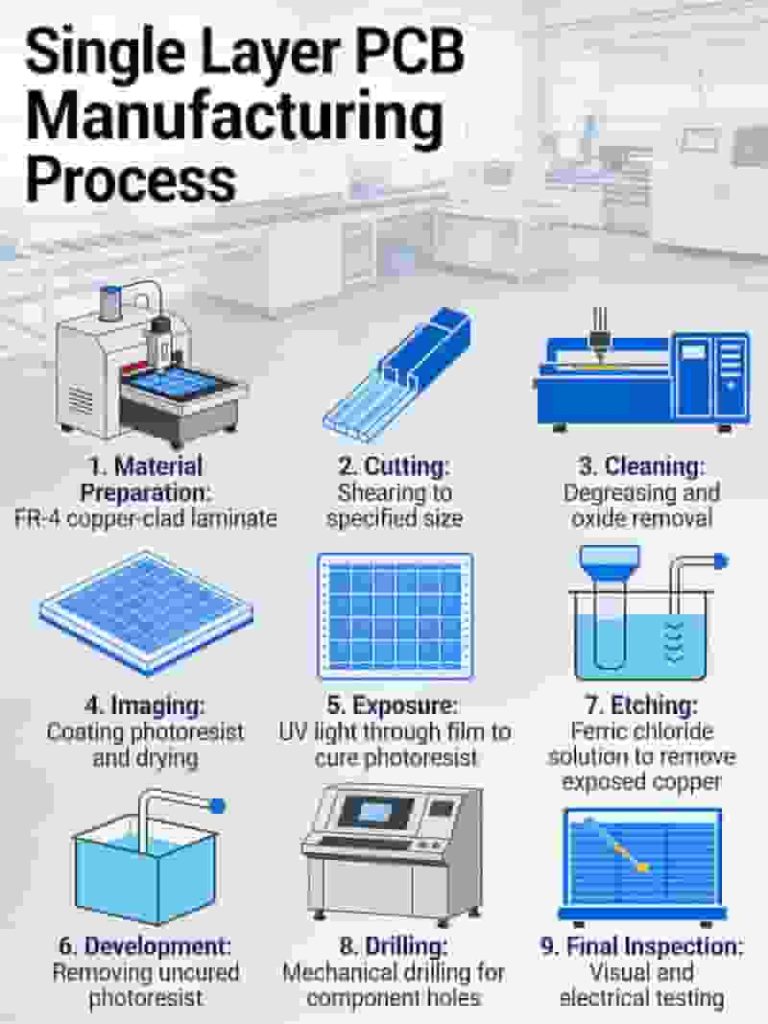
Single Layer PCB Manufacturing | Affordable Single Sided PCBs
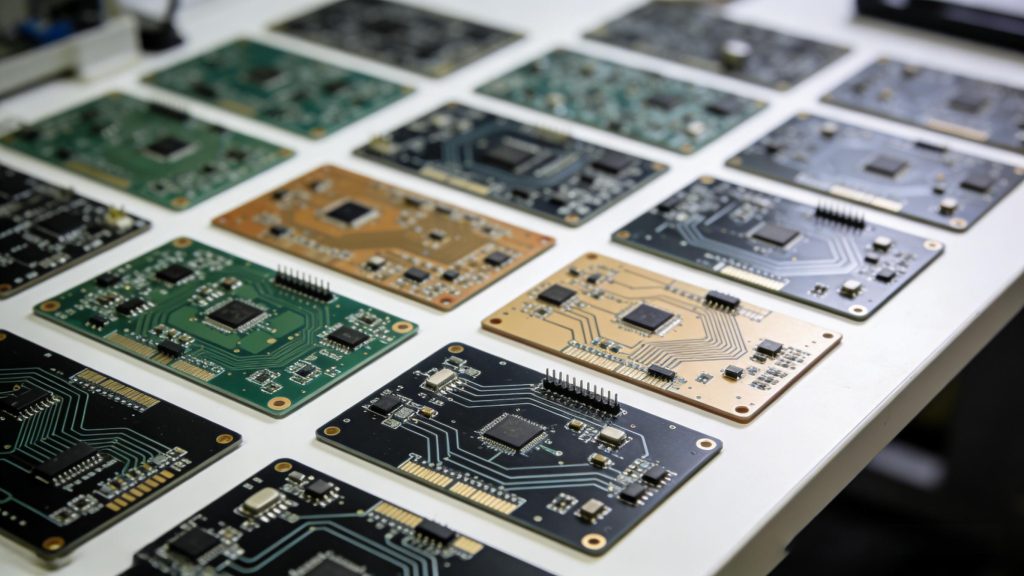
What Is Prototype PCB Assembly
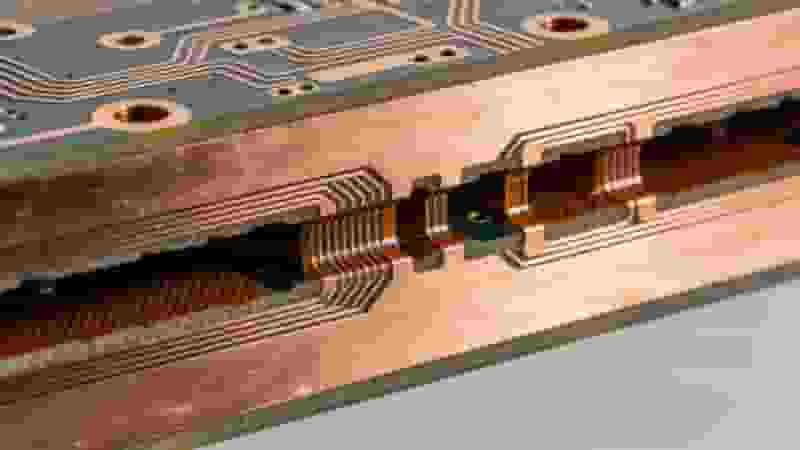
Heavy Copper PCB Manufacturing & Thick Copper PCB Fabrication Service
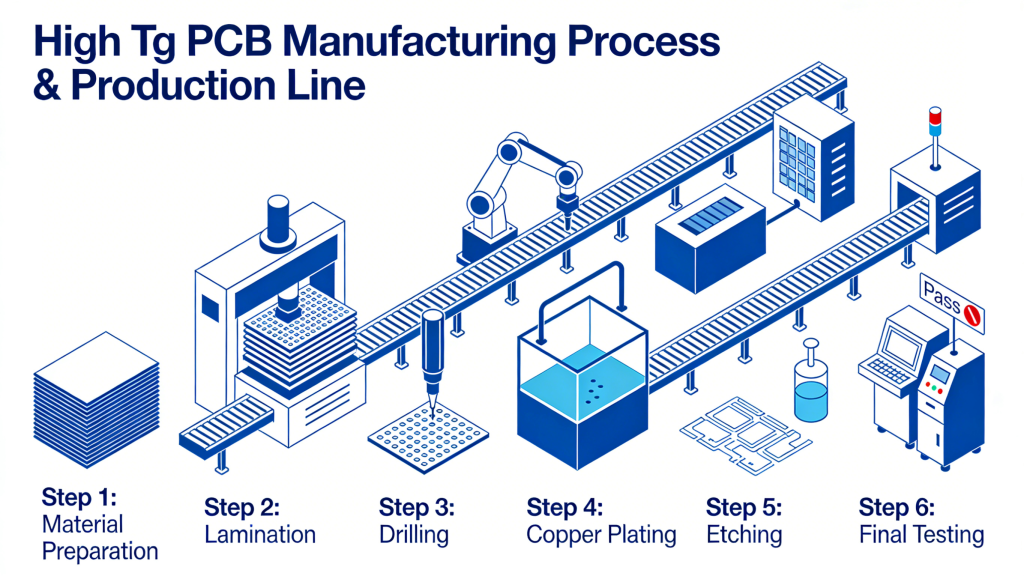
High Tg PCB Manufacturing for High Temperature Applications
Filled and Capped Vias: Boost PCB Reliability for Industrial & Export Applications