Single Layer PCB Manufacturing | Affordable Single Sided PCBs

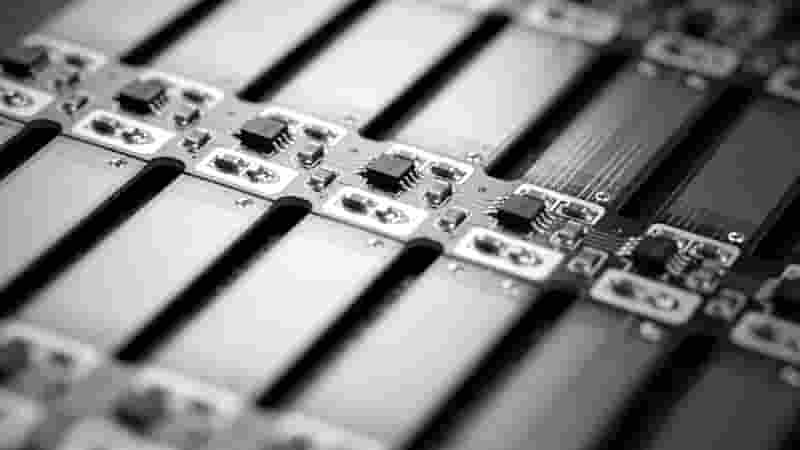
Single Layer Rigid PCB FR-4 Manufacturing

We provide professional single layer PCB manufacturing and cost-effective single sided PCBs for LED lighting, power supplies, consumer electronics, and industrial equipment. Our ISO & IPC‑certified production ensures stable quality, fast lead times, and free DFM analysis for prototypes and mass production.

Single-Layer PCB Definition

A single layer PCB (also called single sided PCB) has only one conductive copper layer bonded to a dielectric substrate such as FR‑4, aluminum, or flexible materials. It is coated with solder mask and marked with silkscreen for component identification. This simple structure makes it the most cost‑effective solution for basic electronic circuits.
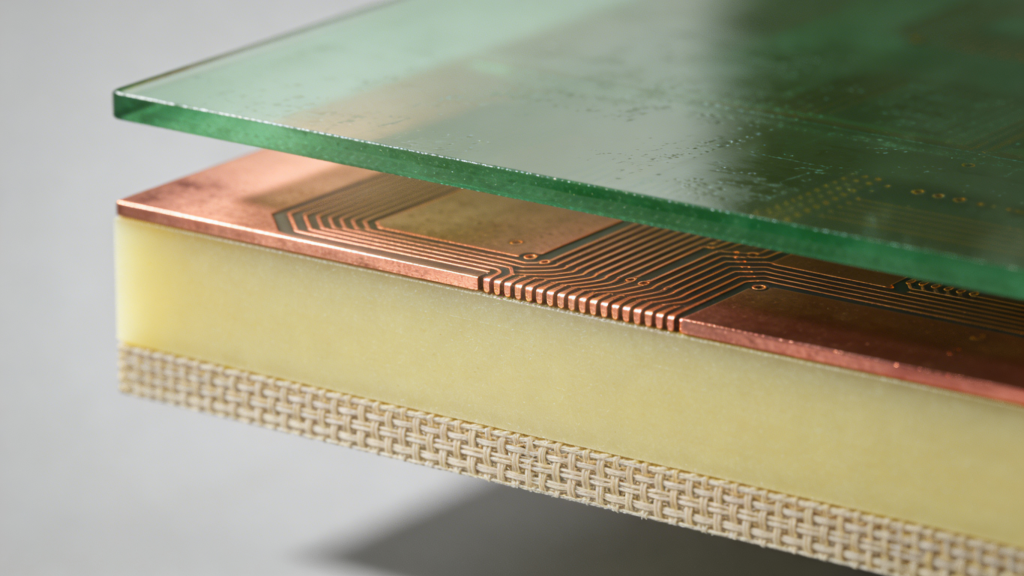
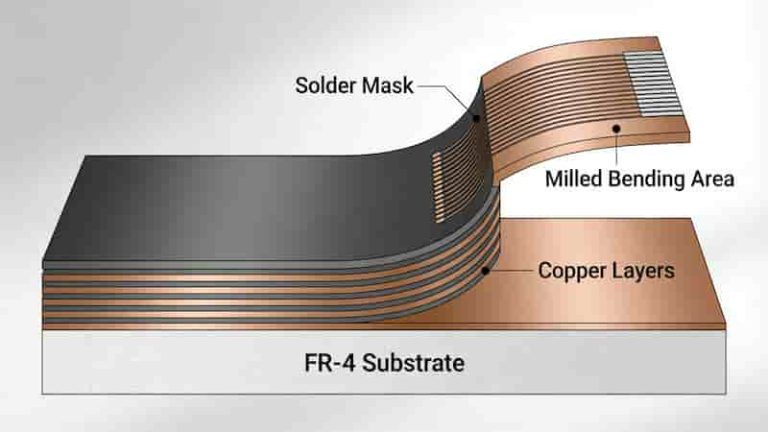
Single Layer PCB Structure Diagram Copper Layer Solder Mask

Types of Single Layer PCBs

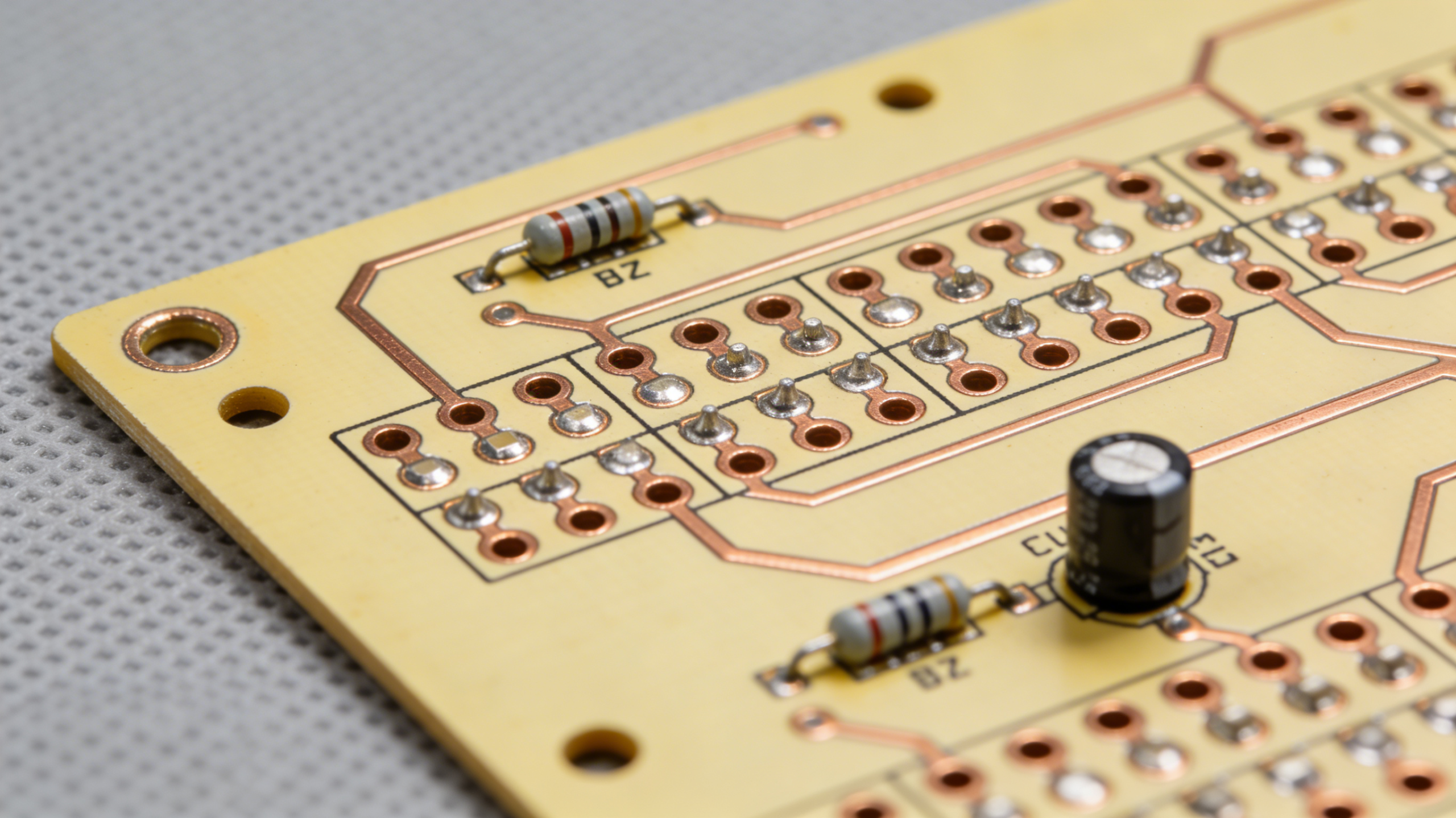
Single Layer Rigid PCB

Built on FR‑4 material, widely used in calculators, remote controls, and low‑power electronics. Our single layer PCB manufacturing ensures stable performance and low cost.
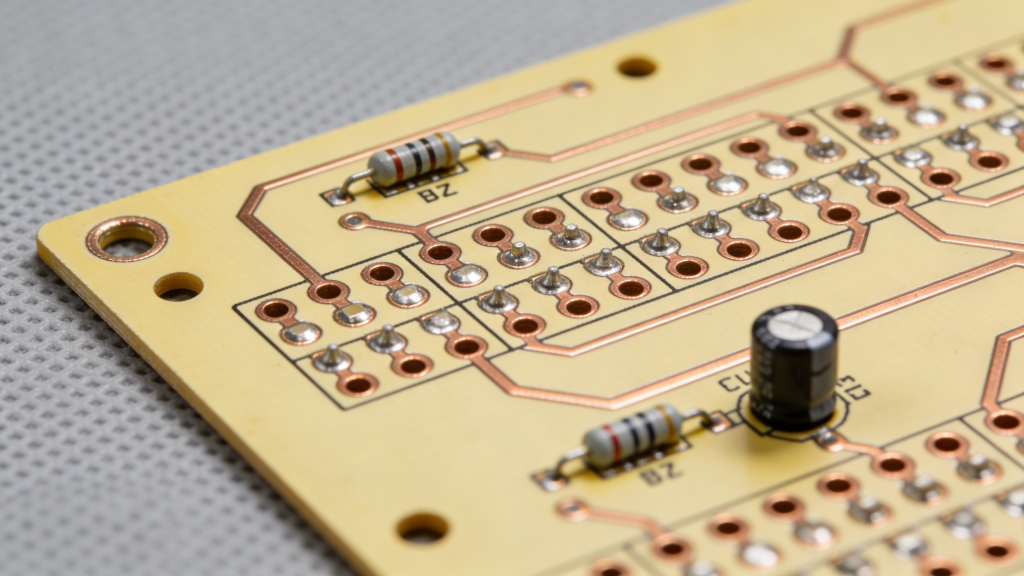
Single Layer Rigid PCB FR-4 Manufacturing

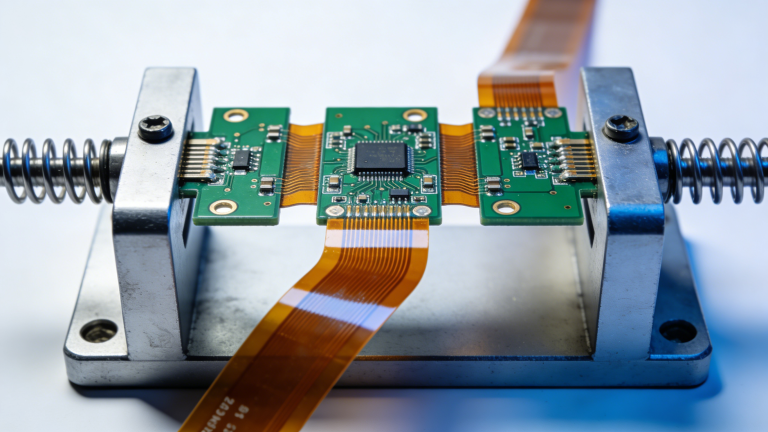
Single Layer Flexible PCB

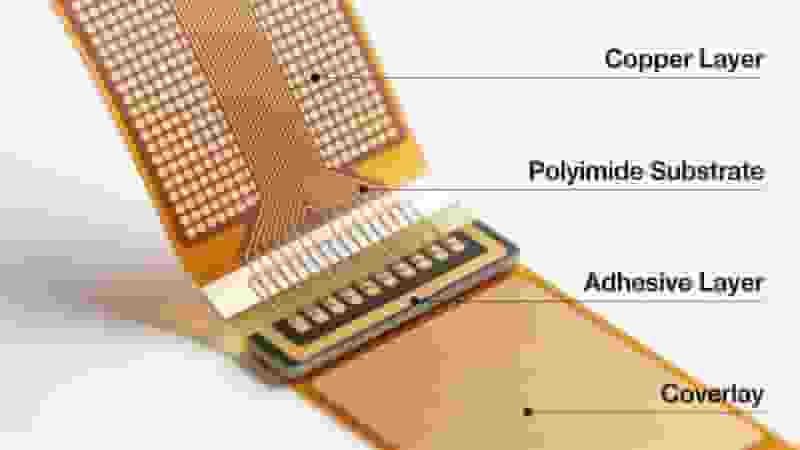
Made of polyimide film for wearable devices, medical sensors, and compact assemblies. We deliver high‑precision flexible single sided PCBs.

Single Layer Rigid-Flex PCB

Combines rigid and flexible substrates for compact devices like cameras and handheld instruments. Ideal for space‑constrained designs.

Single Layer High-Frequency PCB

Uses Rogers or other high‑frequency materials for RF communication and signal transmission applications. Ensures excellent signal integrity.
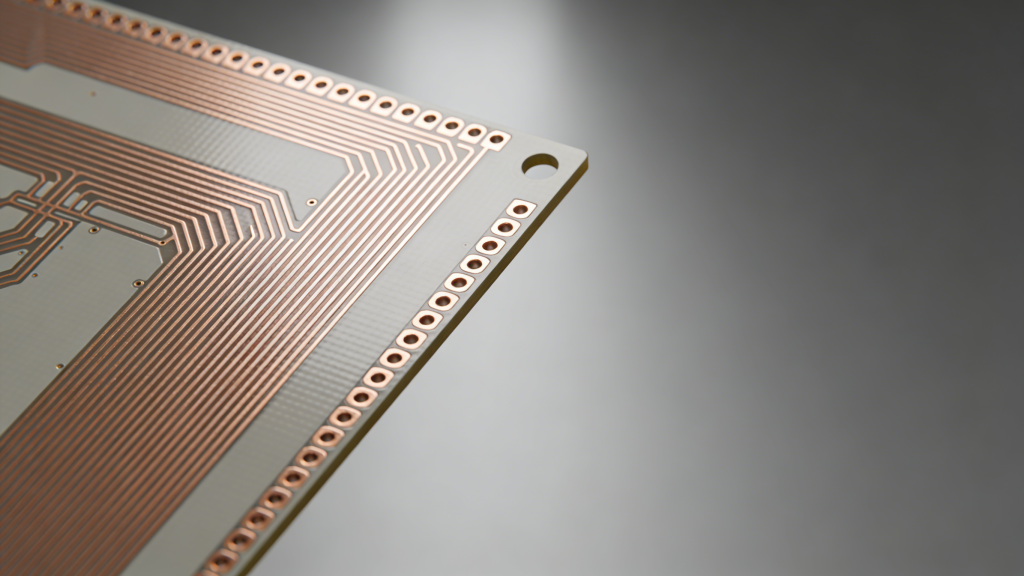
Single Layer High Frequency PCB Rogers Material

Single Layer Aluminum PCB

Features excellent thermal conductivity, perfect for LED lighting, power drivers, and heat‑sensitive equipment.
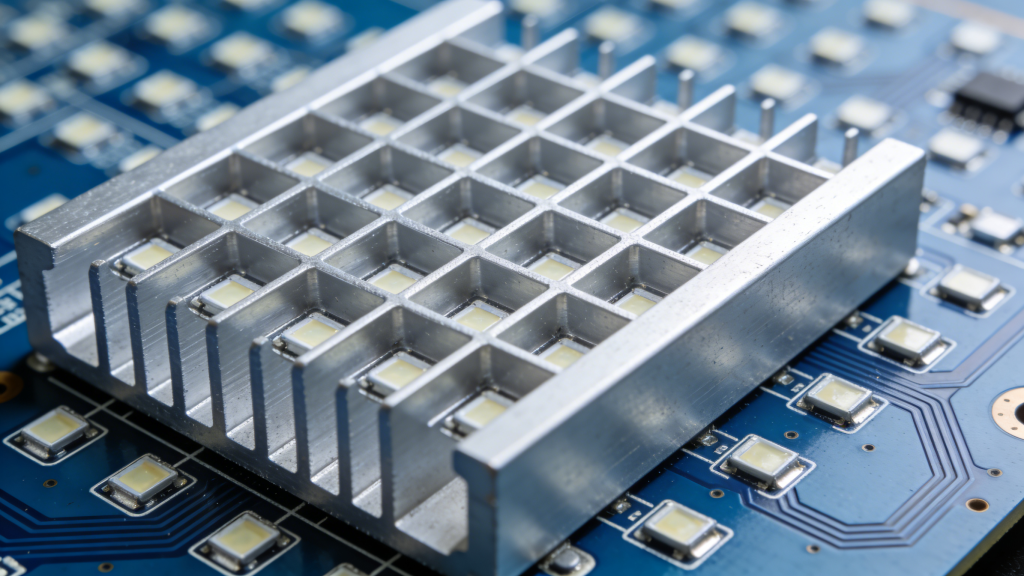
Single Layer Aluminum PCB LED Lighting Heat Dissipation

Benefits of Single Layer PCBs

Cost‑Effective: Lowest production cost among all PCB types, ideal for high‑volume projects.

Simplified Production: Single copper layer reduces defects and shortens lead times.

High Reliability: Simple structure delivers stable performance in harsh environments.

Easy Testing & Assembly: Convenient for AOI, electrical testing, and manual or automated assembly.

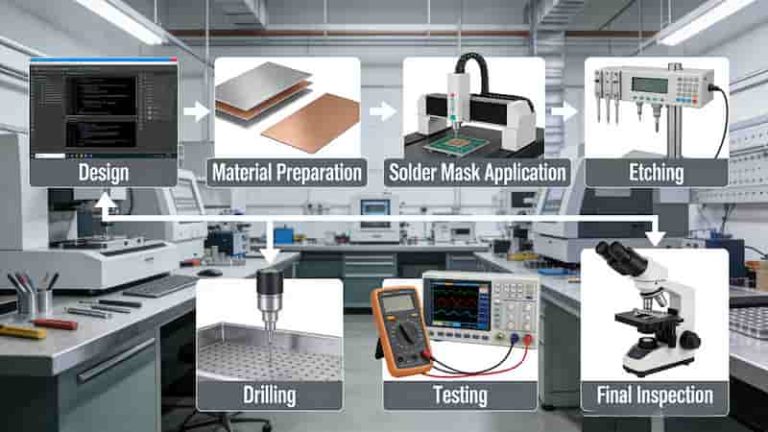
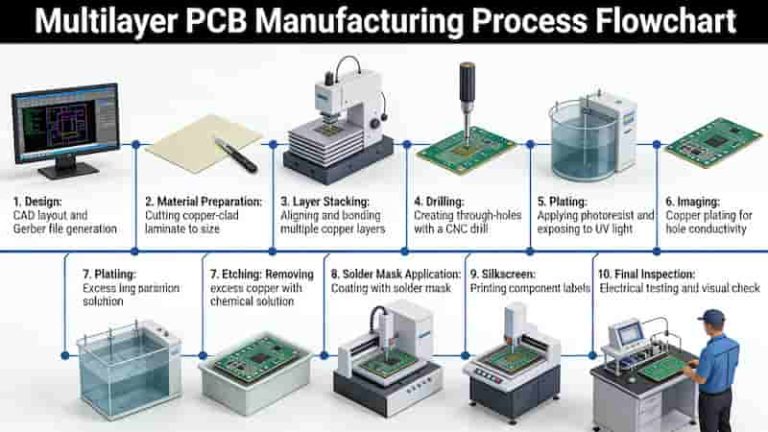
Single Layer PCB Manufacturing Process

1. Order & DFM Check: Review Gerber files to optimize design for manufacturability.

2. Material Preparation: Cut base materials to required panel size.

3. Circuit Printing & Etching: Transfer and etch copper circuits accurately.

4. Drilling: Create precise holes for components.

5. Solder Mask & Silkscreen: Apply protective coating and identification printing.

6. Electrical Testing & Inspection: Ensure 100% quality before shipment.
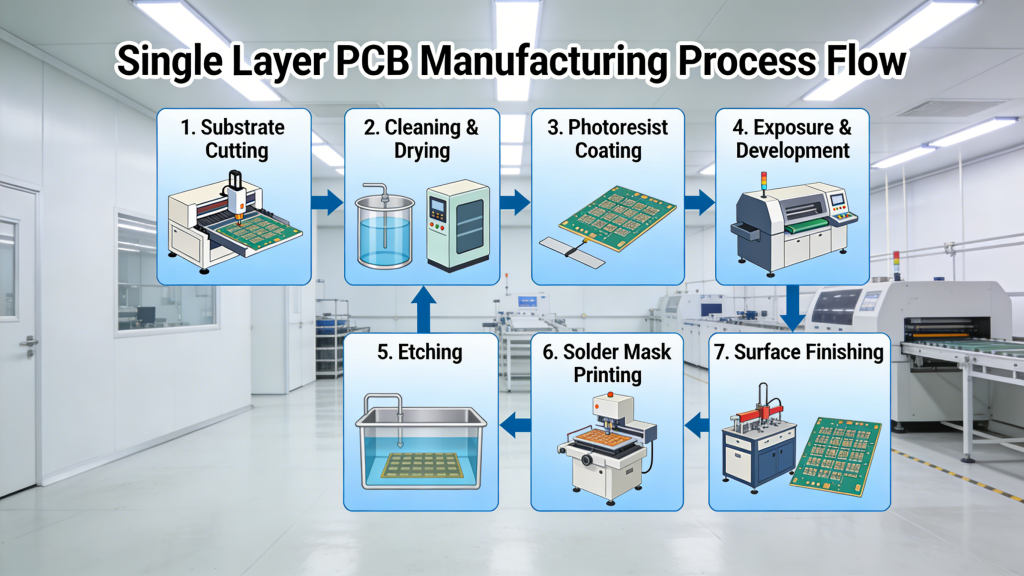
Single Layer PCB Manufacturing Process Flow Chart

Single-Sided vs Double-Sided vs Multilayer PCBs

FeatureSingle-Sided PCBDouble-Sided PCBMultilayer PCB
Conductive Layers123+
Typical CostLowModerateHigh
ComplexitySimpleModerateHigh
Main ApplicationsLED, power supplies, consumer electronicsIndustrial controls, automotiveAerospace, medical, high‑tech devices

Summary

Single layer PCB manufacturing provides the most economical and reliable solution for simple electronic devices. With multiple material options and a streamlined production process, single sided PCBs are widely used in lighting, power, and consumer electronics. We support rapid prototyping, mass production, and free DFM checks to ensure your project success.

Need High-Quality & Affordable Single Layer PCBs?

Request a free quote, free DFM analysis, and custom solutions today.

Get Your Free Quote Now
Single layer flexible PCB structure polyimide flex circuit

Flexible PCB Manufacturer & Flex PCB Fabrication | Custom & Reliable

Posted on
0 Comments
We provide custom single-layer, double-sided, and multilayer flexible PCB solutions for prototyping and mass production. As a professionalflex PCB manufacturer, we deliver fast turnaround, stable quality, and full engineering support for global industrial buyers, engineers, and procurement teams. Flexible PCB Manufacturing Capabilities We specialize in full‑service flex PCB fabrication from simple prototypes to complex high‑volume…
Step-Up vs Step-Down Stencil for PCB SMT

Step Stencil Manufacturing | Precision Multi-Level SMT Stencils

Posted on
0 Comments
Step Stencil Manufacturing provides precision-engineered multi-level thickness stencils for advanced PCB assembly, delivering controlled solder paste deposition for mixed-component boards and high-yield SMT production. What Is a Step Stencil A Step Stencil (multi-level stencil) is a precision SMT assembly tool designed to apply controlled solder paste volumes to PCB surfaces. Unlike standard uniform-thickness stencils, step…
Step Stencil vs Standard Stencil Comparison PCB SMT Production

Step Stencils: Precision Solutions for Modern PCB Assembly

Posted on
0 Comments
Step stencils optimize solder paste deposition for mixed-component PCBs, improving yield, reliability, and first-pass success in SMT assembly for electronics, automotive, and medical devices. Imagine a production line where tiny 01005 components sit alongside large edge connectors on a single printed circuit board. The challenge? Applying just the right amount of solder paste to each…
High TG PCB laminate structure and glass transition temperature diagram

High TG PCB Material: Thermal Stability, Key Benefits, Industrial Applications & Professional Fabrication Solutions

Posted on
0 Comments
High TG PCB Material: The Ultimate Guide to High-Reliability Circuit Boards High TG PCB material (Tg ≥170°C) delivers superior thermal stability, low Z‑axis CTE, and long‑term reliability for high‑power, high‑temperature, and high‑density electronic systems. This guide covers core advantages, industry applications, material types, fabrication controls, and how we support your custom High TG PCB projects…
PCB manufacturing process flowchart from design to finished board

PCB Classification Guide: Types, Applications & Selection for Industrial Buyers

Posted on
0 Comments
Summary: This professional PCB classification guide helps engineers and procurement teams understand PCB types by layers, materials, flexibility, and applications. It provides clear selection criteria to balance performance, cost, and reliability for global industrial projects. Why Understanding PCB Classification Matters Printed Circuit Boards (PCB) are the backbone of modern electronics, serving as the foundation for…
PCB Drilling & Hole Types

Double-sided PCB Manufacturing Process – We Deliver Compliant, Efficient Production

Posted on
0 Comments
Double-sided PCB is the most widely used and preferred type of PCB in the industry. Its advantage lies in the balanced positioning — it avoids the high complexity of multilayer PCBs while overcoming the functional limitations of single-layer PCBs, making it a cost-effective choice for most electronic projects. Unlike single-layer PCBs that only support component…

Single Layer PCB FAQs

A: A single layer PCB is a printed circuit board with only one conductive copper layer, used for simple electronic circuits.

A: LED lighting, power supplies, calculators, remote controls, and industrial instruments.

A: Optimize panel utilization, simplify design, and choose standard materials and thickness.

A: Common thicknesses are 0.6mm, 1.0mm, 1.2mm, 1.6mm, customizable per request.

Similar Posts