This complete engineering guide covers Aluminum PCB Prototype basics, thermal advantages, material selection, fabrication process, assembly, applications, and how to select a reliable supplier for high‑performance electronics projects.
What Is an Aluminum PCB Prototype?
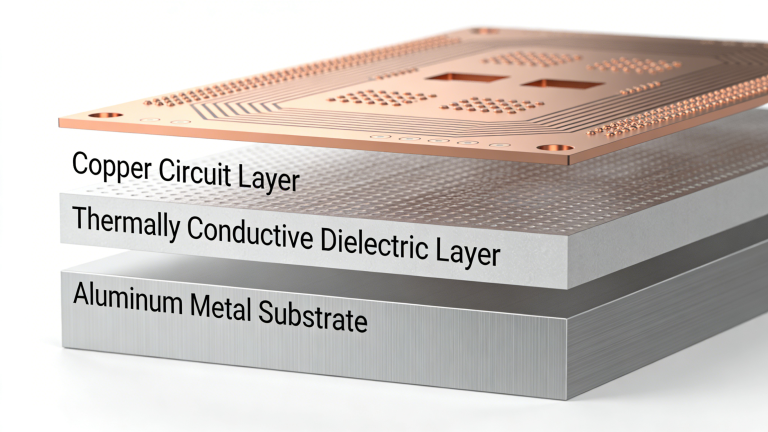
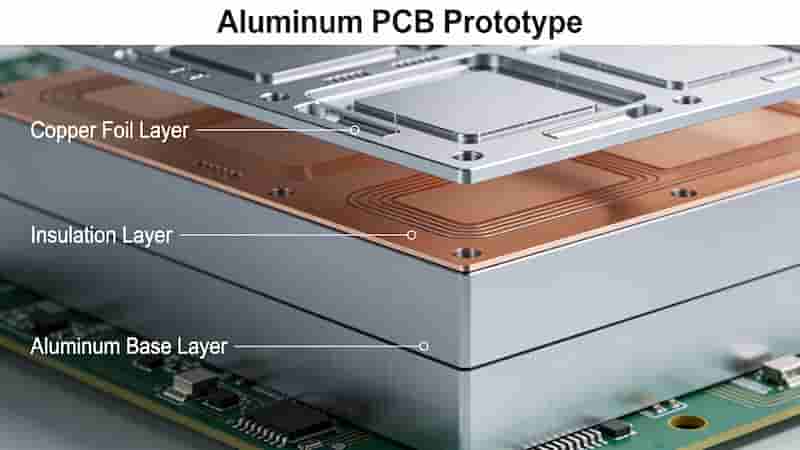
An Aluminum PCB Prototype is a metal‑core printed circuit board that uses aluminum alloy as its base material substrate instead of standard FR4. It delivers exceptional thermal conductivity and structural stability, making it the first choice for high‑power, high‑heat electronic designs.
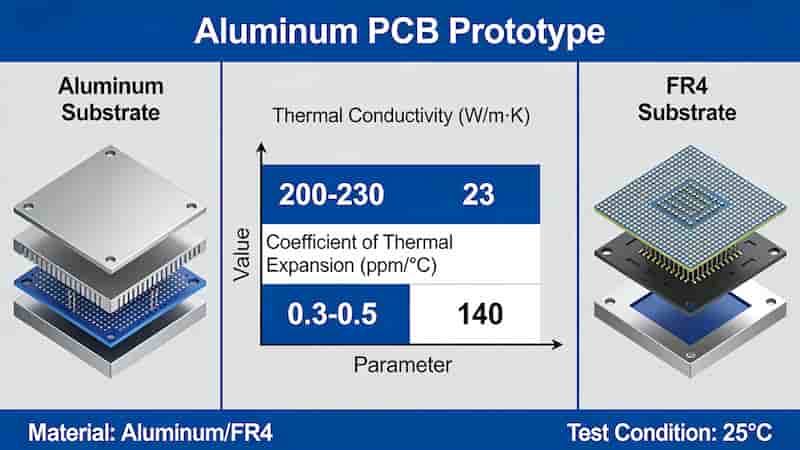
Unlike FR4 PCBs, Aluminum PCB Prototype boards quickly transfer heat away from components, greatly improving reliability and lifespan in demanding environments.
Key Advantages of Aluminum PCB Prototypes
1. Superior Thermal Performance
Aluminum provides far higher thermal conductivity than FR4. A Aluminum PCB Prototype efficiently dissipates heat, lowers operating temperatures, and extends component life.
2. Improved Electrical Stability
Stable dielectric properties reduce signal loss and crosstalk. Aluminum PCB Prototype designs support better signal integrity and power efficiency.
3. Lighter Weight & Higher Strength
Aluminum offers excellent mechanical strength while being lighter than many metal alternatives, ideal for automotive and aerospace use.
4. Durability & Environmental Resistance
Great corrosion resistance and durability make Aluminum PCB Prototype boards suitable for outdoor, industrial, and harsh environments.
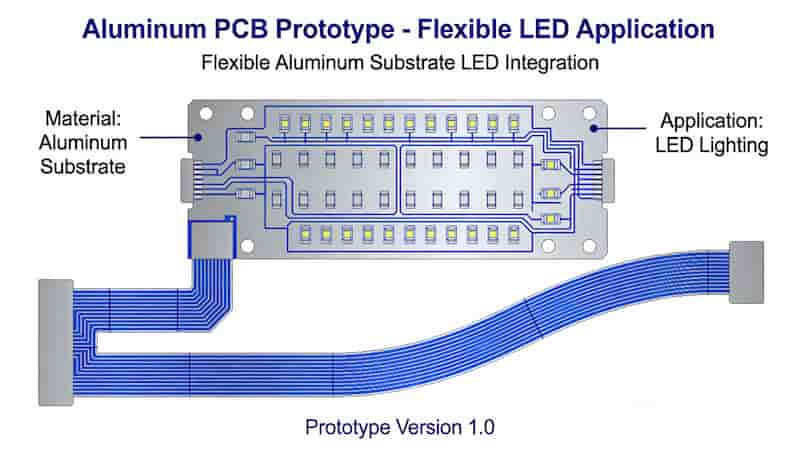
Typical Applications of Aluminum PCB Prototypes
An Aluminum PCB Prototype is widely used in industries that require high thermal management:
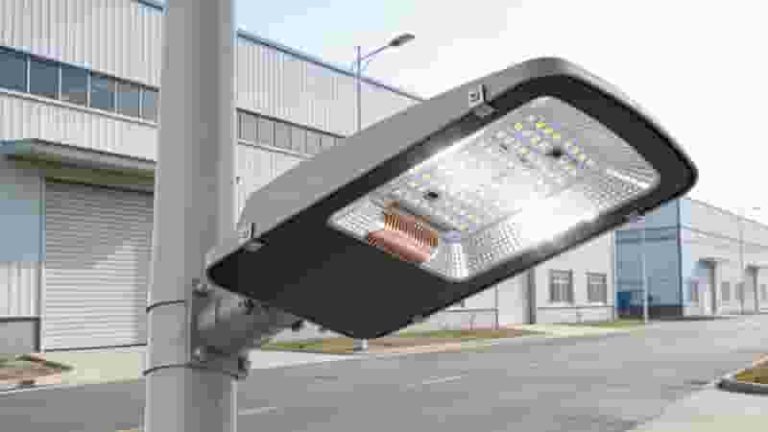
- High‑Power LED Lighting
- Power Supplies, Inverters, and Converters
- Automotive Electronics Control Units
- Aerospace and Avionics Systems
- Medical Imaging and Surgical Equipment
- Industrial Control and Power Drivers
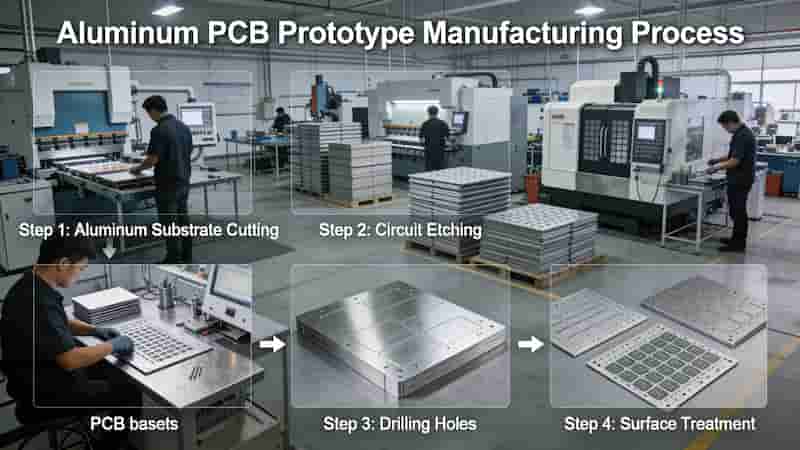
Aluminum PCB Prototype Fabrication Process
The production of a Aluminum PCB Prototype follows precise steps to ensure heat dissipation and reliability:
1. Material Selection
Common alloys: 5052, 6061. Thickness and thermal conductivity are selected based on design needs.
2. Surface Treatment & Bonding
Aluminum surface is cleaned and insulated to support copper foil lamination.
3. Circuit Patterning & Etching
Copper layers are imaged and etched to form circuit traces.
4. Drilling & Plating
Holes are drilled and plated for electrical connection and isolation.
5. Surface Finish & Testing
Common finishes: HASL, immersion gold, tin. Final electrical and thermal tests ensure quality.
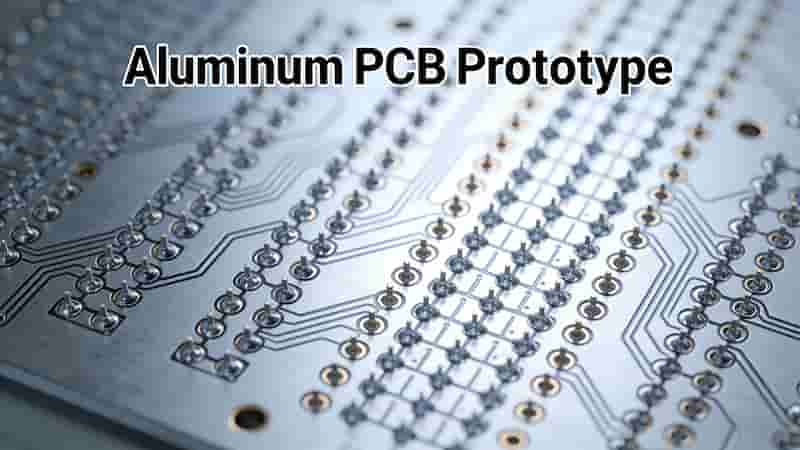
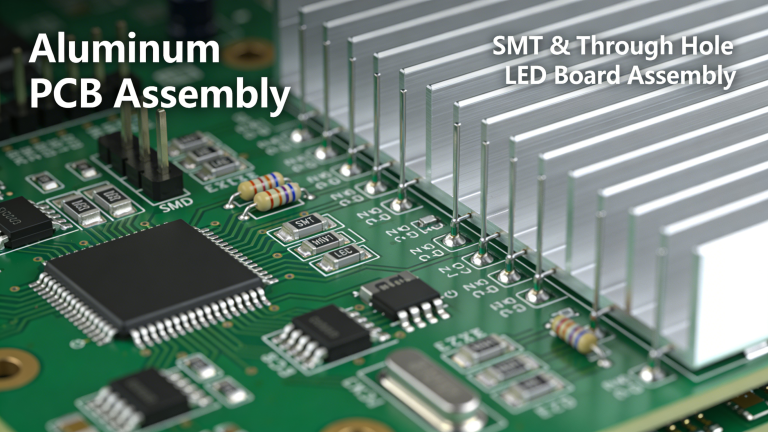
Aluminum PCB Prototype Assembly
Assembly of a Aluminum PCB Prototype requires special thermal profile settings due to metal substrate characteristics:
- Component selection for high‑heat compatibility
- Solder paste printing with optimized stencil design
- Reflow soldering with controlled temperature zones
- AOI visual and electrical inspection
- Functional testing for performance validation
How to Choose a Reliable Aluminum PCB Prototype Manufacturer
Selecting the right partner ensures your Aluminum PCB Prototype meets performance, cost, and lead time goals:
1. Experience & Technical Capability
Focus on manufacturers with proven expertise in metal‑core PCB and thermal design.
2. Quality & Testing System
Check for IPC standards, material certifications, and in‑house testing capabilities.
3. Lead Time & Pricing
Compare quick‑turn prototype services and transparent cost structures.
4. Customer Support & DFM Service
Strong engineering support helps optimize your Aluminum PCB Prototype design for mass production.
Conclusion
A Aluminum PCB Prototype provides superior thermal performance, reliability, and durability compared to FR4 prototypes. It is essential for high‑power LED, automotive, industrial, and aerospace designs.
By understanding materials, fabrication, assembly, and supplier selection, engineers and designers can confidently use Aluminum PCB Prototype solutions to improve product performance and accelerate time to market.
Get Your Aluminum PCB Prototype Solution
Contact us for free DFM analysis, quick quotes, custom prototypes, and reliable mass production support.
Request a Quote Now
PCB Stackup Design Guidelines: Best Practices for 2, 4, 6 Layers
How to Order PCB Prototyping, Fabrication & Assembly Services in China
Single-Sided Flexible PCB Design Guide: Bending Radius, Trace Routing and Stiffeners
Selective Wave Soldering Guidelines: Process, Parameters & Best Practices for PCB Assembly
Flying Probe Testing for PCB: The Complete Professional Guide