PCB vias connect layers in multilayer circuit boards, enabling compact, high-performance electronics. This guide covers plated through holes, blind, and buried vias, their design, manufacturing, and advantages in modern PCB fabrication. From 5G devices to automotive systems, understand how to choose the right via type for your project.
PCB vias are the unsung heroes of multilayer circuit boards, enabling seamless electrical connections across layers. From smartphones to automotive electronics, vias power the devices that drive our world. Whether you’re designing high-density PCBs for IoT or robust boards for aerospace, understanding via types—plated through holes, blind vias, and buried vias—is crucial for optimizing performance and cost. We specialize in delivering cutting-edge PCB fabrication solutions for global clients, ensuring precision and reliability in every project. Ready to elevate your PCB design? Explore the world of PCB vias and discover how we can bring your ideas to life.
What Are PCB Vias?
A PCB via is a small hole in a multilayer PCB that connects copper foil circuits across different layers, enabling electrical signals to flow seamlessly. In modern electronics, multilayer PCBs are essential for compact, high-performance devices like smartphones, medical equipment, and automotive systems. However, each copper layer is separated by an insulating material, making vias critical for creating reliable electrical connections between layers. Without vias, signals cannot travel efficiently, limiting the functionality of complex circuits.
Vias serve two primary purposes: facilitating electrical connections and, in some cases, securing components to the board. From enabling high-speed data transfer in 5G devices to powering intricate IoT modules, vias are the backbone of advanced PCB designs. We leverage state-of-the-art drilling and plating technologies to ensure precision in every via, meeting the diverse needs of global clients. Whether you’re a designer or manufacturer, understanding PCB vias is key to optimizing your next project.
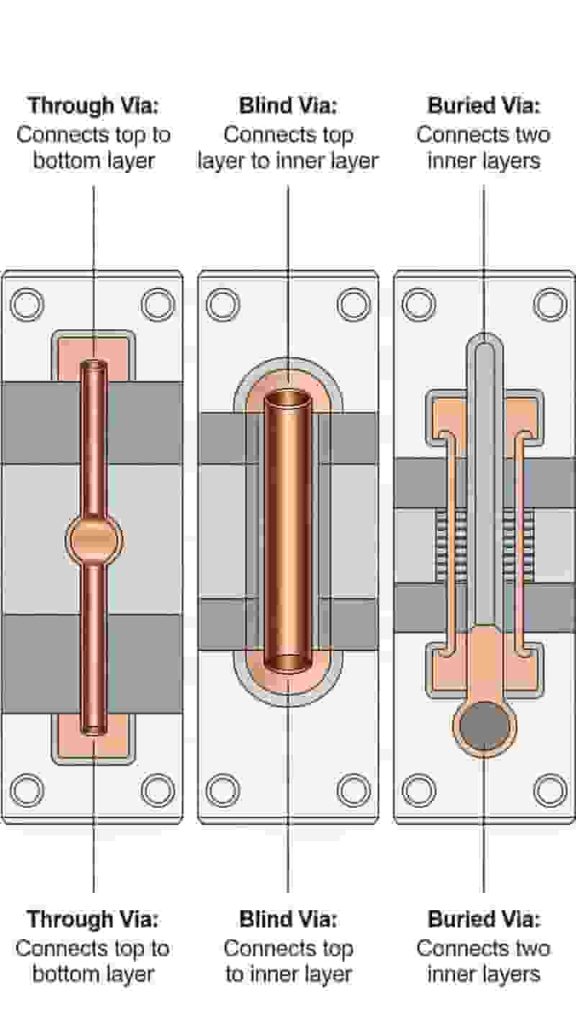
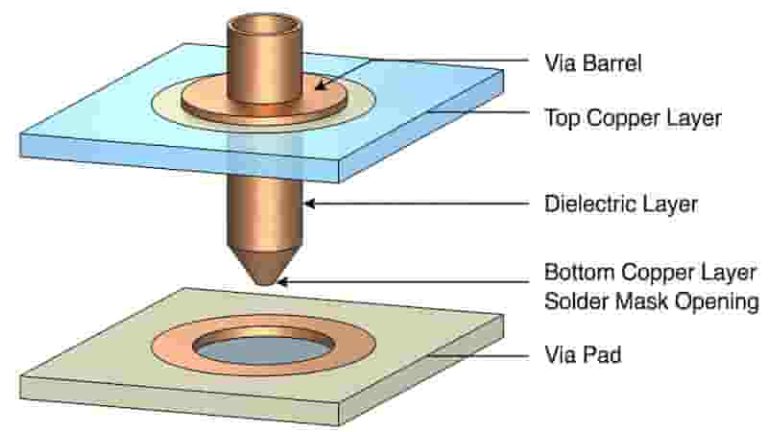
Schematic diagram of various via holes in PCB
Types of PCB Vias
PCB vias are essential for connecting layers in multilayer printed circuit boards, and their types—plated through holes (PTH), blind vias, and buried vias—serve distinct roles in PCB fabrication. This section explores their definitions, manufacturing processes, applications, and trade-offs, helping designers and engineers choose the right via type for optimal performance, cost, and space efficiency. Understanding these PCB via types is key to mastering high-density interconnect (HDI) PCB design and meeting modern electronic demands.
Plated Through Hole (PTH)
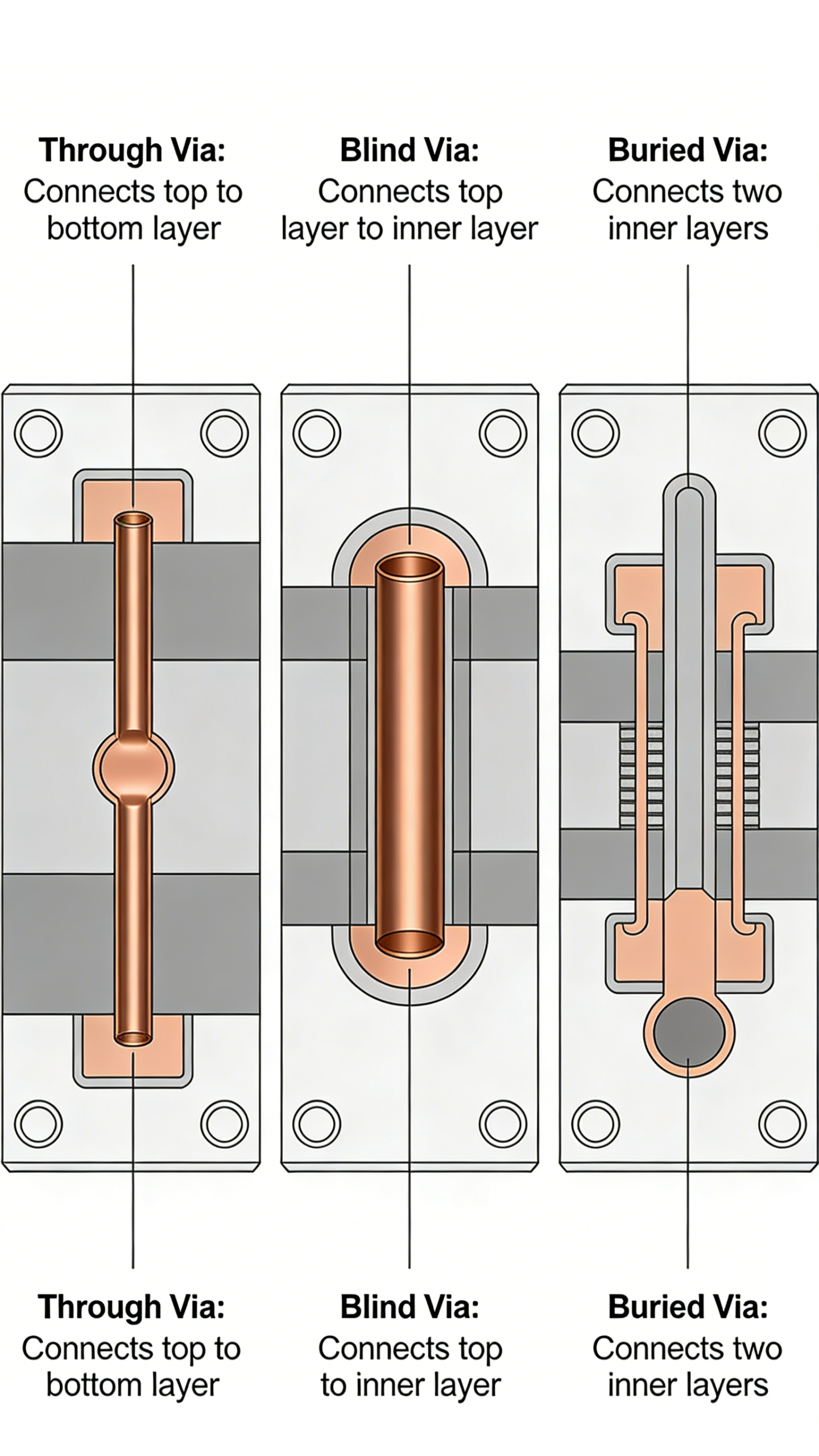
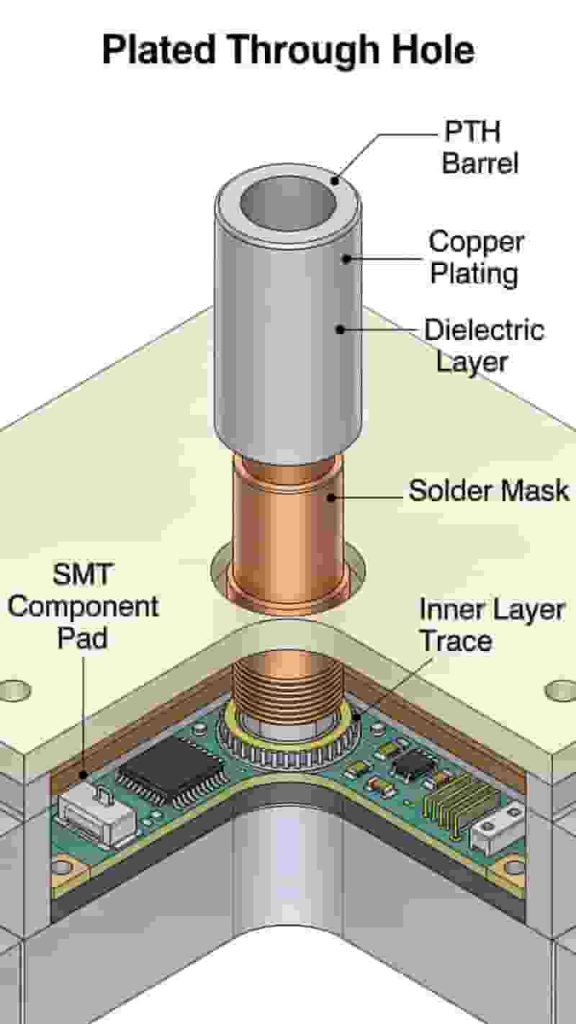
A Plated Through Hole (PTH) is a via that spans the entire thickness of a PCB, connecting all layers with a copper-plated inner wall for robust electrical conductivity. Created through mechanical drilling or laser technology, PTHs are the simplest and most cost-effective via type, typically with minimum diameters of 0.15 mm (6 mil) for mechanical drilling. They are widely used for mounting through-hole components, such as connectors or resistors, and are ideal for traditional PCBs in consumer electronics, power supplies, and industrial controls. PTHs are easy to manufacture—drilling followed by electroplating—but occupy more space than other vias, limiting their use in compact, high-density designs. Their reliability and affordability make them a staple for applications where cost outweighs space constraints.
Blind Via Hole (BVH)
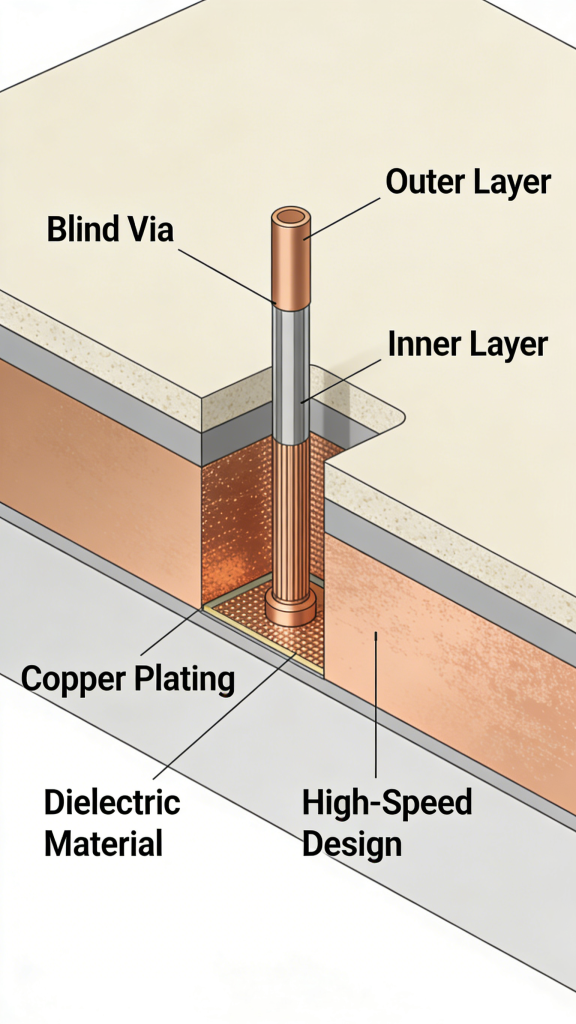
Blind Via Holes (BVHs) connect an outer layer of a PCB to one or more inner layers without penetrating the entire board. Formed using laser drilling for precision, blind vias maintain a controlled depth, often with a depth-to-diameter ratio of 1:1 to ensure uniform copper plating. With diameters as small as 0.1 mm (4 mil), they are critical for HDI PCB design, enabling compact layouts in devices like smartphones, tablets, and wearables. Blind vias save surface space by allowing additional routing or component placement, but their manufacturing is more complex and costly than PTHs due to precise drilling and alignment requirements. They excel in high-speed circuits where signal integrity is paramount, though careful design is needed to avoid plating issues.
Buried Via Hole
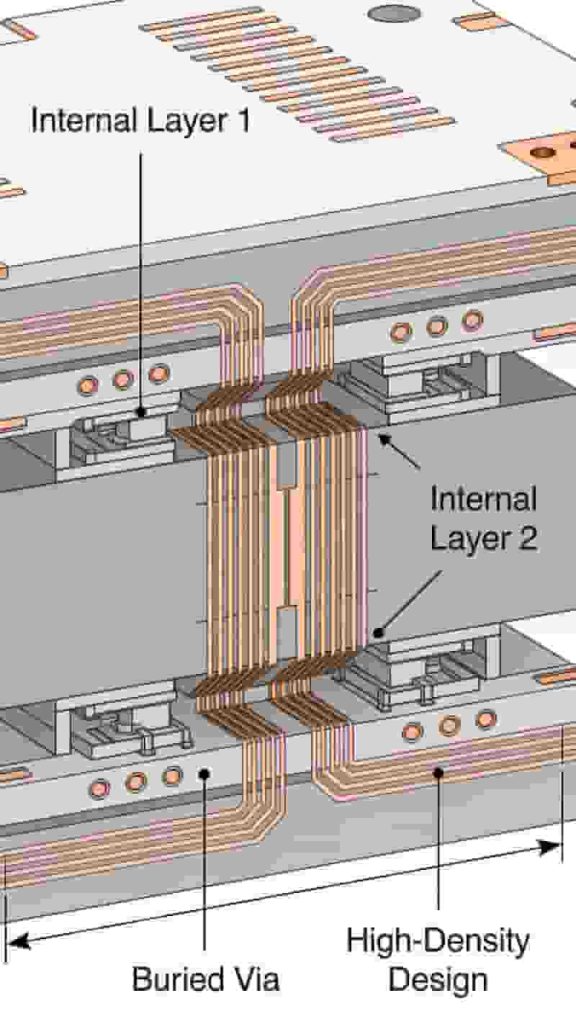
Buried Via Holes connect internal layers of a multilayer PCB without reaching the outer surfaces, remaining hidden within the board. These vias are formed before lamination by drilling and plating individual inner layers, then bonding them together, a process that demands advanced equipment and precise alignment. With diameters as small as 0.1 mm via laser drilling, buried vias are vital for HDI PCBs in complex applications like servers, aerospace electronics, and medical devices. They maximize surface space and reduce parasitic capacitance, enhancing signal integrity, but their intricate manufacturing increases costs. Buried vias are reserved for high-density designs where space efficiency and performance justify the added complexity.
Comparison of Via Types
| Parameter | Through Via (PTH) | Blind Via | Buried Via |
|---|---|---|---|
| Layer Connection | All layers (top to bottom) | Outer to inner layers | Inner layers only |
| Visibility | Both sides visible | One side visible | No surface visibility |
| Manufacturing | Mechanical drill + plate | Laser/depth drill | Sequential lamination |
| Cost | Lowest | Medium | Highest |
| Best For | General PCBs, power circuits | HDI, consumer electronics | High-layer, high-speed designs |
PCB Via Design and Manufacturing
Designing and manufacturing PCB vias require precision to ensure electrical performance and reliability in multilayer printed circuit boards. Vias are created using mechanical or laser drilling, with the choice depending on the via type and board complexity. Mechanical drilling, suitable for plated through holes, achieves minimum diameters of 0.15 mm (6 mil) and is cost-effective for standard PCBs. Laser drilling, used for blind and buried vias in HDI PCBs, supports smaller diameters down to 0.1 mm (4 mil) but increases costs due to its precision.
Via size is critical: smaller vias save space and reduce parasitic capacitance, ideal for high-speed circuits, but they demand advanced manufacturing techniques. Design rules, such as maintaining a depth-to-diameter ratio (e.g., 6:1 for mechanical drilling), ensure uniform copper plating and signal integrity. For high-current applications, larger vias (e.g., 0.5 mm) are preferred to handle thermal and electrical loads. Adhering to industry standards, like IPC guidelines, optimizes via performance while balancing cost and complexity in modern PCB designs.

Advantages of Blind and Buried Vias in Modern PCBs
Blind and buried vias, known as non-through vias, offer significant advantages in modern PCB design, particularly for HDI PCBs. By connecting specific layers without occupying the entire board thickness, these vias maximize surface space for components and routing, enabling compact designs critical for devices like smartphones, IoT modules, and medical equipment.
Blind vias link outer layers to inner ones, while buried vias connect internal layers, reducing signal interference and improving electromagnetic compatibility (EMI) performance. Their smaller diameters, often as low as 0.1 mm via laser drilling, minimize parasitic capacitance, enhancing signal integrity for high-speed circuits. Additionally, non-through vias reduce the number of layers needed, lowering manufacturing costs in complex designs. These benefits make blind and buried vias essential for advanced applications, such as 5G infrastructure and automotive electronics, where space efficiency and performance are paramount.
Conclusion
PCB vias—plated through holes, blind, and buried—are critical for enabling efficient electrical connections in multilayer PCBs, driving innovation in compact, high-performance electronics. From cost-effective PTHs to space-saving blind and buried vias, choosing the right via type optimizes design efficiency and signal integrity for applications like 5G devices and automotive systems. Understanding via design and manufacturing ensures better performance and cost management in PCB fabrication.
Need Professional PCB Fabrication?
Get a free quote for your PCB via design, custom prototyping, or mass production project today. We support high-precision through, blind, and buried vias for global industrial buyers.
Contact Us for a Free Quote
Rigid-Flex PCB Stackup: Professional Design & Manufacturing Guide

Why Choose Us for Double Sided PCBs?
Standard PCB Thickness – The Complete Guide for Engineers & Buyers

Printed Circuit Board Assembly Services | Full Turnkey PCBA Solutions
Custom Flex PCB: Tailored Solutions for Your Applications