Plated Half-Holes (Castellated Holes) are critical edge interconnect structures in modern PCB design. They enable reliable module-to-board soldering, improve space efficiency, and enhance assembly accuracy for high-density electronic products.
What Are Plated Half-Holes (Castellated Holes)?
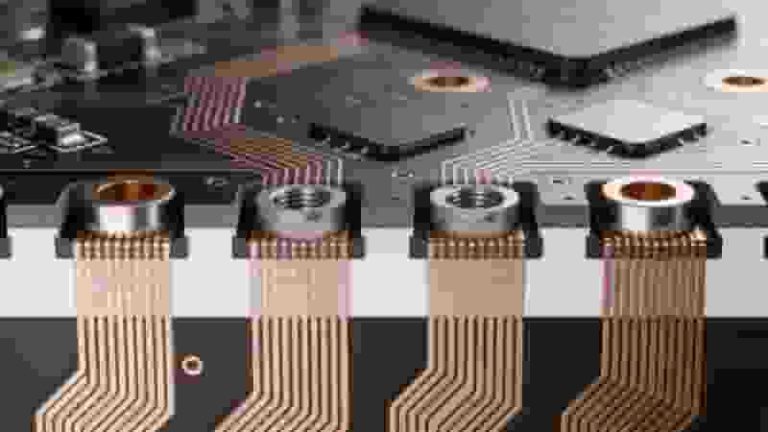
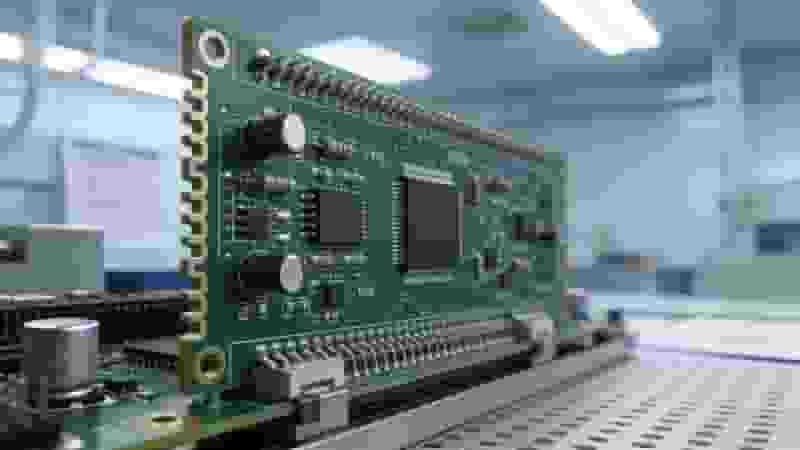
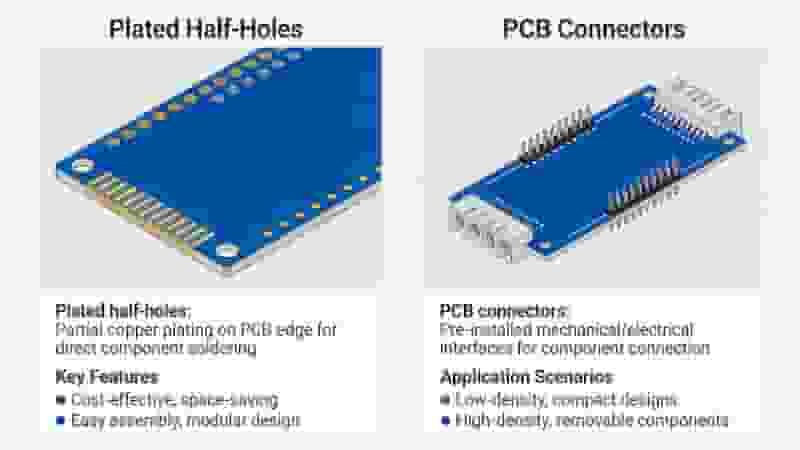
Plated Half-Holes (Castellated Holes) are semi-circular copper-plated holes located precisely at the edge of printed circuit boards. They act as edge connectors for PCB modules, allowing direct soldering to motherboards without additional connectors.
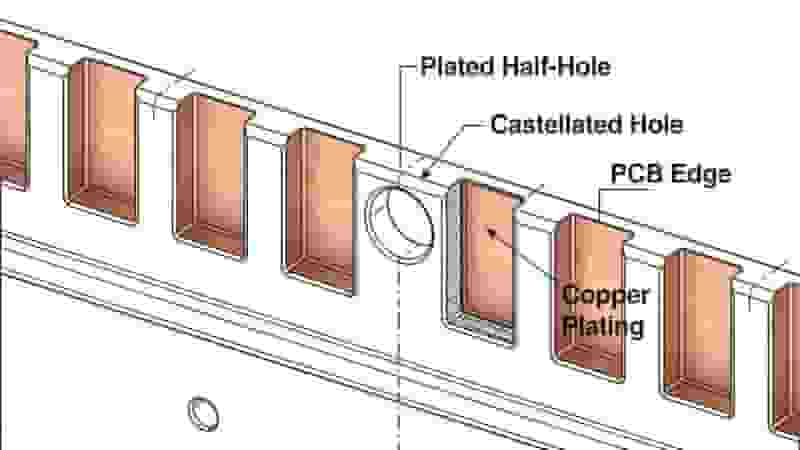
Unlike standard through-holes, these structures expose only half of the plated barrel, creating ideal solderable surfaces for SMT assembly and modular PCB designs.
Structure & Working Principle
Plated Half-Holes (Castellated Holes) use the same plating technology as PTH (Plated Through Holes) but are placed at PCB edges. The copper plating covers the inner wall of the half-hole, forming stable electrical connections when soldered.
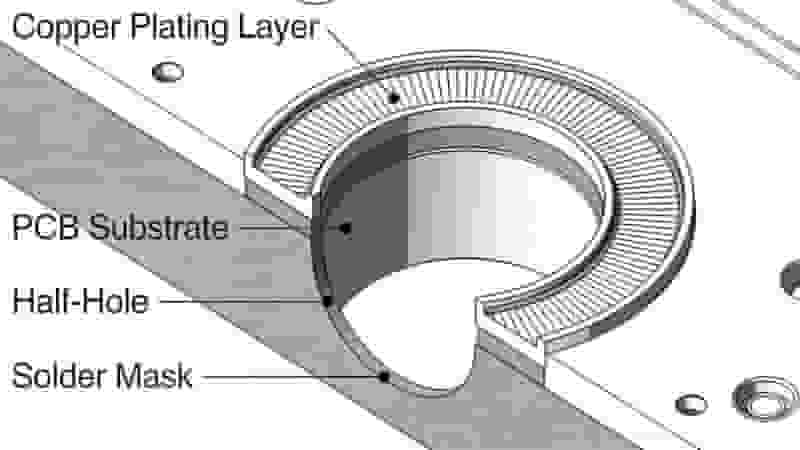
These structures deliver excellent mechanical stability and electrical conductivity, making them ideal for compact electronics and modular PCB systems.
Critical PCB Design Guidelines
Follow these rules to ensure performance and manufacturability for Plated Half-Holes (Castellated Holes):
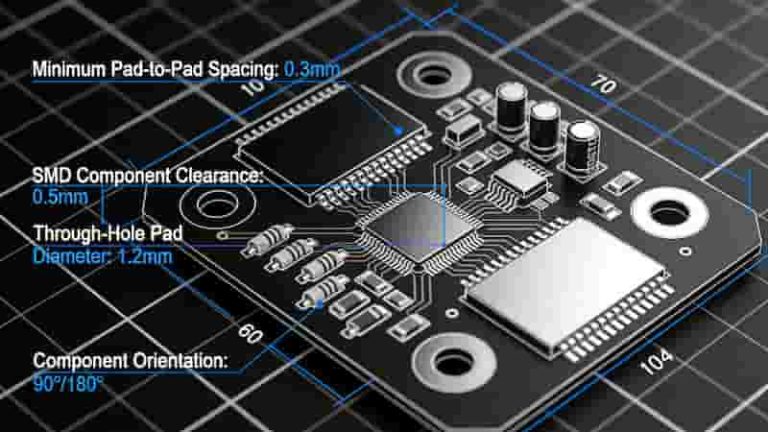
- Position holes accurately at PCB edges with strict alignment
- Define as plated through-holes in EDA design software
- Provide clear drill files for PCB manufacturing
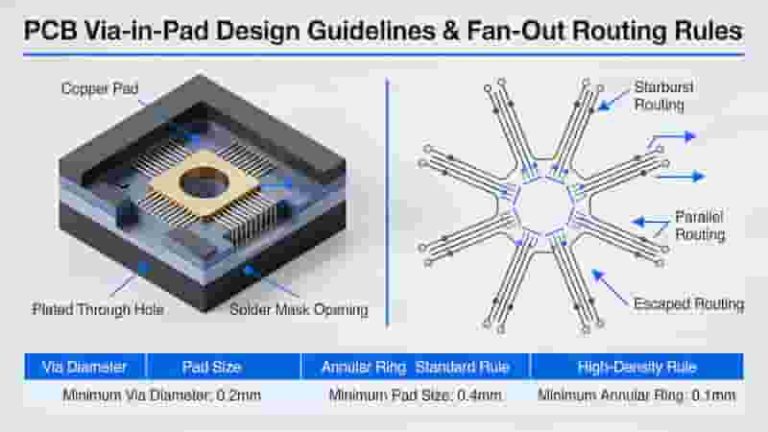
- Add sufficient copper pads on all layers for stability
- Comply with IPC standards for minimum size and spacing
- Balance hole diameter with reliability and routing space
Manufacturing Process
Modern production of Plated Half-Holes (Castellated Holes) uses precision processes to ensure high quality:
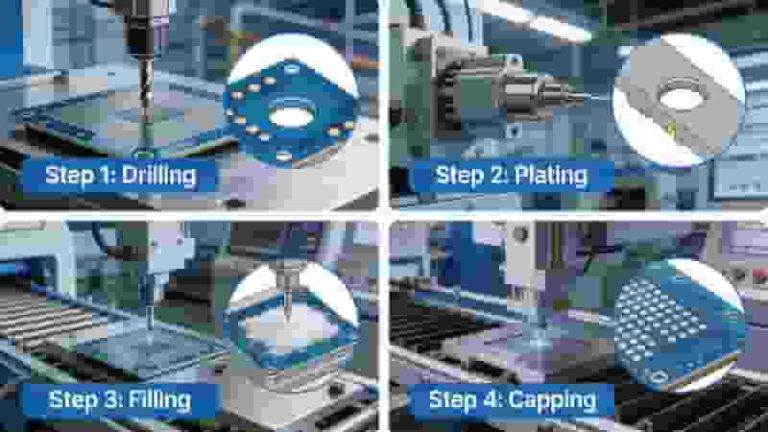
- Precision edge drilling with controlled depth
- Electroless copper plating and electroplating
- Laser routing for clean edge formation
- Surface finishing (ENIG, HASL, immersion silver)
- Automated optical inspection for quality control
Advanced processes eliminate burrs and ensure consistent plating quality for Plated Half-Holes (Castellated Holes) in mass production.
Key Advantages
- Space Efficiency: Eliminates bulky connectors for miniaturized devices
- High Reliability: Solder joints resist vibration and thermal cycling
- Simplified Assembly: Fully compatible with standard SMT processes
- Easy Inspection: Clear access for soldering and quality checking
- Cost Effective: Reduces BOM cost and assembly complexity
- Better Performance: Improved signal integrity for high-speed designs
Industrial Applications
Plated Half-Holes (Castellated Holes) are widely used across industries:
- Modular PCB assemblies and compact electronic devices
- High-density interconnect (HDI) PCB designs
- Wearable electronics and IoT products
- Automotive and industrial control modules
- Rigid-flex PCB interconnection sections
- Consumer electronics and communication equipment
Plated Half-Holes vs. Traditional Connectors
| Feature | Plated Half-Holes (Castellated Holes) | Traditional Connectors |
|---|---|---|
| Space Usage | Ultra-compact, edge-mounted | Requires large mounting space |
| Assembly | SMT compatible, single reflow | Separate assembly steps |
| Reliability | High, solder joint connection | Medium, contact-based connection |
| Cost | Lower BOM and assembly cost | Higher component cost |
Conclusion
Plated Half-Holes (Castellated Holes) are essential in modern PCB design, delivering superior space efficiency, reliability, and cost savings. Following proper design and manufacturing best practices allows you to maximize the value of these structures in modular PCB projects.
Mastering the design rules, fabrication process, and applications of Plated Half-Holes (Castellated Holes) helps engineers build more reliable and competitive electronic products.
Need Reliable PCB Manufacturing & Assembly?
We specialize in high-quality Plated Half-Holes (Castellated Holes) PCB fabrication, prototyping, and full SMT assembly for global industrial clients. Get a free quote and DFM review today!
Request Free Quote
Contact Engineering Team
Key Factors Influencing Custom PCB Costs in 2025
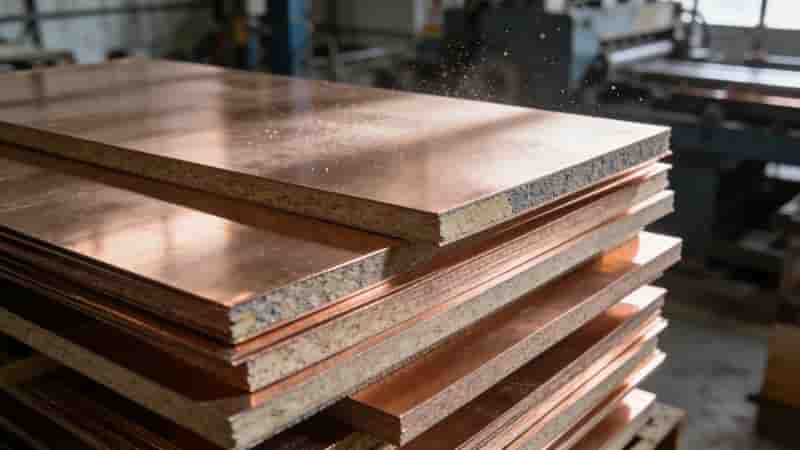
PCB Manufacturing Process Part 1: MI, Cutting & Drilling – Complete Industrial Guide
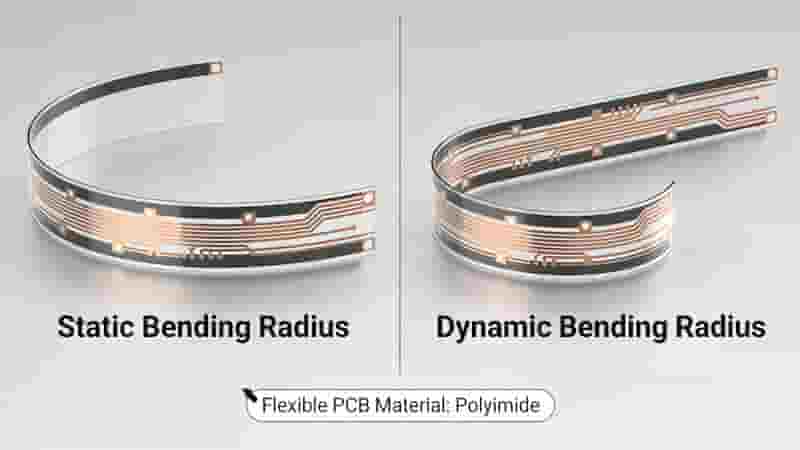
Single-Sided Flexible PCB Design Guide: Bending Radius, Trace Routing and Stiffeners
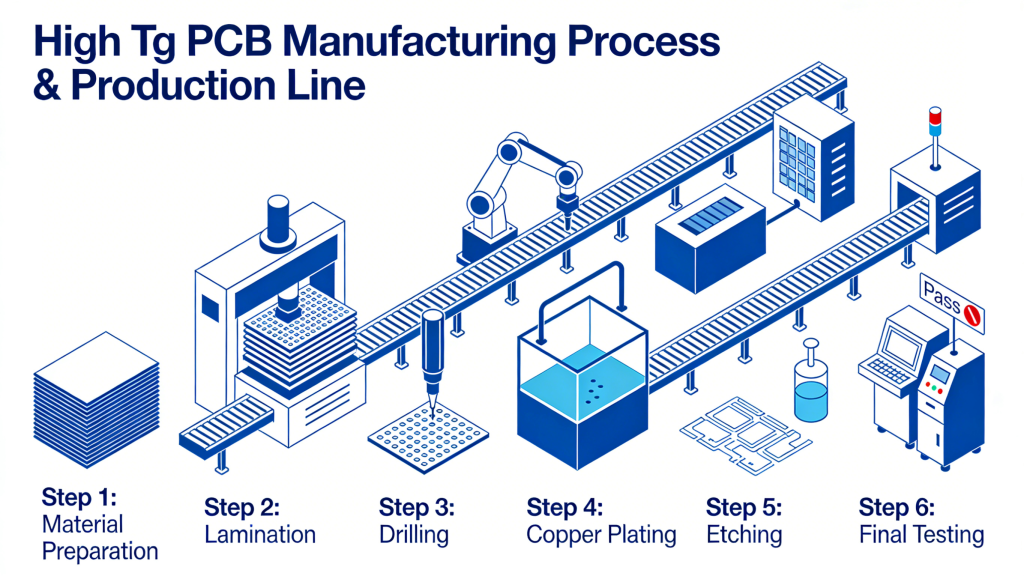
High Tg PCB Manufacturing for High Temperature Applications
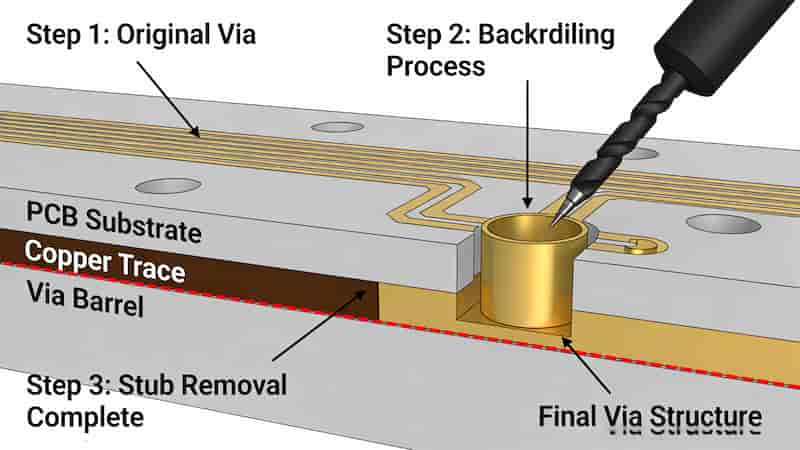
Backdrilling of Vias: The Definitive Guide for High-Speed PCB Signal Integrity