|

Free Software for PCB Design for Manufacturing and DFM Analysis

How to use PCB DFM analysis step by step

Use professional PCB DFM analysis software to eliminate manufacturing risks, lower prototype costs, and speed up mass production for global electronics projects.

What is PCB DFM Software

PCB Design and PCB Manufacturing are two separate but closely linked systems. Design data cannot be directly used for production; it requires conversion to CAM (Computer-Aided Manufacturing) data. Without proper analysis, design flaws lead to production failures, delays, and extra costs.

A DFM (Design For Manufacturing) tool checks designs from a production perspective, identifies risks early, and bridges the gap between design and manufacturing teams.
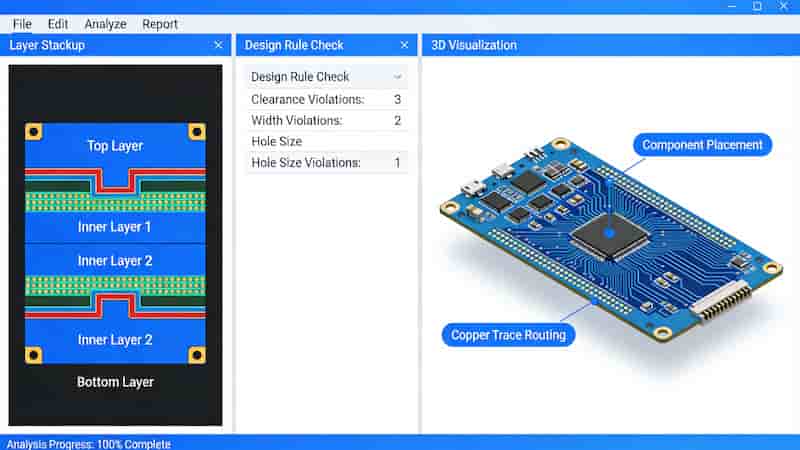
PCB DFM analysis software interface for design verification

Core Functions of Free DFM Tools

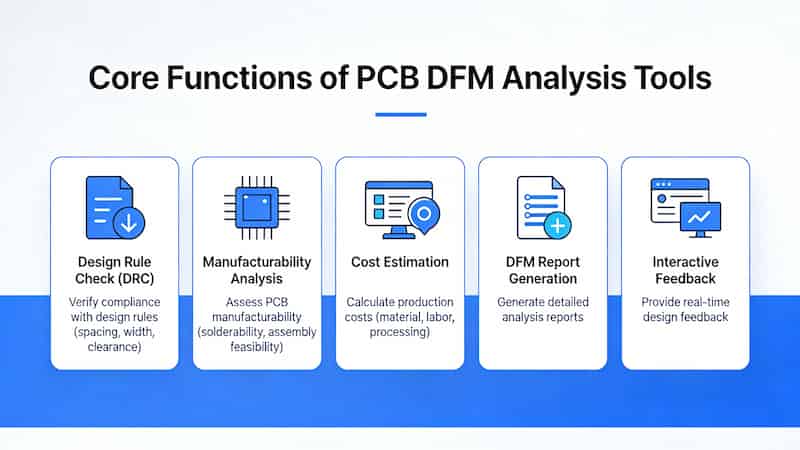
Free PCB DFM software provides essential checks without high costs. Key functions include:

  • Import Altium, Protel, PADS, Allegro, Gerber, ODB++ files
  • One-click automatic manufacturability analysis
  • 23+ critical design rule checks
  • Visual defect location and repair suggestions
  • Automatic PCB stackup and impedance calculation
  • Component parameter verification
Core functions of PCB DFM analysis tools

Best Free DFM Software Options

Among available free tools, HuaQiu DFM stands out as a reliable solution for engineers and manufacturers. It is lightweight, easy to use, and supports both desktop and online access.

This tool helps users detect design issues before production, improve quality, shorten development cycles, and reduce overall costs.
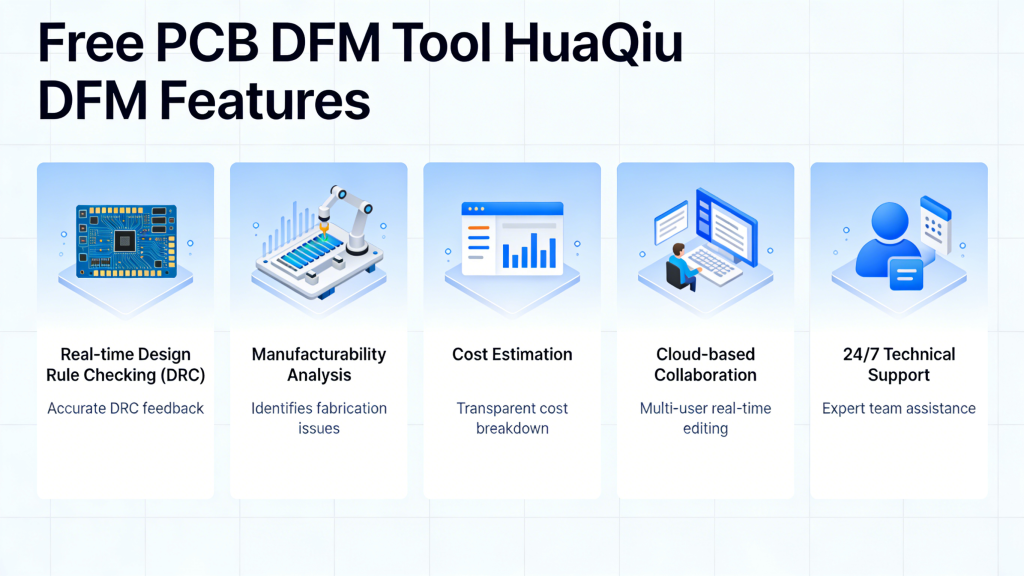
Free PCB DFM tool HuaQiu DFM features

DFM Tool Comparison

FeatureFree DFM SoftwareProfessional CAM Software
CostFreePaid, high license fees
Learning CurveEasy, fast startupSteep, long training
Designer FocusYes, DFM checks optimizedFor production engineers
File SupportAll major EDA formatsLimited design formats

How to Use DFM Software Effectively

Follow these steps to maximize PCB DFM analysis value:

  1. Import your design files (Gerber, ODB++, or native EDA files)
  2. Run automatic manufacturability inspection
  3. Review error locations and improvement suggestions
  4. Adjust design based on production capabilities
  5. Export optimized files for manufacturing
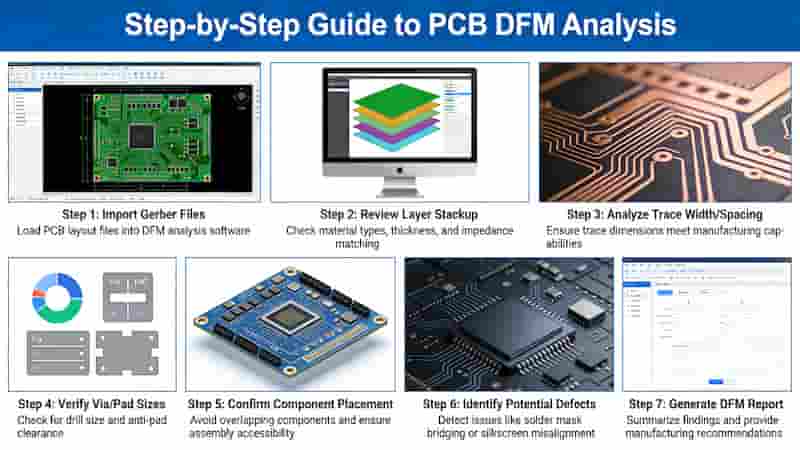
How to use PCB DFM analysis step by step

Benefits for PCB Design & Manufacturing

Using free DFM software brings clear advantages:

  • Reduce PCB prototype cost and rework
  • Shorten lead time from design to mass production
  • Improve PCB reliability and yield rate
  • Minimize communication errors between teams
  • Support consistent quality for global exports
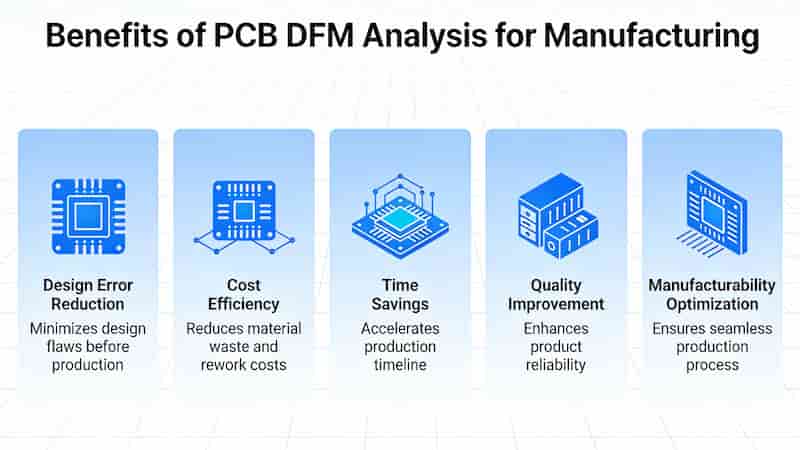
Benefits of PCB DFM analysis for manufacturing

FAQ About PCB DFM Software

Q: Is free DFM software reliable for professional use?
A: Yes, tools like HuaQiu DFM provide industry-standard DFM checks trusted by engineers worldwide.

Q: What files does free DFM software support?
A: Most tools import Gerber, ODB++, Altium, PADS, Protel, and Allegro files.

Q: Can DFM software replace CAM processing?
A: No, it complements CAM by fixing design issues before production.

Summary

A reliable free PCB DFM analysis tool is essential for modern PCB design and manufacturing. It reduces risks, lowers costs, speeds up time-to-market, and ensures your boards meet international quality standards.

We provide full PCB manufacturing and assembly support alongside professional DFM guidance for global buyers.

Get Your PCB Project Started

Contact us for PCB fabrication, assembly, or DFM support

Free quote, Fast lead time, Global export support

Inquire Now
PCB layer thickness vs standard PCB thickness

Standard PCB Thickness – The Complete Guide for Engineers & Buyers

Posted on
0 Comments
Standard PCB thickness is typically 1.57 mm (0.062 inches), often rounded to 1.6 mm. This guide covers definitions, influencing factors, manufacturing constraints, non-standard design rules, and selection tips for industrial buyers and engineers. Quick Overview: standard PCB thickness (1.6mm) is industry default; common alternatives include 0.78mm (0.031in) and 2.36mm (0.093in). Thickness impacts durability, weight, assembly,…
PCB Prototype Quality Testing - AOI Electrical Impedance Verification

PCB Prototype Manufacturing: The Complete 2025 Technical Guide for Engineers & Buyers 

Posted on
0 Comments
PCB prototype manufacturing is the critical first step in electronic product development. This professional guide covers full processes, materials, DFM, testing, standards, and selection tips to help you build reliable, production-ready prototypes efficiently. Introduction to PCB Prototypes PCB prototype manufacturing validates design functionality, optimizes performance, and reduces risks before mass production. For engineers and procurement…
Rigid PCB Prototype FR-4 Industrial Circuit Board

Learn the Essential Requirements for PCB Prototype Manufacturing in 2025

Posted on
0 Comments
Summary: Master critical standards for PCB prototype manufacturing including file formats, design rules, layer stackup, and documentation. Optimize your prototyping workflow with expert best practices to achieve high-quality, cost-effective, and on-time PCB prototypes for industrial and engineering applications. Prototype PCB Fabrication PCB prototyping is a crucial step in the electronics design process, enabling designers to…
Multilayer PCB manufacturing process flowchart from design to final inspection

Multilayer PCB Prototyping & Manufacturing Services | Fast & Reliable

Posted on
0 Comments
Explore multilayer PCBs: their structure, benefits, and applications. We deliver fast, high-quality multilayer PCB manufacturing and prototyping services for global industrial buyers and engineers. What is a Multilayer PCB? A multilayer PCB features three or more copper layers, unlike single-layer PCBs with just one. Components are placed on the outer surface layers, while inner layers…
RoHS restricted substances limits for PCB materials and assembly

RoHS Compliant PCBs: Complete Guide to Standards, Manufacturing & Testing 

Posted on
0 Comments
RoHS Compliant PCBs are essential for global market access. This guide covers restricted substances, compliance benefits, lead-free processes, assembly, testing, and how to partner with trusted RoHS compliant PCB manufacturers. Introduction to RoHS Standards RoHS (Restriction of Hazardous Substances) is an EU directive that limits hazardous materials in electrical and electronic products. For printed circuit…
ENIG PCB layer structure: copper, nickel, immersion gold

PCB Immersion Gold (ENIG) Surface Finish: Full Guide for Reliable Lead-Free PCBs

Posted on
0 Comments
PCB Immersion Gold (ENIG) is a premium surface finish delivering excellent solderability, oxidation resistance, and flatness for high-reliability printed circuit boards. This guide explains definition, benefits, process, pros & cons, comparisons, and applications for engineers and global buyers. What Is PCB Immersion Gold (ENIG) Surface Finish? PCB Immersion Gold (ENIG) (Electroless Nickel Immersion Gold) is…

FAQs About PCB DFM Analysis Software & Application

A: It inspects PCB design from manufacturing perspective, finds hidden design defects in advance, gives modification advice to avoid post-production rework and extra expense.

A: Compatible with Gerber, ODB++ and native files from Altium, PADS, Protel, Allegro and other mainstream EDA design software.

A: Free DFM is zero cost, easy operation for design engineers; professional CAM needs expensive authorization and complicated training focusing on factory production data processing.

A: Import design files → run automatic inspection → check error positions & optimization tips → revise PCB layout → export corrected documents for production.

A: Cut prototype rework cost, shorten project lead time, raise finished PCB yield and reduce communication deviation between designer and manufacturer.

A: No, DFM only fixes design flaws upfront; CAM is still required for subsequent factory production data conversion and process setup.

A: Trace width/spacing, via size, annular ring, pad clearance, stackup impedance calculation and component layout manufacturability verification.

A: Yes, mature free DFM tools follow industrial standards and are widely adopted by global engineers for pre-production design verification.

Similar Posts