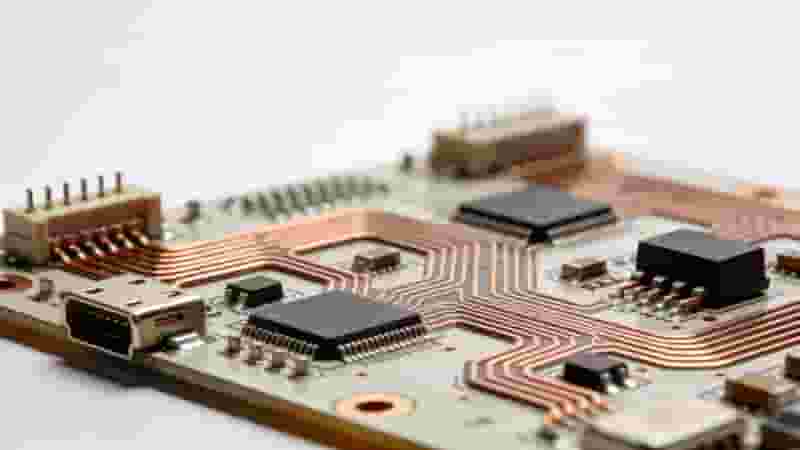
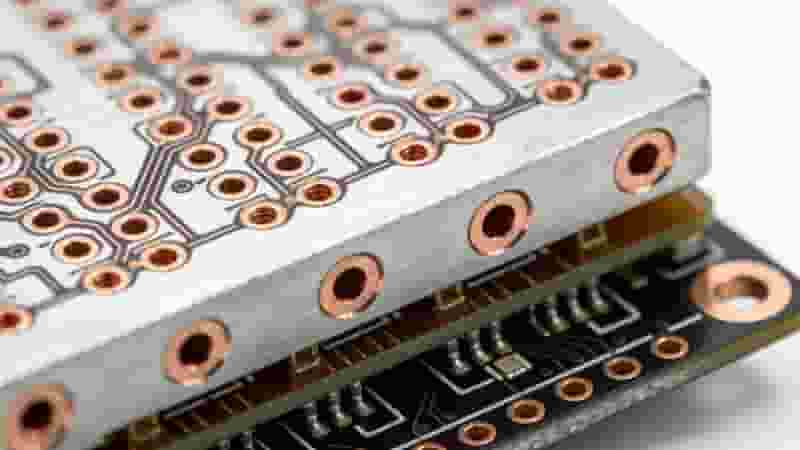
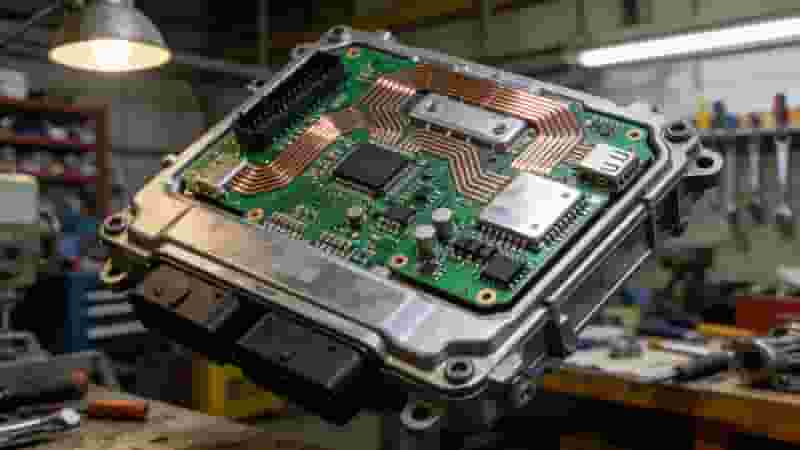
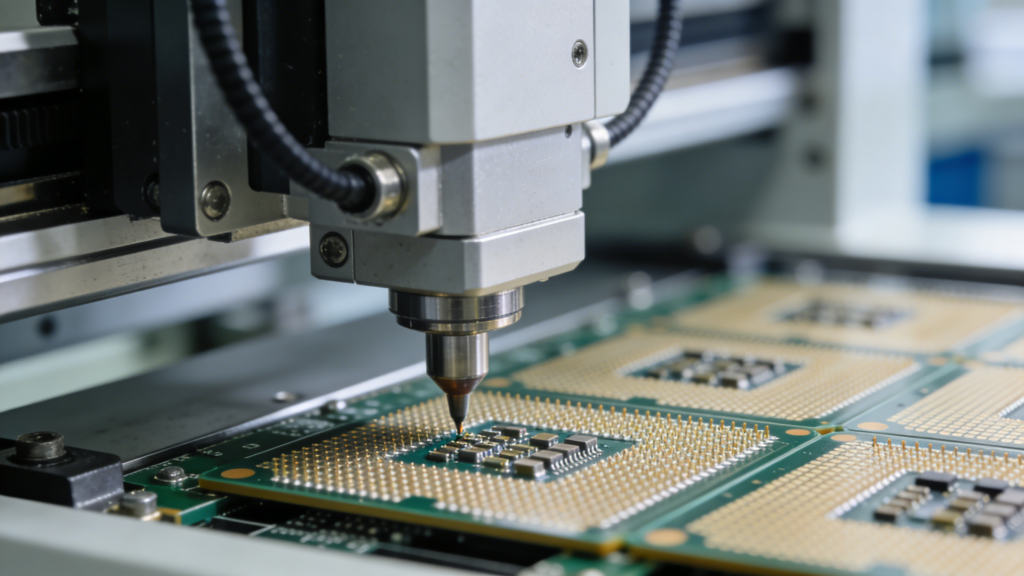
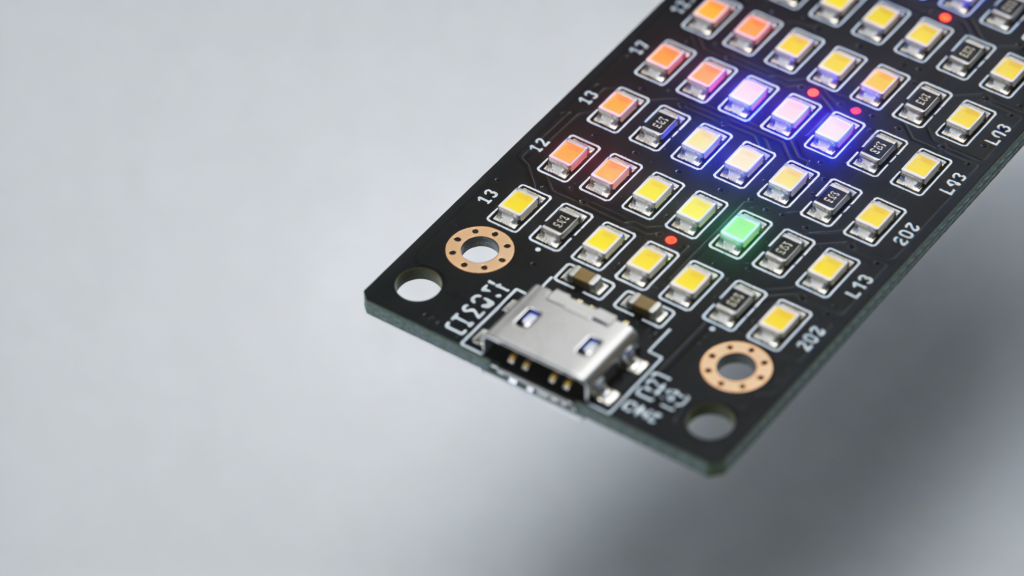
Heat resistant circuit boards are engineered to maintain stability, reliability, and electrical performance in extreme thermal environments. We specialize in high-temperature PCBs, IMS PCBs, and high-Tg FR4 boards for automotive, aerospace, industrial power, and LED systems.
Request a Quote
What Are Heat Resistant Circuit Boards?
Heat resistant circuit boards are printed circuit boards designed to resist warping, delamination, and performance loss at elevated temperatures. Unlike standard FR4 PCBs, high-temperature PCBs use specialized laminates and thermal management structures to operate safely above 130°C and up to 260°C continuously.
These boards are essential for applications where heat generation is unavoidable, such as power converters, engine controls, high-power LEDs, and industrial automation equipment.
Core Materials for High-Temperature PCBs
The performance of heat resistant circuit boards depends entirely on substrate materials. We use only certified, IPC-compliant high-temperature materials.
High-Tg FR4 PCB
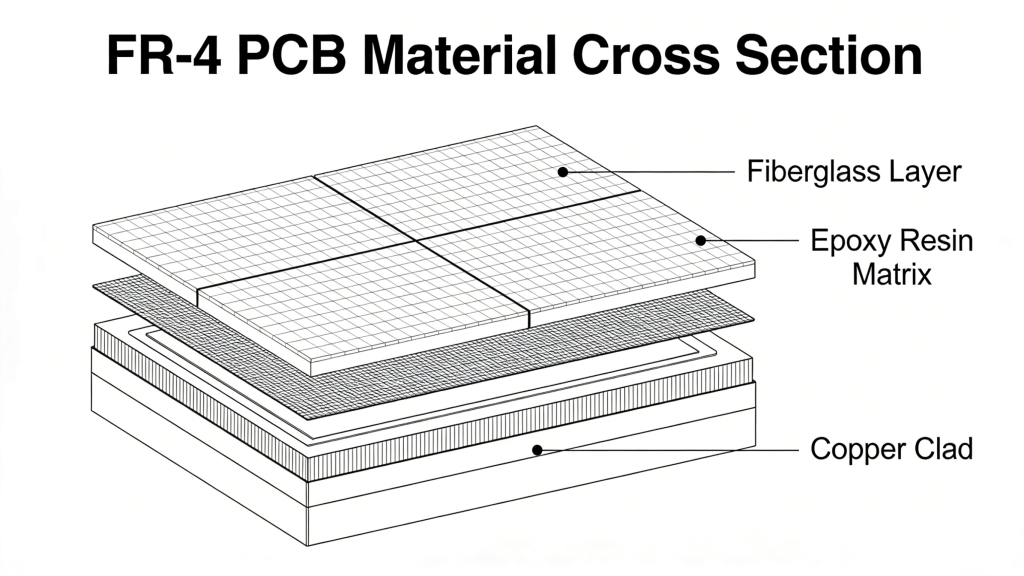
High-Tg FR4 features a glass transition temperature above 170°C, offering improved dimensional stability and heat resistance compared to standard FR4. It is the most cost-effective solution for moderate high-temperature PCB applications.
Polyimide PCB
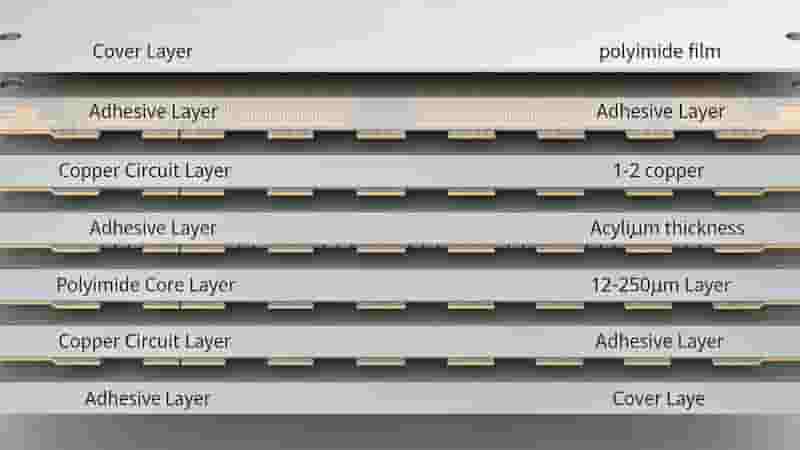
Polyimide substrates withstand continuous temperatures up to 260°C, with excellent chemical resistance and low thermal expansion. Ideal for aerospace, military, and extreme environment electronics.
Ceramic PCB
Ceramic-based PCBs handle temperatures exceeding 500°C, with ultra-high thermal conductivity for high-power and high-frequency applications.
Insulated Metal Substrate (IMS) PCB
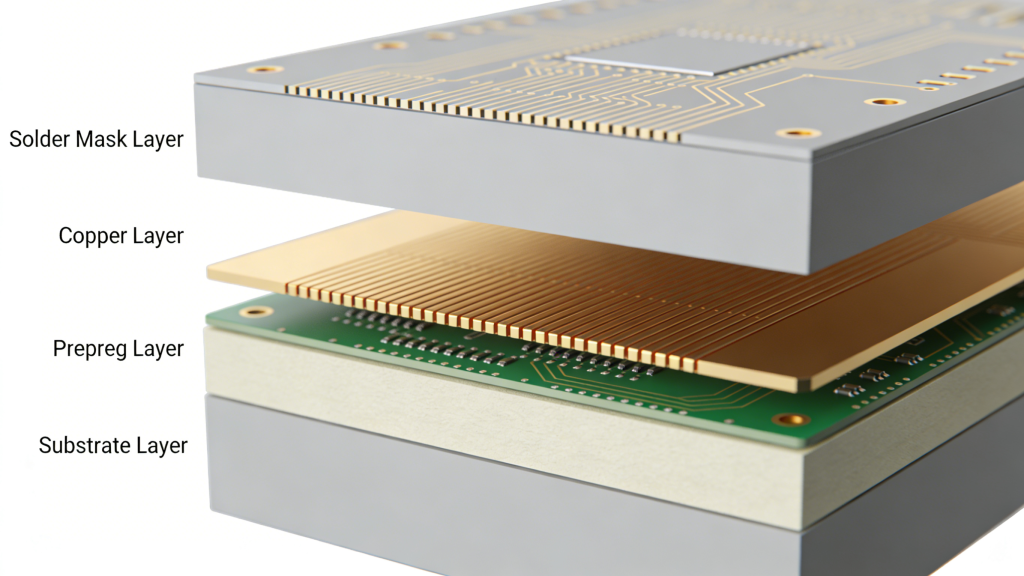
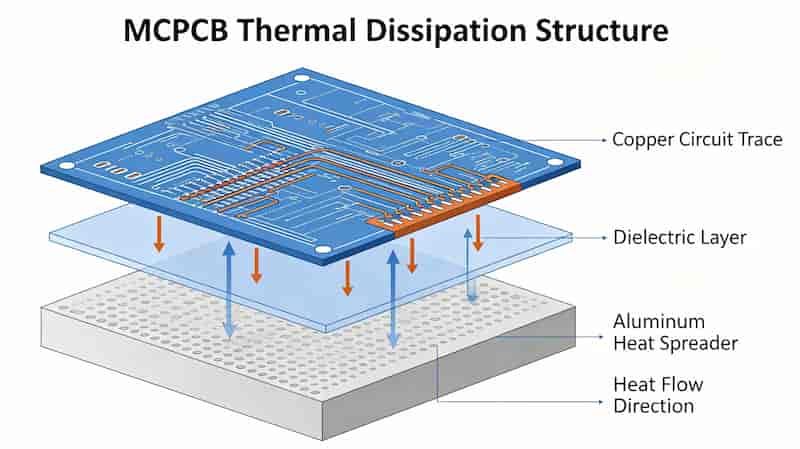
IMS PCB is the most effective thermal management solution for heat resistant circuit boards. It uses an aluminum base, thermally conductive dielectric layer, and copper circuit layer to rapidly dissipate heat.
IMS PCBs eliminate hotspots, improve component lifespan, and enable higher power density. They are widely used in LED lighting, automotive electronics, power supplies, and motor drivers.
Thermal Design Guidelines for Heat Resistant PCBs
Effective design ensures high-temperature PCBs perform reliably over their lifetime.
Thermal vias under high-power components
Increased copper weight for better heat spreading
Strategic component placement to avoid heat concentration
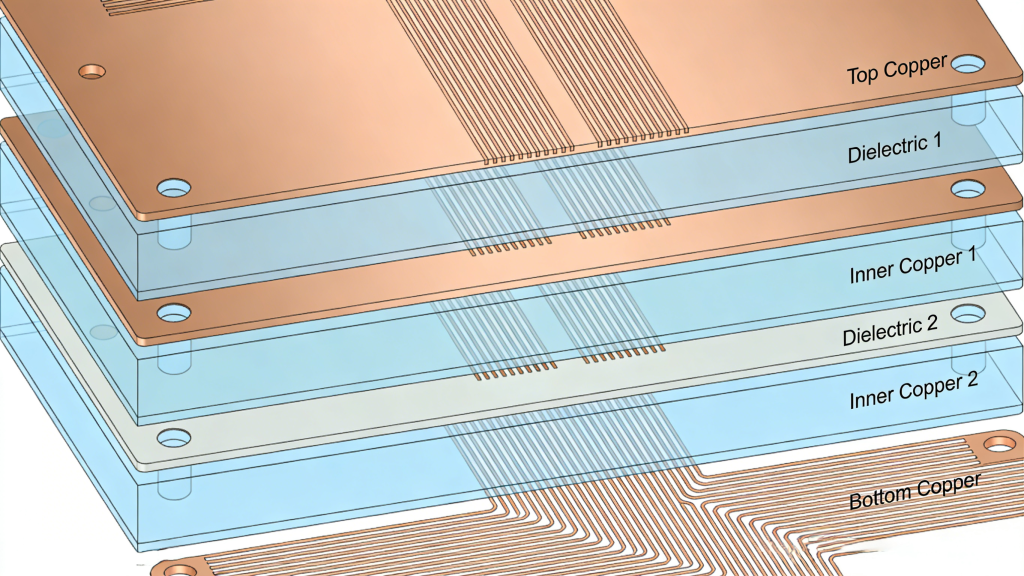
Optimized layer stack‑up for multilayer heat resistant circuit boards
Compatible high-temperature components and solder materials
Heat resistant circuit boards are foundational to reliable high-performance electronics. Choosing the right high-temperature PCB material and design directly impacts product lifespan, safety, and operational stability.
We provide fully customized IMS PCBs, high-Tg FR4, polyimide, and ceramic heat resistant circuit boards to meet your exact specifications, certifications, and performance needs.
Inquiry, Customization & Quotation
Tell us your layer count, material, thickness, working temperature, and quantity. We will provide a fast, accurate quotation and DFM review for your heat resistant circuit boards project.
Turnkey PCB manufacturing and assembly provides a fully integrated end-to-end service covering design for manufacturing (DFM), bare board fabrication, electronic component sourcing, SMT assembly, THT assembly, functional testing, quality inspection and global shipping. This unified model reduces lead times, lowers total costs, improves quality consistency and simplifies project management for international electronics buyers, engineers and…
FR-4 PCBs remain the global industry standard in 2025, delivering unmatched cost‑efficiency, reliability, and versatility for 5G, IoT, electric vehicle, and industrial electronics. This guide explains core properties, advantages, material comparisons, and why FR‑4 is still the top choice for engineers and global buyers. Introduction: Dominance of FR-4 in PCB Manufacturing Printed circuit boards are…
This guide covers the 6 core types of flexible circuit boards, including single-sided, double-sided, multilayer, double access, PTF, and rigid-flex PCBs. Learn their structures, benefits, applications, and how to select the best flex PCB for your industrial, medical, automotive, or aerospace design. Why Flexible PCBs Matter Flexible PCBs (FPCs) are built on bendable substrates like…
This article clearly defines PCB and PCBA, explains core technical differences, manufacturing processes, functionality, cost, and application scenarios to help global engineers and purchasers make accurate procurement decisions. 1. Definitions of PCB and PCBA PCB (Printed Circuit Board) is the bare printed circuit board without electronic components. It provides mechanical support and electrical connection paths…
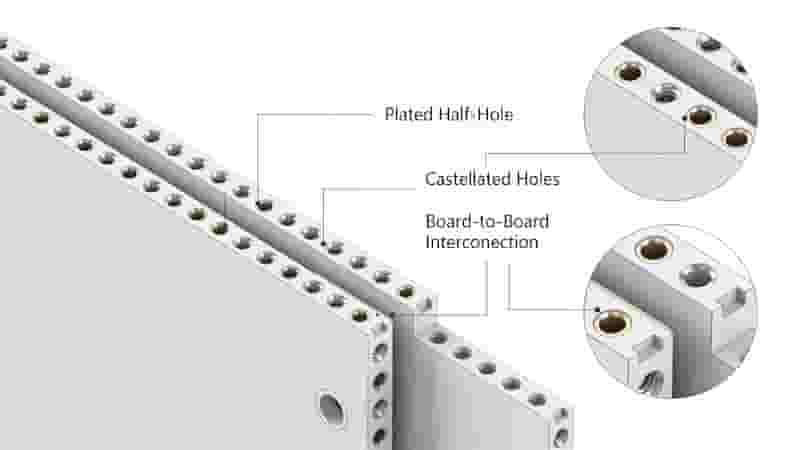
Plated half-holes (also known as castellated holes) offer a space-efficient, reliable method for interconnecting PCB modules through direct soldering. Positioned at board edges, they simplify assembly, improve alignment, and boost mechanical stability compared to traditional bottom pads. This guide covers structure, design rules, fabrication, benefits, applications, and best practices for engineers and buyers. What Are…
We provide professional SMT PCB assembly supporting rapid prototypes to high-volume production, compliant with IPC-A-610, ISO, and RoHS standards, with full inspection, fast lead times, and global delivery for industrial buyers and engineers. SMT PCB Assembly Capabilities Our SMT PCB assembly supports single-sided, double-sided, and mixed-tech assembly for rigid, flex, and rigid-flex PCBs. We handle…
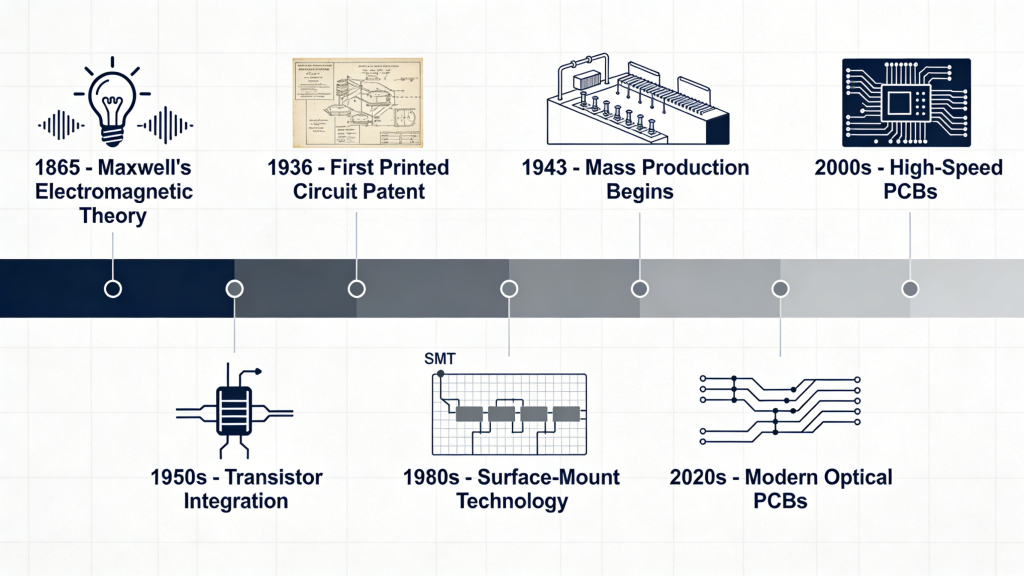
Explore the complete evolution of printed circuit boards from early electromagnetic theory to modern HDI, flexible, and optical PCBs. This timeline covers key inventions, military adoption, mass commercialization, and future trends for global electronics manufacturing. PCB Prehistoric Era & Electromagnetic Foundations The journey of printed circuit boards starts with the discovery of electromagnetic principles that…
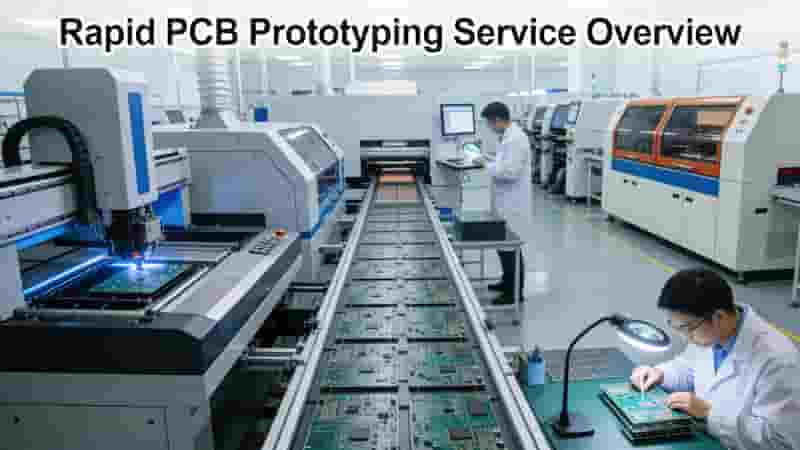
We provide high-quality, fast-turn PCB fabrication services to bring your ideas to life. From single-sided to multilayer PCBs, our rapid PCB prototyping ensures quick delivery starting at just 8 hours for double-sided prototypes and 24-72 hours for small batches. Trust our advanced equipment and strict quality standards to streamline your design process. Why Choose Us…
Plated Half-Holes (Castellated Holes) are critical edge interconnect structures in modern PCB design. They enable reliable module-to-board soldering, improve space efficiency, and enhance assembly accuracy for high-density electronic products. What Are Plated Half-Holes (Castellated Holes)? Plated Half-Holes (Castellated Holes) are semi-circular copper-plated holes located precisely at the edge of printed circuit boards. They act as…
OSP (Organic Solderability Preservative) is a lead‑free, water‑based organic coating applied to exposed copper pads on printed circuit boards to prevent oxidation and ensure reliable soldering for SMT assembly. This complete guide covers definition, process, pros & cons, comparisons, storage, assembly best practices, and ideal applications for global engineers and buyers. What Is PCB Surface…
We continuously upgrade PCB manufacturing processes to maintain our core competitive advantage. Our enhanced capabilities deliver cutting-edge production technologies while reducing total costs for global industrial buyers, engineers, and procurement teams. Full Technical Capabilities of Our PCB Manufacturing & SMT Assembly Services We support full-cycle production for all standard and advanced PCB types, paired with…
Rapid PCB prototyping allows functional validation of printed circuit board layouts within 24–120 hours. Rapid PCB prototyping services enable engineers to quickly design and manufacture printed circuit board prototypes within an extremely short timeframe, usually 1–5 days. What Is Rapid PCB Prototyping Rapid PCB prototyping refers to the design and manufacturing of printed circuit boards…
We provide professional Rapid PCB Prototyping with ultra‑fast lead times, strict quality control, and full customization for global engineers and buyers. From prototype to small‑batch production, we speed up your innovation and time‑to‑market. What Is Rapid PCB Prototyping Rapid PCB Prototyping is the fast production of small‑batch printed circuit boards to validate design, function, and…
What is a Blank PCB? A Complete Guide to Bare Circuit Boards A blank PCB (also called a bare PCB) is simply the base of an electronic circuit board—it has no electronic parts (like resistors or chips) soldered on it yet. For anyone new to electronics, think of it as a “blank canvas”: you can…
PCB vias are essential vertical interconnects in multilayer PCBs that link copper layers for signal, power, and ground paths. This professional guide explains through vias, blind vias, and buried vias with engineering specs, manufacturing processes, and real-world use cases to help engineers and buyers select reliable via solutions. What Are PCB Vias? A PCB via…
Lightweight, high‑density multilayer flexible PCB for compact, reliable electronics in consumer, automotive, medical, and industrial applications. Up to 16‑layer flex and rigid‑flex PCB manufacturing with tight tolerances and controlled impedance. 10+ years flex PCB experience in China 1,000,000+ flex circuits shipped per year Quick‑turn prototypes & volume production for multilayer flexible PCB Multilayer Flex PCB…
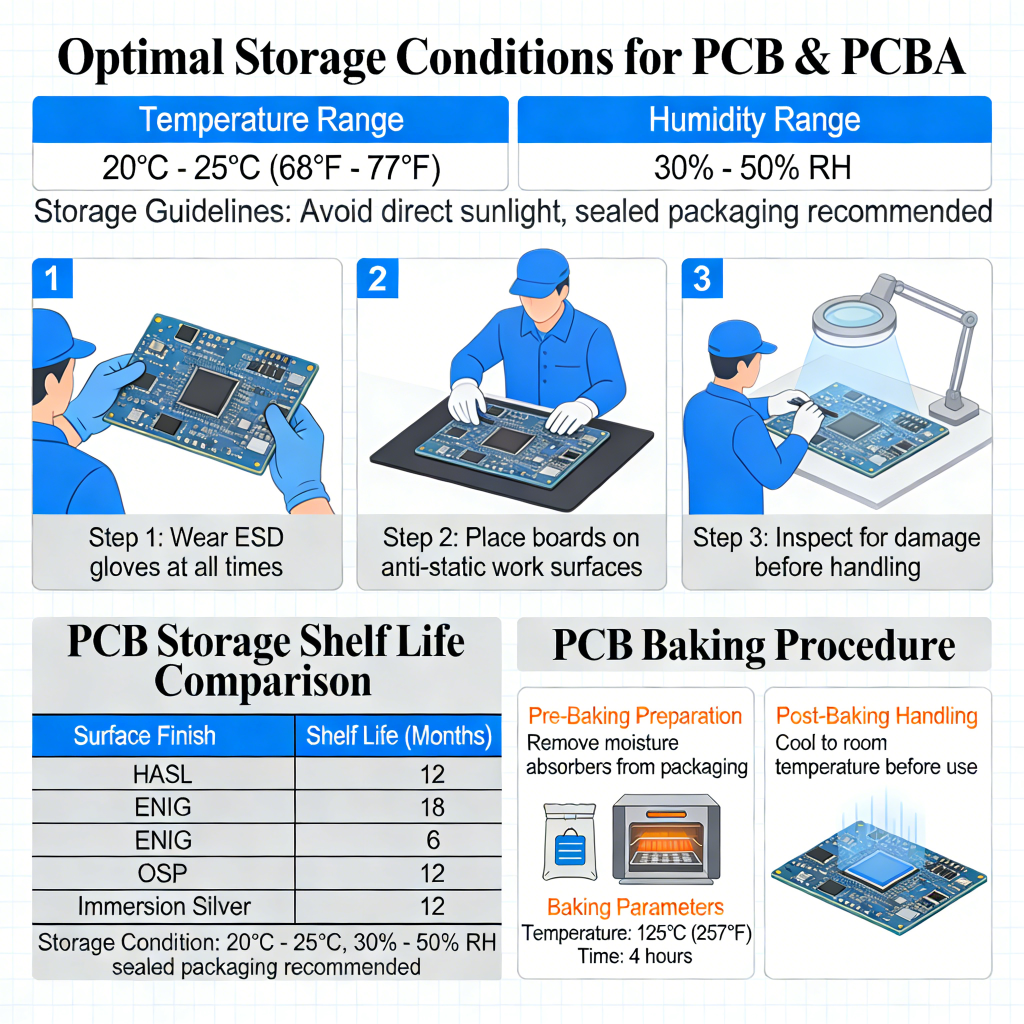
PCBA finished products can typically be stored from 3 months to 10 years under controlled conditions, depending on surface finish, packaging, components, and environment. This guide explains official shelf life standards, storage conditions, and best practices for industrial buyers and engineers. What Is PCBA (PCB Assembly)? PCBA stands for Printed Circuit Board Assembly, the completed…
Learn how to select a trusted PCB manufacturer in Europe with certifications, technical capabilities, quality control, lead times, and compliance for industrial, automotive, medical, and aerospace projects. Selecting a reliable PCB manufacturer in Europe directly impacts product quality, compliance, supply chain stability, and long-term project success. This guide helps engineers, procurement teams, and project managers…
We deliver professional custom PCB fabrication from China, supporting fast‑turn prototypes and high‑volume mass production. Certified to ISO 9001, IPC‑A‑600, and IPC‑6012, we serve industrial buyers, engineers, and procurement teams worldwide with stable quality, short lead times, and full assembly solutions. Custom PCB Manufacturing Capabilities We specialize in full‑service custom PCB fabrication covering rigid, flexible,…
PCB Classification Guide: Types of PCBs by Layer, Material & Application PCBs serve as the foundational components of all electronic products. For products with different purposes—whether for industrial equipment, consumer electronics, or automotive systems—the type of PCB you need to select will vary significantly. In the global supply chain, we typically classify PCBs based on…
PCB Design Software Free Download This is a comparison of several PCB design tools that meet the following criteria: 1. PartSim PartSim is a free, user-friendly online circuit simulator featuring a full SPICE simulation engine, web-based schematic capture, a graphical waveform viewer, and direct Digi‑Key integration—all accessible via your web browser. It also includes an…
China PCB manufacturers are the backbone of global electronics supply. This guide shows you 5 proven steps to vet suppliers for qualifications, technology, quality, consistency, and communication to secure a long-term, trusted PCB production partner. Global demand for PCB manufacturing services from China continues to rise, with China producing over 50% of the world’s PCBs….
Learn PCB storage and PCBA storage best practices to avoid oxidation, ESD, moisture damage, and ensure reliable performance for industrial electronics. PCB storage and PCBA storage are critical for manufacturers and buyers alike. Proper storage prevents damage, maintains solderability, and avoids costly failures during assembly or operation. After production, boards are stored with strict precautions…
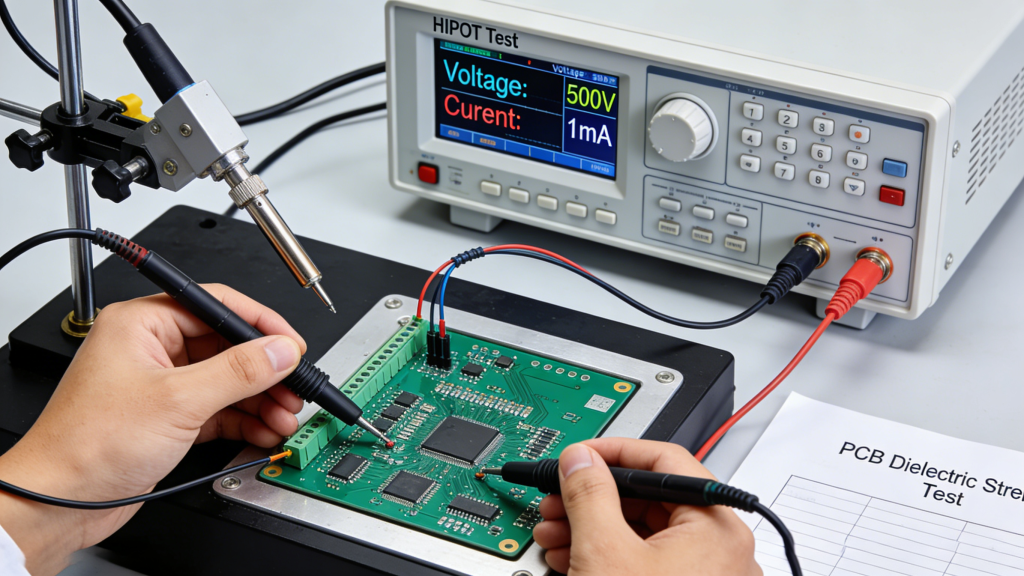
Dielectric strength is critical for PCB reliability, ensuring insulation and safety in high-voltage and high-frequency applications. This guide dives into key PCB materials, their dielectric properties, testing techniques, influencing factors, and practical advice for designing robust circuits. Introduction In the fast-paced world of electronics, a single oversight in PCB design can lead to catastrophic failure—like…
Gold exhibits excellent corrosion and oxidation resistance. When a PCB is finished with a gold surface treatment, it ensures exceptional long-term durability, while the underlying copper layer remains fully protected and structurally intact. The conductive pathways on a PCB are composed of copper, which enables reliable electrical signal transmission. While copper is an exceptional conductor,…
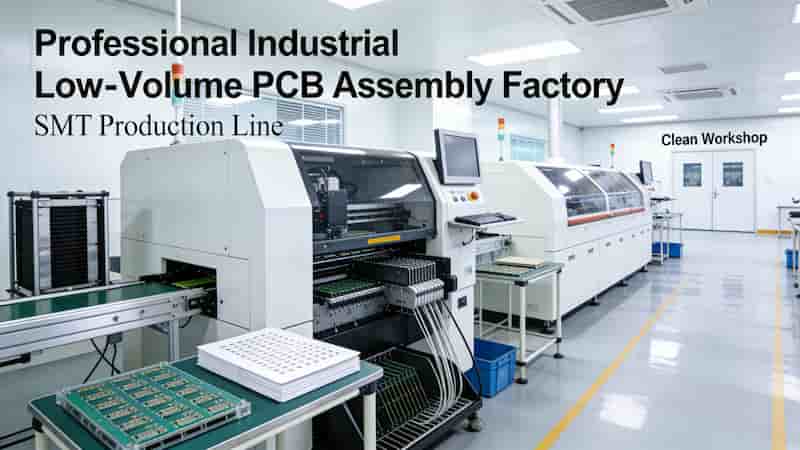
This professional guide helps industrial buyers, engineers, and procurement teams evaluate low-volume PCB assembly suppliers systematically, covering technical capabilities, quality systems, lead time, cost transparency, and long-term partnership to ensure reliable, cost-effective, and high-quality PCB assembly for prototypes and small-batch production. Technical & Assembly Capabilities Low-volume PCB assembly demands specialized equipment and expertise for small-batch…
This professional guide details the full PCB fabrication process with engineering-grade steps, quality controls, and technical specifications for industrial buyers, engineers, and global procurement teams. Learn how reliable PCB manufacturing ensures consistency, performance, and compliance for export projects. Pre-Production Engineering & DFM Review Every professional PCB fabrication process starts with engineering validation. We perform full…
Standard PCB thickness is critical for mechanical strength, signal integrity, and assembly compatibility. This guide covers definitions, industry standards, influencing factors, manufacturing constraints, and design best practices for global industrial buyers. What Is Standard PCB Thickness The global standard PCB thickness is 1.57 mm (0.062 in), commonly referenced as 1.6 mm for simplicity. This is…
We provide reliable single-sided flexible PCB manufacturing and full assembly for industrial, medical, automotive, and consumer electronics globally. Jump to: Overview | Capabilities | Process | Comparison | FAQ Single-Sided Flexible PCB Overview A single-sided flexible PCB is a lightweight, bendable circuit with conductive traces on one dielectric layer. It is widely used in compact…
Reliable aluminum PCB manufacturer & MCPCB supplier in China, providing fast prototypes and small to medium-volume production for LED lighting, power supply and other high-power electronics. About Our Aluminum PCB Services We specialize in aluminum PCB and metal core PCB fabrication, from single-sided aluminum PCBs for LED lamps to complex multilayer aluminum boards for power…
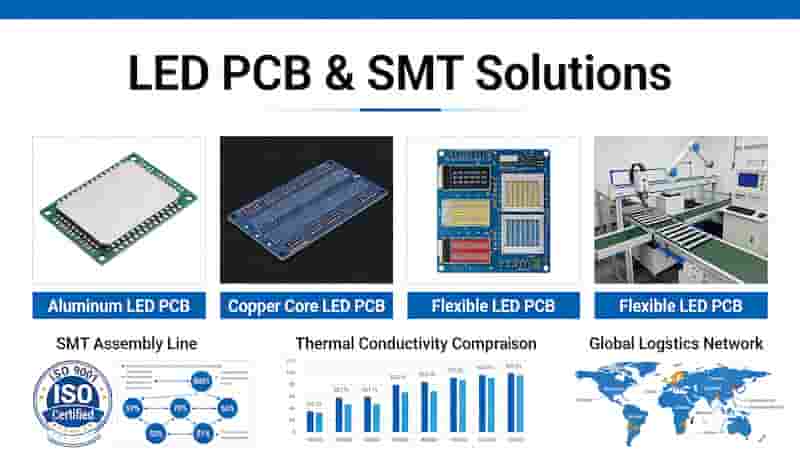
ISO 9001 certified LED PCB manufacturer offering aluminum, copper core & flexible LED PCB with superior heat dissipation, fast turnaround & competitive pricing for global buyers. LED PCB Manufacturing & Assembly Services We are a professional LED PCB manufacturer focusing on high-quality LED PCB fabrication and assembly. We provide complete one-stop solutions from design to…
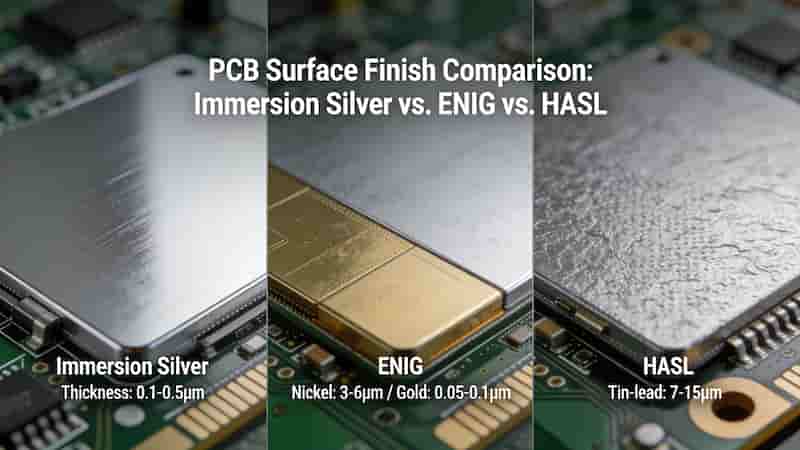
Immersion silver PCB surface finish is a lead‑free, RoHS‑compliant protective layer for copper pads, delivering balanced cost, solderability, and high‑speed signal performance. Widely used in telecom, automotive, and fine‑pitch electronics, it offers a practical alternative to ENIG and HASL. This guide covers process, pros & cons, applications, cost data, and side‑by‑side comparisons for engineering and…
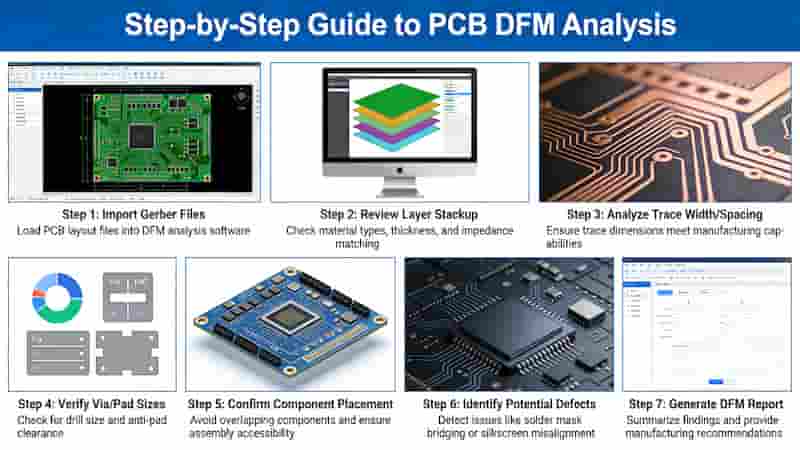
Use professional PCB DFM analysis software to eliminate manufacturing risks, lower prototype costs, and speed up mass production for global electronics projects. What is PCB DFM Software PCB Design and PCB Manufacturing are two separate but closely linked systems. Design data cannot be directly used for production; it requires conversion to CAM (Computer-Aided Manufacturing) data….
In our PCB manufacturing process deep dive, we explored lamination, exposure, and development steps that transfer circuit layouts onto boards. Up next, we tackle graphical electrodeposition and AOI. PCB Copper Plating In the previous article, we covered the first and second steps of the PCB manufacturing process – MI (Manufacturing Instruction), which involves crafting a…
We provide professional BGA PCB manufacturing, precision assembly, advanced rework, and full testing for high-reliability electronics. Our ISO/IPC-certified processes support prototypes to mass production for global industrial buyers, engineers, and procurement teams. What Is BGA (Ball Grid Array) and Why It Matters for Your PCB? A ball grid array (BGA) is a high-density surface-mount package…
LED PCB is a thermally optimized printed circuit board purpose-built for mounting, powering, and cooling LEDs. This guide covers definition, structure, types, materials, thermal design, applications, and selection tips to help you source reliable LED PCB for industrial, automotive, and commercial lighting projects. What Is an LED PCB? An LED PCB (LED Printed Circuit Board)…
Low-volume or small-batch PCB assembly is your best solution for flexible assembly parts on a relatively small batch of bare PCB boards! A low-cost PCB prototype is essential if you are looking at a new launch. After all, you do not want a situation where you deal with errors after a high-volume or mass production run. Alternatively, you could be…
If you’re wondering how to choose the best metal core PCB manufacturer for your project, you’re in the right place. Selecting the right supplier is critical for high-power applications like LED lighting, automotive systems, and power supplies. Why Choosing the Right Metal Core PCB Manufacturer Is Critical In modern electronics, metal core PCBs deliver superior…
How to Convert Circuit Diagram to PCB Layout: A Complete Guide Discover the essential steps to convert circuit diagrams into optimized PCB layouts. We share professional insights on tools, common pitfalls, and advanced techniques to ensure your designs are manufacturable and high-performing. Ideal for engineers seeking reliable PCB prototype and assembly services. In the fast-paced…
Plated half-holes, also called castellated holes, provide a space-efficient way to interconnect separate PCB modules by soldering. Unlike bottom pads, their edge positioning simplifies mounting and enhances reliability. This article explains everything about plated half-hole structures, design guidelines, manufacture, benefits and use cases. Structure of Plated Half-Holes Plated half-holes, also known as castellated holes, resemble…
We provide end-to-end turnkey PCB assembly supporting full and partial models, with SMT assembly, THT, BGA/QFN, rigorous testing, and global logistics for industrial buyers, engineers, and importers. What Is Turnkey PCB Assembly Turnkey PCB assembly is a one-stop manufacturing solution covering PCB fabrication, component sourcing, assembly, testing, and delivery. We manage the full supply chain…
Single-sided flexible PCBs look simple, but poor design on bending radius, trace layout or stiffener placement can quickly lead to cracks and failures. This engineering guide provides practical rules for minimum bend radius, trace routing in flex zones, and stiffener usage to keep single-sided flexible PCB reliable in static and dynamic applications. Introduction to Single-Sided…
FAQs About Heat Resistant & High Temperature PCBs
A: They are PCBs resisting deformation and performance drop under high heat, stably working from above 130°C up to 260°C continuously.
A: Its glass transition temperature exceeds 170°C, cost-effective, mainly used for industrial control and common consumer electronics.
A: Polyimide works up to 260°C for aerospace and military use; Ceramic PCB can withstand over 500°C for high-power & high-frequency devices.
A: IMS is insulated metal substrate PCB with excellent heat dissipation, commonly used in LED lighting, automotive electronics and power supplies.
A: Add thermal vias, increase copper weight, optimize component layout and layer stackup, and adopt high-temperature solder and components.
A: Automotive, aerospace, industrial power, high-power LED, new energy inverters and 5G telecommunication equipment.
A: Pick High-Tg FR4 for moderate temperature; choose IMS for heat dissipation; use Polyimide/Ceramic for ultra-high temperature extreme environments.
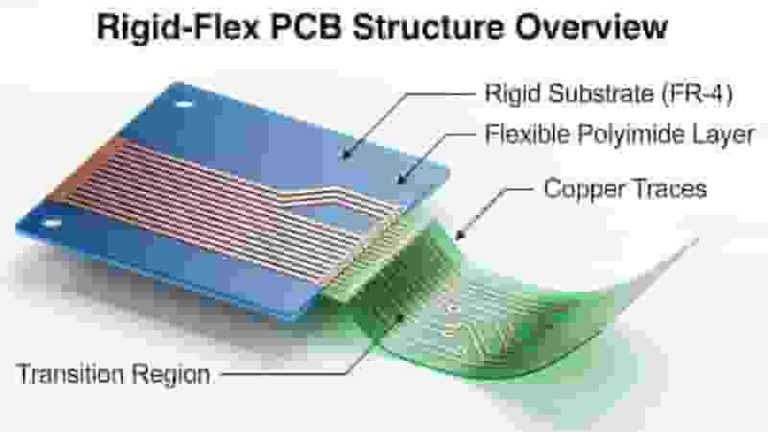
We are a professional Rigid-Flex PCB manufacturer providing 1–12 layer rigid-flex PCB prototyping, mass production, and assembly services for global industrial buyers, engineers, and procurement teams. ISO, UL, and RoHS certified, we support quick-turn fabrication, free DFM checks, zero MOQ, and full custom solutions. Key Benefits of Rigid-Flex PCB Rigid-Flex PCB integrates rigid PCB stability…
As a dedicated high frequency PCB manufacturer, we provide reliable RF and microwave circuit boards from 500 MHz up to 20 GHz, using Rogers, PTFE and hybrid stackups to ensure stable signal integrity and low loss. High Frequency PCB Services We Provide As an experienced high frequency PCB manufacturer, we offer complete RF and microwave…
Summary: High Tg FR4 PCBs provide outstanding thermal stability, mechanical strength, electrical insulation, and cost efficiency for high-temperature electronics. This guide explains core properties, key benefits, industrial applications, and material comparisons to help engineers and purchasers select the right high Tg PCB solution for automotive, aerospace, industrial, and telecom systems. What Is a High Tg…
Microvias are core interconnect structures that enable extreme miniaturization in PCBs. This guide covers definitions, types, fabrication, reliability, applications, and design best practices for global industrial buyers, engineers, and procurement teams. What Are PCB Microvias? As printed circuit boards are designed to pack more components into increasingly compact spaces, microvias play a crucial role in…
Rigid-Flex PCB manufacturing integrates flexible circuits and rigid boards to deliver compact, high-reliability interconnect solutions for medical, aerospace, automotive and industrial electronics. This professional guide covers full fabrication flow, material selection, DFM rules, quality control and industry best practices for global engineers and buyers. What Are Rigid-Flex PCBs? Rigid-flex PCBs are hybrid circuit boards that…
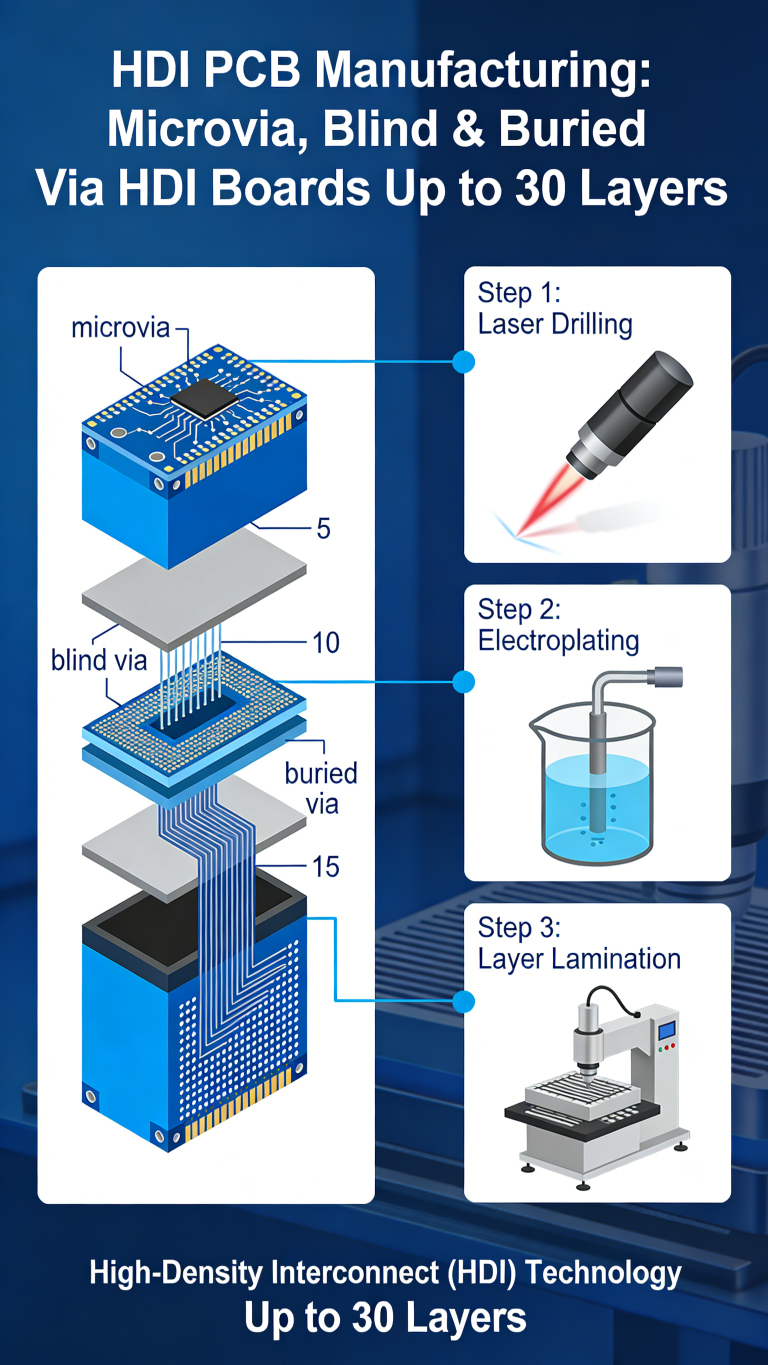
HDI PCB manufacturing provides high-density interconnect solutions with microvia, blind via, and buried via structures for compact, high-performance electronics. We deliver reliable HDI boards from prototype to mass production, supporting up to 30 layers for automotive, 5G, medical, and industrial applications. What Is HDI PCB and Why Choose It High-density interconnect (HDI) PCBs offer much…